Standing room only on outrage bus
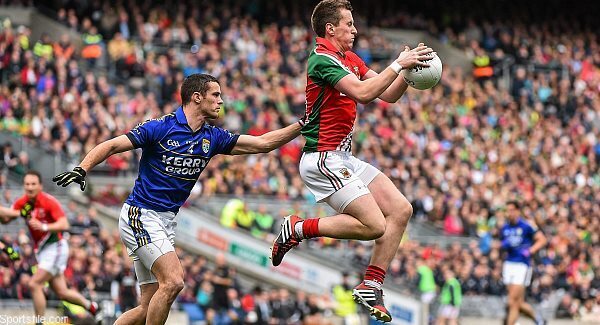

Since Jerry Grogan announced over the Croke Park PA just minutes after Sunday’s final whistle the Gaelic Grounds would host the replay, its capacity has been stretched.
This column isn’t prepared to step on board on this occasion for several reasons. One of them being the very fact the Mayo County Board knew what they were letting themselves in for in the event of drawing with Kerry.
All-Ireland semi-final replays are rare; so rare maybe they didn’t consider the ramifications, but if they had reservations with the venue or the date then was the time to express them.
Ideally, yes, Croke Park would host the replay next Saturday. Since the early part of last year, the American football colleges game has been set in stone. There wasn’t the remotest of chances it was going to be cancelled or postponed, although staging it in the busiest month of the Croke Park calendar was always going to be fraught with peril.
It would have been regarded as a calculated risk by stadium and commercial director Peter McKenna. If the Penn State-University of Central Florida game opens the door for bigger American football games then it will be the GAA that reap the lucrative financial reward.
Then again, just like Mayo, there might have been an assumption that All-Ireland semi-finals are usually decided at the first time of asking. Since the turn of the century, only three from 29 games have ended in a draw. But, of course, all three were played in Croke Park.
What Kieran O’Leary’s equaliser triggered on Sunday can at worst be described as unfortunate. Appalling? Disgraceful? Come off it.
Of course, the players would prefer to do it all over again in Croke Park but a three-week break between Saturday and the All-Ireland final can’t be sniffed at. It is the ideal run-up. especially with the prospective winners taking in an extra game to get there.
A lot of the indignation doesn’t hold up. On the internet yesterday, former Roscommon goalkeeper Shane Curran slated the Gaelic Grounds, calling it “a kip” and “a dump”. The Gaelic Grounds is many things. A traffic nightmare after a big game, yes, as it will be on Saturday evening. But a kip? A dump? Hardly.
Drawing parallels with the Garth Brooks gigs and querying whether Dublin would be treated this way are forms of lazy analysis.
Tommy Carr claimed on Morning Ireland that when the game couldn’t be played in HQ the Gaelic Grounds wasn’t selected for the right reasons. “It is a Limerick factor here — and this is how the GAA works,” he said. “They’re doing Limerick and the Gaelic Grounds a favour by doing this. There’s as much politics in this decision as there is pragmatism.”
The suggestion was dismissed out of hand by GAA president Liam O’Neill yesterday. Head of communications Alan Milton went as far as describing it as “scandalous” while highlighting the autonomy of the Central Competitions Control Committee (CCCC). This column spoke to CCCC chairman Tony O’Keeffe last night and he categorically stated Limerick was chosen as the next best alternative for geographical reasons.
And then there’s the harsh truth.
As much as we might like to say differently, a replay is different, even an All-Ireland semi-final replay. Look at the crowds. In 2000, 50,449 watched the first game between Kerry and Armagh. A slightly smaller crowd took in the second game.
Four years later, 64,518 watched Mayo and Fermanagh finish level; 39,485 were at the replay. The Kerry-Cork 2008 replay spoke the trend when 30,000 more were at it than the 35,317 who watched them first time around in Croke Park.
That was an exception. Replays traditionally just don’t have the same appeal as their precursors probably because they are such novelties. especially at a time of the season when it’s all about business. If the GAA treats one on this occasion differently, it’s only because the rest of us have always regarded replays in a dimmer light.
News at the weekend that the Clare, Limerick, Waterford and Tipperary officials are considering an alternative seeded Munster SFC draw doesn’t sit quite right.
The proposal, which is to be discussed by their respective boards, calls for Munster finalists to receive a bye into the semi-finals of the following year’s championship.
That would mean Cork and Kerry, as this year’s top two, would again be granted automatic spots in the last four.
As it’s an open draw, there would be the possibility the pair could be drawn against one another, paving the way for one of the other four to reach a final, but it’s a 50-50 chance.
Then, on the other hand, Cork and Kerry mightn’t look too favourably on the possibility of having one provincial game next season. There are risks, not just for the developing four, but the traditional big two as well.
The Munster Council’s competitions control committee meet on September 11 to discuss the structure for 2015.
A change is most certainly inevitable but a return to the open draw may be just be the simplest solution for the time being.
Seamus McEnaney let it be known last week that he’s ready, willing and able to return to inter-county management.
With 11 football positions currently vacant, the former Meath and Monaghan boss shouldn’t be short of an offer or two.
The high number of departures this summer is of little surprise given that there were 13 in 2012 and the norm for county boards now is to offer two-year terms.
And with James Horan and Jim McGuinness almost certain to step down after four seasons in charge, there are likely to be at least two more positions available for 2015.
But with so many “for wanted” signs going up, does the supply of competent managers meet the demand?
Or, as Niall Carew explained in departing Waterford, are developing counties willing to back their new managers sufficiently to make progress?
Either way, expect another significant round of exits and opportunities in 2016.