Winning Munster proves a curse
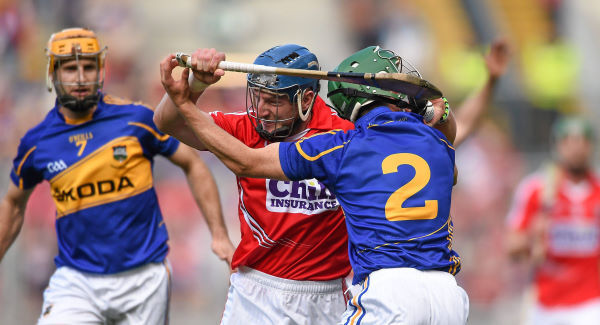
They satisfied a worrying trend that has developed in recent years. Another All-Ireland semi-final, another no-show by Munster champions.
Going back to Tipperary’s abysmal display against Kilkenny in 2012, the average size of defeat for previously unbeaten provincial representatives now stands at almost 12 points.
Not since 2005 has a Munster-winning team claimed an All-Ireland title. Not since 2011 has one reached an All-Ireland final. Since ’05, just Tipperary (2009, ’11) and Cork (’06) have followed up a provincial title with a September decider appearance. That means in nine seasons Munster champions have been beaten at the semi-final stages on six occasions.
In 2007, Waterford had a three-week break between beating Limerick and their quarter-final win over Cork. The following year, provincial champions were once again ushered directly to the All-Ireland semi-finals. Kilkenny have more than coped with the gap between winning Leinsters and last four games, as did Galway in 2012, but the record of Munster kingpins at that stage is horrendous.
With the exception of Waterford who won a Munster final replay against Cork in 2010, the time between competitions has been five weeks since 2007.
So what gives? Too much put into Munster campaigns?
That has to be a consideration. Despite claims to the contrary, its position as the premier provincial competition has never been challenged.
And there is a natural comedown after climbing such a peak. For Limerick last year winning their first provincial title in 17 years and Cork this season bridging an eight-year barren spell, naturally there was a lot of energy expended.
There is no real argument about being left in the dark for a couple of weeks about the identity of their semi-final opponents. Munster winners have one more week to size up their rivals compared to Kilkenny, who in the same time-span have never been found out at this stage.
The lack of challenge matches to keep them ticking over, however, is a reasonable argument. Kilkenny mightn’t feel the need for games with other counties but then, as we know only too well at this stage, not everyone is like Kilkenny.
Writing before last season’s Clare-Limerick semi-final, John Mullane expressed concern for Limerick because of the extensive layoff. “The long break between the Munster final and All-Ireland semi-final is an issue. And how will they deal with the hype in the county? We found it very difficult to cope with that in Waterford and no matter how hard [John] Allen tries to insulate his players from it, it’s almost impossible for them to block it out.”
Reflecting on their 2013 semi-final disappointment, Limerick’s Gavin O’Mahony this year admitted the lack of games outside the camp was a difficulty. “It would have been great to have a couple of competitive matches but also it is very hard to get challenge matches this time of year, so we had to have faith in our own internal matches.”
Jimmy Barry-Murphy was too gracious a loser to admit the five-week break had an impact on Cork on Sunday. He had dismissed it as an issue beforehand so he as sure as hell wasn’t going to blame it afterwards.
But when he looks back he may consider that being left so cold for so long was going to have an impact. Having seen what could be argued was a better Tipperary team in 2012 and then Limerick fall so badly short having been in the same boat, it would have been arrogant to ignore such a danger.
Cork’s defeat on Sunday may have been a gilt-edged opportunity for some to settle old scores but the fact is their difficulty is shared among several of their fellow counties in Munster.
That it has become a trend can’t but make GAA authorities in the province and Croke Park sit up and take notice. It must certainly be on the agenda for Liam Sheedy’s Hurling 2020 committee.
There are four options. One is, of course, to do nothing. The second is to condense the championship so that Munster champions don’t have to wait as long. The third is for the Munster Council, if possible, to put their final back by even a week to give their champions a better chance in the All-Ireland series.
The fourth is to reintroduce quarter-finals for the provincial winners, which might just be the most realistic and best alternative. Give them home advantage as well as the same opportunity to sustain momentum as everybody else.
Because right now winning Munster is no reward in the All-Ireland series. It might as well be a liability or, dare it be said, a curse.
Email: john.fogarty@examiner.ie
There are many things beguiling about Mayo supporters. Not all of it positive, mind you.
For a county so passionate about their football (just look at their massive take-up of season tickets), the statement James Horan (pictured right) made about their silence towards the end of last year’s All-Ireland final remains a moot one.
It was hardly a Delia Smith moment. Indeed, it was significant just how quiet their fans, even those who had ‘infiltrated’ Hill 16, became after Bernard Brogan’s second goal.
One wonders have they actually become institutionalised by their succession of September failures to the point that there is a comfort in reconciling themselves with the fact that their team will come up short.
Horan’s greatest feat in his four years has been to cocoon his players from this almost self-perpetuating prophecy of doom. A fourth All-Ireland semi-final in as many years is the mark of high achievers.
We don’t mean to tar all Mayo fans with the one brush, but when we see the Mayo4Sam campaign raise its head again ahead of Sunday’s meeting with Kerry it strikes us as extremely hollow.
Keeping the faith isn’t about convincing some unknowing and indifferent celebrity to pose for a photo holding up a sign; it’s about cheering on your team until the end.
Why do we worry about the British take on GAA?
So Joey Barton likes his hurling. Good on you, Joey, but should we really care? Since Sky Sports’ arrival into the televised GAA sphere, there has been a silly fascination with what the British audience thinks of our games.
Some on social media might lampoon these new viewers’ take on Gaelic football and hurling but the very fact so much attention is given to their opinions reveals a worrying insecurity.
Even before Sky came on board with the GAA, there was a ridiculous amount of attention devoted to a piece in The Guardian last October exulting the virtues of the previous month’s All-Ireland hurling final replay.
Do we really need the approval of others that badly? Shouldn’t we know ourselves how good we’ve got it?