Munster hurling officials caught in vicious circle
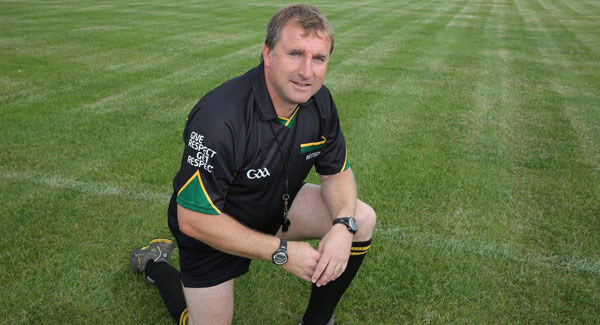
I only caught up with the Setanta Sports series about referees recently, and it was well worth the effort.

Munster hurling officials caught in vicious circle

Alain Rolland, Alan Kelly, Barry Kelly and David Coldrick were the officials followed by the cameras and each of them gave a terrific insight into the stresses and rewards of wearing black, metaphorically speaking, on big match day.

A throwaway line of Kelly’s tinkled in the ear: he recalled his early days officiating — teams on an A4 sheet was the killer detail — and the hurling snobbery that looked askance at a Westmeath referee handling big games.


Brian Cody flicked away the dig of ‘manufactured hurlers’ at Dublin as condescending last week, and the same outlook should apply to those kinds of lofty dismissals.

On a parallel track, something occurred to me during the week: the preponderance of Leinster officials who’ve been in charge of the big games in hurling in recent years.

Only one Munster referee has taken charge of an All-Ireland final since Seamus Roche back in 2005, that being Michael Wadding (2011).

Halt your prejudices right there.

This column isn’t about to insinuate anything about the way referees from a particular province handle games; the simple question is whether it’s best practice to have a preponderance of officials from one area handling matches.

This is not to take on board the sometimes extraordinary level of suspicion and distrust that can exist among county management and players about certain officials. I recall after a league game a couple of years ago an inter-county player stormed past us having been sent off; as he passed he said the referee had asked him before the game, ‘Will I send you off now and get it over with?’

(Does it seem more or less significant that the dismissal was a correct call?)

Neither is this a coded call for referees who ‘understand’ how certain teams play — that’s never been a cogent argument. Foul play needs to be punished no matter the culprit.

The geographical imbalance also calls for a retort as obvious as it is accurate: as Peter, Paul and Mary never sang, where have all the (Munster) referees gone? If there were more high-profile officials from the south then presumably they’d be appointed too, but that seems to be a circular argument — you become a high-profile referee when you get high-profile games.

Answers on a postcard please: black, yellow and red only.

Women not getting fair hearing on social media

Last week I wrote here about a chat with basketball coach Mark Scannell for a forthcoming feature about coaching approaches and so forth.

Mark pointed out that there was a time when a top US or Spanish coach came to Ireland and what he showed in terms of drills and game plans was literally brand new. Nowadays, of course, you can call up the full training regimes of Real Madrid or the Boston Celtics on Youtube and prepare your own side accordingly.

That’s a development which still strikes those of us old enough to remember two-channel TV as almost unearthly in its reach and immediacy, but the interweb isn’t all good news.

Take the recent controversy over the suspension of NFL star Ray Rice for allegedly hitting his girlfriend (and knocking her unconscious), an offence which got him suspended for all of two games.

What many observers noted when this news broke was not just the lenient disciplinary sanction, but the reaction to women – journalists and sportspeople alike — who joined in the debate on the matter.

Admittedly much of this was on Twitter, the home of reasoned, rational debate said nobody at all ever, but some of this had an edge that was uglier than normal.

Sports Illustrated’s Richard Deitsch told website Mashable: “What I’ve found in the last six to 12 months is that the intensity of the conversation these women are facing has gone up and the intensity generally leads to more negative comments than positive comments. I do think the attacks and the coarseness of the attacks have gotten more intense.”

The examples Mashable provided certainly underline Deitsch’s comments and I’ll let you enjoy your morning scone without having to read them; he also made a good point when he said these women were facing those conversations rather than participating in them.

We’ve had some examples of poor judgement on social media over on this side of the pond in recent months, of course, and without revisiting those in any detail it’d be as well to bear in mind not only the excellence on view in women’s sports right now – the Irish women’s rugby team at the World Cup, the ladies football and camogie championships – but the right of everyone to express an opinion on those sports and their male equivalents.

The desperate search for column ideas

I recently picked up Heartburn by the late Nora Ephron, a novel which gained an extra dimension when it was published because of the similarity of the storyline (pregnant lady abandoned by husband for another woman) to events in Ephron’s own life, when she was married to Carl Bernstein, who broke the Watergate story with Bob Woodward.

Anyway, this was a terrific read until an unpleasant recognition occurred about halfway through, when the narrator recalls her errant husband’s desperation for column ideas, recounting how his eyes would search the dinner table for inspiration, conjuring a possible column out of the location of the pepper and salt shakers, how difficult it was to open those containers, whether anyone had ever noticed that before...

That’s not how it happens, honest (I usually go down to the ideas shop for a 3 for 2 deal). But if I’m ever reduced to an item on the soakability of cornflakes and milk, you’ll know it’s because I felt a discussion of the condiment containers was an insult to your intelligence.

Forward-thinking needed to exploit space

Yesterday was one of those days in Croke Park when it would have been handy to have a top-notch thermal imaging camera to track the movement of the players.

Not so much for the ‘he ran 12km and the average is 10km’ line but just to draw a picture of the compression of the play.

After less than ten minutes in the first game Kerry had two men in their inside line and another one, floating outfield. Galway likewise.

In the second game Cork’s half-back line sometimes looked like it had five in it, while Mayo’s alignment often looked like three-one-three in their half.

In a heat map of the game, if such were available, that would surely point to plenty of space elsewhere: the question, as always, is how to exploit that?

x

More in this section

Sport

Newsletter

Latest news from the world of sport, along with the best in opinion from our outstanding team of sports writers. and reporters

Cookie Policy Privacy Policy Brand Safety FAQ Help Contact Us Terms and Conditions

© Examiner Echo Group Limited