Even the World Cup is fair game for fixers

I don’t have the gambling gene, in all honesty. The appeal of free money I can see — I might be atheistic about gambling but I’m not agnostic about money — but the lure of doubles and trebles, and laying some off and all that? Sorry, no habla the lingo: never mind those first-throw-in or first-yellow-card wagers, which seem even to this untutored eye a licence to corrupt.
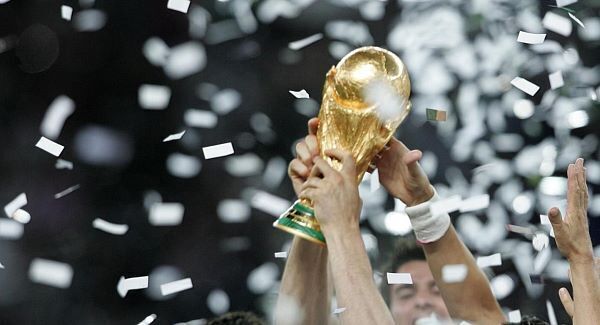
But I was interested to see recently that there are serious concerns now about match-fixing in soccer, serious concerns which may include a current tournament in Brazil, an ongoing festival you might have noticed.
A couple of weeks ago, I spoke to Brett Forrest, author of The Big Fix: A True Story of the Search for the Match Fixers Bringing Down Football, and he told me this: the crookedness isn’t a matter of fixing the first throw-in or the first corner-kick, it’s a lot bigger than that. But the first order of business for the fixer is the preparation work: namely, isolating the weakness of the players.
“You have to think in terms of areas of vulnerability,” Forrest told me.
“The less a player makes in salary, the more liable to take some side money to fix a match. The smaller the economy, the greater the difference that match-fixing money will make to his life or his family’s.
“Conversely, the more money, the bigger the career, he makes the less likely he is to risk his livelihood for a little money on the side.
“However, you have to realise the size of the pot. Nobody knows the number for sure, but the hypothesis from Interpol and bookmakers I’ve spoken to is upwards of one trillion US dollars per year.”
The obvious conclusion is — as Forrest alluded to — that the players on show in the World Cup are too well rewarded to consider match-fixing, but that’s not quite correct.
Fifa’s current head of security told Forrest that the most vulnerable group of games are the final pool matches, because many are dead rubbers in terms of the tournament itself, but still significant enough to attract sizeable (legal) betting. Just thought I’d pass that on if you were thinking of a harmless wager. You can thank me with a 10% notifier’s fee.
We’re all well able to complain. Some of us have a bigger pulpit than others to shout from, that’s all.
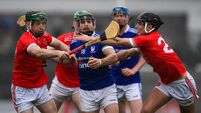
Take the game of hurling, recently in the news because of a certain player’s method of taking frees and penalties — Relax. Don’t move on with your eyes rolling: I’m not about to get into that issue all over again.
Not today, anyway.
Consider this, though: chances are you were one of those shaking your head and saying “typical” over last week’s to-and-fro with the rules, grumbling about the fact that the GAA can do such-and-such when it suits, while everybody knows well that in fact if you raise the ball and somebody is 20 metres away anyway...
Well, here’s an outlet for your dissatisfaction.
The Hurling 2020 committee, chaired by Liam Sheedy, was established “to look at the game of hurling and to submit proposals for change as appropriate to ensure the improvement of the game over the next 20 years”.
That call for proposals isn’t an empty gesture. Sheedy and company are seeking your opinion as they seek to find initiatives and ideas which may be of benefit to the old game. You need only log on and offer your thoughts.
Just a thought, though: the champions league/championship format? I thought of that. The names on the helmets? Me too.
Everyone has an opinion on hurling. Here’s a chance to get that opinion heard. Try hurling@gaa.ie or, if you prefer, write to Hurling 2020 committee, c/o GAA Communications Team, Croke Park, Dublin 3.
It’s worth taking the time. There’s a prize of two All-Ireland final tickets to be won if you fill out the online survey at this address: http://gaahurling.surveyanalytics.com/
There’s the possibility of enjoying a fair double whammy: the chance of a couple of ringside seats for the big show in September, and the guarantee that Croker will hear your ideas for hurling .
Just lay off the notion of point posts. They’re gone, gone, gone.
I don’t know about your pain threshold. Mine is pretty low. Sometimes I end up rubbing a knuckle on my right hand in cold weather: I broke the finger there in a hurling match almost 30 years ago but I can’t remember how sore it was (I remember distinctly the pain I felt when one of our mentors told me it was dislocated and gave it a good yank, mind you; I’d say the mentor in question still remembers the squawk out of me, too).
I raise this issue here for a number of reasons: one was the neat Virginia Woolf quote I came across, the one about a schoolgirl having Shakespeare to ransack for vocabulary when in love: “But let a sufferer try to describe a pain in his head to a doctor and language itself runs dry.”
The other reason was that, coincidentally, I came across the basketball star Kareem Abdul-Jabbar’s description of a mid-game migraine: “It felt like the Alien was trying to come out through my eyes.”
And finally, I raise it because I also rediscovered one of my favourite sports injury stories over the weekend: that of the ice hockey player who discovered, just after he’d had an on-ice fight in a minor league game, that he’d been called up by an NHL team. Once his knuckles were stitched up he was put on a flight to the Show.
Unfortunately, our hero’s hand fingers started swelling on the flight. Then his hand. Then his entire arm.
On landing he was rushed to hospital, where it came to light that an opponent’s tooth had been accidentally stitched into his knuckles.
The BBC was showing the official films of previous World Cups recently, though those broadcasts came at a time of the morning when people were either at work or school unless, of course, you were a sportswriter.
The other morning I caught some of the 1978 film, which was like a first contact from some other planet.
The players’ gear — the players’ hair — the chain-smoking managers ... all of that without getting into the snowing ticker-tape, which this observer remembers as one of the most striking images beamed back from half a world away.
That and the names. There they were in all their massive-thighed glory: Kempes and Luque, Bertoni and Passarella. No doubt there’s a corner of the internet where you can see them as they are now, but you can keep it. For me, Luque’s moustache is forever ebony.