All talked out about Stephen
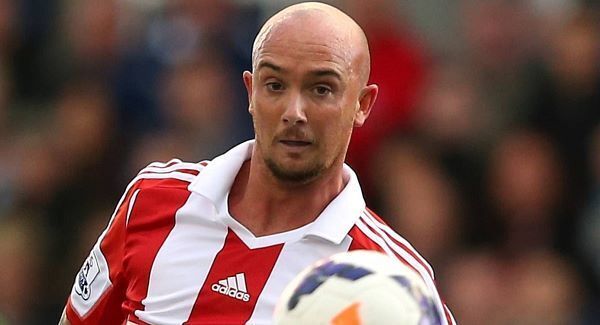
We have to talk about Stephen. Well, actually, we don’t, but it seems that in at least every other encounter with a manager of the Republic of Ireland over the past seven years, we end up talking about Stephen.

All talked out about Stephen

This would be Stephen Ireland, of course, Irish football’s most talked-about exile since ‘Grannygate’ erupted at the end of a game in Bratislava in 2007 which, with the player’s subsequent departure from the camp in a state of some emotional turmoil, turned out to be his last in the green shirt, bringing to an abrupt end a brief but shining and, for a while, hugely promising spell in the international team.

At the same time, it was merely the start of a protracted will he/won’t he saga which kept the presses merrily rolling through the management reigns of Steve Staunton and Giovanni Trapattoni and which has now reached what has all the appearances of being an all too predictably unhappy conclusion under Martin O’Neill.


Like his predecessors, O’Neill has felt obliged to indicate “the door remains open” but, to judge by the manager’s mood as much as his comments in Waterford this week – when he revealed that his efforts to contact the player for a clear-the-air chat had got no further than Ireland’s agent – that famous open door is now only barely ajar.

And if Stephen Ireland is ever to walk through it again, you suspect he’ll have to show willingness to prise it open with his fingernails.

But, ensnared as so many of us have been in Irish football’s longest-running soap, a question which has almost been forgotten is this: Does it really matter anymore if Ireland gives himself back to the Irish? When O’Neill unveiled his original squad for the summer friendlies in Dublin a fortnight ago, Ireland’s possible inclusion was once again high up on the agenda. It seemed reasonable then to ask O’Neill if he thought his assistant Roy Keane might have a role to play in resolving the issue since, I endeavoured to explain, there had previously been something of a mutual appreciation society between the two Corkmen.

I didn’t get any further than that, O’Neill – who can do a good turn as a smiling assassin – interrupting to remark that, oh, he would have thought the more likely second party in any mutual admiration society involving Roy Keane would be, y’know, someone like Patrick Viera. Touche.

Yet, I was hardly guilty of gilding the lily. Flash back to 2009, when Stephen Ireland was in his pomp at Manchester City and Trapattoni was the national team manager having to field relentless interrogation about the player’s continued absence from the squad, and here’s what Keane was saying about the Cobh man at the time: “I remember hearing about Brian Clough trying to get Archie Gemmill to sign for Forest – he slept on his sofa. That’s what I’d do with Stephen. Well, I wouldn’t sleep on his sofa, I would sleep outside his house to try and get him back for Ireland. I’m sure Trapattoni has done all he can to get him back, but he would obviously make a big, big difference to the Irish team. He’s pure quality, the lad. He’s been one of the most consistent players in the Premier League this season, in an inconsistent Manchester City team.”

That’s appreciation, right there, I think, and all the more notable for coming from a man accustomed to heavily rationing his praise. But that was also a whole five years ago, when the player who had initially lit up the Irish team under Steve Staunton had blossomed at Man City into something even more special. Touch, vision, silky skill, a wonderful weight of passing and, to cap it all, an eye for goal – Ireland seemed to have it all as an attacking midfielder, the kind of player, indeed, around who many experts felt you could legitimately think of constructing a team.

But that, sadly, was as about as good as it would get for Ireland at City. When Mark Hughes was replaced by Roberto Mancini and the club underwent its transformative revolution, the increasingly out of sorts Ireland became surplus to requirements, eventually moving on to Aston Villa, going out on loan to Newcastle United, and then returning to Villa again, before finally fetching up at Stoke.

Reuniting with Hughes at the Britannia seems to have given Ireland a new lease of life but whether, at 27, he can hope to hit the heights again is debatable. Before injury took its toll, Andy Reid had shown this season that, at a comparatively late stage in his career, a player can return from the wilderness at club level to recapture his best form and make another strong claim for international honours, but we probably won’t know if Ireland can achieve a similar resurrection until some time into the next season at Stoke.

The possibility that he might, probably explains why O’Neill insists he hasn’t yet slammed the door shut and thrown away the key. More than most managers, Ireland gaffers have to be pragmatic since, given the relatively small pool of playing talent at their disposal, they are rarely so overburdened with quality options that they can easily afford to dispense with any serious contender.

Otherwise, frankly, I would have fully expected a no-nonsense sort like O’Neill to have put it up to Stephen Ireland by naming him in his very first squad and, then, if the player had declined the call-up, simply moving on without him.

As it happens, we seem to be much closer to that scenario now than at almost any point since the great upheaval of 2007. Correctly, the manager has shifted the next move, if there is to be one, to the player – and, again, quite rightly, with no guarantees attached should Ireland decide he wants to come in from the cold.

But that, you would have to say, now seems the most unlikely scenario of all. On the subject of the two Irelands, we might just finally be all talked out.

More in this section

Sport

Newsletter

Latest news from the world of sport, along with the best in opinion from our outstanding team of sports writers. and reporters

Cookie Policy Privacy Policy Brand Safety FAQ Help Contact Us Terms and Conditions

© Examiner Echo Group Limited