Plenty of Cardiff final memories, but they’re not all good

Back then nobody envisaged anyone breaking that French monopoly. Little did we know.
With three Irish teams in this season’s quarter-finals, I was sure that at least one would make it all the way to May but, if I’m honest, not having to negotiate another retreat from Cardiff next weekend has its compensations.
Of all the venues — as opposed to stadiums — Cardiff is a nightmare, with the return journey proving even more challenging than Munster’s epic path towards winning the trophy for the first time in 2006 after years of pain and hardship.
After that 1997 final between Brive and Leicester Tigers, the Millennium Stadium hosted four more in 2002, 2006, 2008 and 2011, all with an Irish presence. The 2002 event is still defined by Neil Back’s opportunism in denying Munster a late scoring chance from an attacking scrum when he scooped the ball from Peter Stringer’s hand as he prepared to feed the set piece.
In truth, Leicester were the dominant side that day and the chances of Munster manufacturing a try from that attacking platform were minuscule. Blaming the canny back-rower for Munster’s shortcomings became part of the grieving process. Had the roles been reversed and Alan Quinlan or David Wallace did something similar en route to a famous victory, their actions would have gone down in Munster folklore.
That final introduced us to the appalling limitations of Cardiff Airport for the first time when thousands of Munster’s ever growing travelling faithful were treated like cattle and held back in airport hangers with the departures lounge proving incapable of dealing with the invasion.
That journey home became a case of survival of the fittest. Chaos reigned. I still recall a former high ranking Aer Lingus employee using his connections to get our charter plane out.
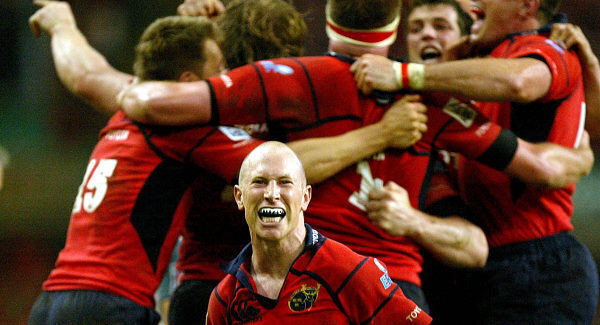
The 2006 excursion was no better but at least the fact that Munster won a Heineken Cup final at the third time of asking made up for all the discomfort. Stringer’s opportunistic try, leaving the great Serge Betson in his wake, was sufficient compensation for the inevitable chaos that awaited back at the airport.
The nightmare reached a peak in 2008 to such a degree that I vowed never to commute through the airport again. The thrill of beating the aristocrats of European rugby, Toulouse, in the final was still being absorbed as we arrived at our pre-appointed coach rendezvous immediately after the game. Then we were informed our plane wouldn’t be leaving until 3am. Talk about letting the air out of the balloon.
We were advised to reassemble at 2am to await further instructions. With six hours to kill, you don’t need much imagination to work out what happened. The sing-song that followed at the Marriott Hotel with the sponsor’s brew flowing freely reached the point that we cared little if we ever got home. That changed rapidly when we arrived at our pick-up point in the small hours of the next day. Everyone was unbelievably well behaved despite the hardship as supporters ranging in age from eight to 80 waited to hear their fate. Amongst them, the Rock of Cloyne. Diarmuid O Sullivan’s exploits for Cork had reached legendary proportions at that stage but the great full-back was fighting for his place at the outset of the 2008 hurling championship.
Watching him sitting on the hotel room floor six hours after his scheduled arrival time back home with a make or break outing for Cork in their final challenge game before the Munster championship, I couldn’t help but feel that Munster Rugby could yet contribute to the demise of one of Cork’s finest.
We arrived at the airport at 3am but it was clear that we were going nowhere soon. Finding a comfortable bench in an abandoned restaurant, I lay down and had just nodded off before a well-intentioned Munster supporter woke me up just to let me know that our departure was delayed for another four hours. At 7am the flight was finally called. By that stage everyone was on edge. Just as we were about to board, a well proportioned female security guard bearing a striking resemblance to one of those schoolyard bullies from the early black and white St Trinian’s movies started to bark out orders, instructing people to form an orderly queue. At this stage the 80-year-old gent next to me had enough and let fly. Sensing a potential riot, this chiselled monster with security stripes stepped forward to aid his female colleague. As he did I slipped into what one former Irish rugby press officer called “my second row face” to let big Taffy know the best course of action was to let us board without delay. Thankfully he concurred. We finally made it home just after 9am with Munster’s triumph already consigned to history.
Three years later Leinster represented Irish interests in Cardiff. Absorbing the lessons of history, I made my way to the Welsh capital via Bristol. Things were going great until boarding the train at Temple Meads station. Every carriage was packed nose to nose with Leinster fans. You know the script...what are you doing here? The return journey was equally eventful after Leinster’s amazing comeback against Northampton from being 22-6 down at half-time. Jonny Sexton was the architect of that revival and having been mercilessly reminded of my Munster roots on both legs of the trek could only retort that at least Sexton’s father and grandfather were proud sons of Listowel.
With the Heineken Cup coming to an abrupt end next weekend, memories of wonderful sojourns to Toulouse, Beziers, Clermont, Montpellier, Bordeaux, San Sebastián, Toulon, Paris and other glorious venues far outweigh those deeply unsatisfactory returns from Wales.
On Saturday, the might of Toulon and Saracens have the Millennium Stadium to themselves as I attempt to decide which of them I dislike most. The fact that one of our own, the eminently likeable Mark McCall, is at the helm in Saracens offers the only plausible reason why a win for them might feel a bit more palatable.
As for Sully, he eventually saw the light and turned his hand to the rugby with Highfield and Midleton in the AIL after his retirement from the inter-county scene. If only he had made that transition five years earlier he may well have been on the only plane to exit Cardiff on time on that fateful night back in 2008 — the team charter.