The fluctuating price of Sterling
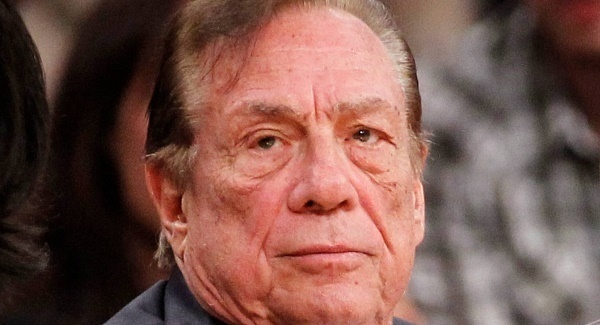
We won’t revisit the whole thing, suffice to say Sterling’s remarks provoked a reaction from many commentators, his own players and not least, a lifetime ban from the NBA itself.
I noted that last week in these pages Dónal Óg Cusack referred to the unpleasant way in which Sterling amassed the fortune necessary to own a professional sports franchise: reports in various outlets allude to shameful exploitation of low-income tenants, many of whom were black, which goes to show a consistency in attitude, if nothing else.
Being an unpopular owner of a sports team is something which echoes down the decades in America. Almost 100 years ago H. Harry Frazee condemned the Boston Red Sox to years in the wilderness when he sold Babe Ruth to the New York Yankees (to finance a musical he wanted to produce, called No, No, Nanette). Frazee’s name was mud in Boston forever, while in Brooklyn the O’Malley family became outcasts when they moved the much-loved Dodgers baseball club to Los Angeles, lock, stock and barrel, in the mid-50s. The O’Malleys owned the team, but the people of Brooklyn felt betrayed by the switch of coasts. More recently, Robert Irsay became a hate figure in Baltimore when he moved the Colts from that city to Indianapolis in the middle of the night in 1984.
Ironically, one of the few universally admired owner-families is the Irish-American Rooneys, who own the Pittsburgh Steelers NFL team; Dan, whose father Art bought the club in the 30s — allegedly out of a day’s winnings at the track — was until recently US Ambassador to Ireland.
That’s a little context for people like Donald Sterling: interesting, you say, but so what? Well, it’s been also been a week or fortnight in which much has been made of Munster rugby’s relative poverty when playing against a team like Toulon, which is powered by the wealth of owner Mourad Boudjellal, and there have been one or two little hints that perhaps private investment is something Munster should look at when it comes to competing at the highest level: welcome the sugar daddy, if you like.
Well, it’s a possibility. But you need to factor in the Sterling factor. Only two years ago, Boudjellal was suspended in France for saying his side had been “sodomised by referees” in one game, and Donal Lenihan admitted his surprise in these pages lately when Boudjellal addressed the press before the coaching staff after the Munster game.
That’s the risk you take when there’s a moneybags involved. The next question, though, is whether you can afford not to have one involved.
Gary Smith retired from magazine sportswriting last week.
This is big news to a certain constituency, because Smith is regarded as the best long-form sportswriter going, an institution at Sports Illustrated and a powerful weapon in that magazine’s armoury for many years. Smith will continue to write, however, focusing on books. I raise his retirement here because it’s bad news if you like lengthy pieces on sport you can lose yourself in.
I also raise it because, after a year or so of trying, I spoke recently to one of the men who paved the way for writers like Smith to drop thousands of words on those lengthy, discursive pieces: Gay Talese, one of the greats of journalism.
Look, I’m not going to lie to you. It was fantastic. This is the man who wrote The Silent Season Of A Hero, the magnificent profile of Joe DiMaggio, the piece which opens the Best American Sportswriting of the Century.
He also wrote Frank Sinatra Has A Cold, widely regarded as the greatest magazine profile of all time. (By the way, he published those in Esquire in the same year. The same year!)
Anyway, the full conversation will feature in the paper soon, but I thought I’d give you a sneak preview here of one of the topics discussed.
At a time when journalism often gets a bad rap, Talese didn’t equivocate about what it demands and what it stands for.
“I teach classes sometimes at colleges,” he told me. “Including Harvard and Yale, and I meet kids wearing blue jeans and T-shirts, baseball caps turned backwards as though they were from the ghetto...
“I tell them, ‘if you’re going to be a journalist then dress with a little pride in your profession’.
“It’s the only honest profession I know of. If you go into banking you’re a crook, politics, even the clergy....
“I’m not saying there’s no corruption in journalism. There is. But there’s less lying. In the big city room of The New York Times I thought there were fewer liars per square yard than there was in any comparable room in any other occupation. I always believed that.”
Gay Talese, ladies and gentlemen. Coming soon to an Examiner near you.
By the way, I should point out — full disclosure, as they like to say in America — that when I had that conversation with Gay Talese I was dressed in a navy T-shirt with ‘QUINT FISHING AMITY ISLAND’ on it, blue jeans and New Balance runners which were not, frankly, at their best.
The press box, though, promotes an informal dress code which is hard to break out of. Yours truly wore a bright shirt once to Thurles and it was much remarked upon, more so, say, than the Liverpool tops which were much in evidence in the Gaelic Grounds press area for the NHL semi-final double-header.
It’s interesting sometimes to contrast your own clothes, though, with what your interview subjects wear. I’ve lost count of the number of times I’ve bought a coffee for someone wearing a tracksuit, for instance, or seen someone flip up a hood when the conversation is over. I remember asking one tracksuited sportsperson how many such items he had at home: “A room full of them,” was the response. I almost responded with: “Would it kill you to put on a pair of trousers?”, but at that point the interview had yet to be conducted...
I enjoyed the spin along the most evocative stretch of roadway — for this traveller, anyway — in Irish sport yesterday.
Once you turn off the motorway for Thurles, and you cruise through the countryside, you’d need to be made of stone not to feel the pulse quickening as you pass Thurles Golf Club.
Why? From that point on, the atmosphere can be tasted.
Roll on summer.