Life to get tougher for Irish raiders
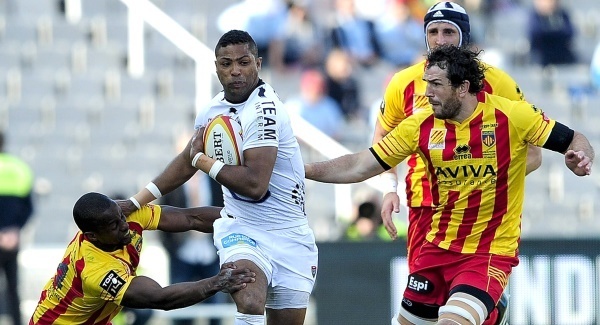
In a market that is set to become even more competitive given increased revenues from their domestic and European broadcast deals, the English and French clubs are set to make life a lot more difficult for the Irish provinces.

Life to get tougher for Irish raiders

Getting three Irish sides to the last eight of this season’s Heineken Cup is an achievement that will get increasingly difficult to replicate in the new landscape of European rugby.

In a repeat of last season Munster, Clermont Auvergne, Saracens and Toulon contest the weekend semi-finals, but in truth the gap between our provinces and the rest is growing.


The big difference between Munster and the remaining contenders is that all three enjoy massive financial backing from independent sources to supplement the substantial income generated from their share of the domestic BT Sport and Canal+ broadcasting deals. In addition, all the French Top 14 clubs will receive a loyalty payment of €2m from the French Federation next season for committing to the new European model.

Mourad Boudjellal and Nigel Wray’s millions have been responsible for underpinning solid foundations at Toulon and Saracens respectively, while Clermont still enjoy the support and backing of the Michelin tyre consortium, a relationship dating back to the club’s foundation in 1911.

The fact Munster are still punching above their weight was reinforced forcibly over the last week with the groin injury to JJ Hanrahan. One injury and the team is on the verge of chaos with Europe’s leading scrum-half Conor Murray having to sample game time at out-half against Connacht last Saturday in the event of anything happening to the incumbent Ian Keatley.

One injury and Munster’s resources are stretched to a point that must have Toulon and Clermont scratching their heads. With Jonny Wilkinson, Matt Giteau and Freddie Michalak sharing the out-half duties all season, Toulon are well covered while Clermont also have multiple options in the key decision-making role on the field. Brock James will more than likely start for Clermont against Saracens on Saturday but Vern Cotter has experienced back-up in former All Black Mike Delaney and South African Gavin Hume. Reserve scrum-half Ludovic Radoslavjevic has also seen time in the role, starting there in last season’s 36-14 quarter-final win over Montpellier. In addition, French international scrum-half Morgan Parra has played at out-half in a World Cup semi-final and final.

With more money now available to English clubs they should be a lot more competitive in Europe after enduring a barren time since Wasps claimed the Heineken Cup in 2007.

Saracens are constantly making progress on that front and with a squad packed with some of the best young talent in English rugby, they will remain serious competitors for the foreseeable future.

Meanwhile, Munster are left struggling in their quest to attract top quality midfielders to fill the holes left by Casey Laulala’s move to Racing Metro and James Downey’s impending departure.

Munster have scoured the southern hemisphere in recent months but players of suitable quality are hard to come by 18 months out from the 2015 World Cup.

With a plethora of quality players likely to come on the market after that event, would it be more prudent to opt for a holding job by signing a more seasoned campaigner approaching the end of his career for a season?

That is the dilemma facing Munster’s new head coach Anthony Foley. It doesn’t help either that the Irish provinces are in competition with themselves, with Munster and Leinster also said to be interested in Connacht’s new signing Bundee Aki.

Surprisingly for a set-up that is underfunded in comparison to its neighbours, Connacht were prepared to pay about €40,000 per annum above the valuation put on the Waikato Chiefs centre by either Munster or Leinster.

It will be interesting to see if that gamble is justified but if Aki facilitates the growth and development of Robbie Henshaw playing in midfield alongside him then Irish rugby will ultimately benefit.

The big challenge for the Irish provinces is how they can continue to compete on equal terms in Europe when their primary function is to drive the competitiveness of the national team. That is against a background where Boudjellal, Racing Metro’s Jackie Lorenzetti and several other benefactors scattered around France and England don’t give a monkeys about the state of affairs of their national side.

That is why it was interesting to read the IRFU’s highly respected chief executive Philip Browne admit during the week that the union may have to examine limited ways of allowing the provinces more autonomy, which could incorporate private investment. That makes sense to me.

It seemed ridiculous at the time that Leinster lost Jonathan Sexton to Racing Metro primarily because the province were unable to top up the player’s salary from their own resources, with a reputed €50,000 per annum sufficient to keep him in Ireland. The benefits to the national side in allowing Leinster go down that road are there for all to see, especially given the workload Sexton has endured this season on the back of a demanding Lions tour.

Browne admitted last week that changes may be required and that will surely form part of the brief entrusted to Ireland’s first performance director David Nucifora — more on that appointment down the track.

The chief executive noted that “over the last 12 months, our business model has been under pressure and so we have to continue to look at it. There’s one thing that we won’t sacrifice and that’s control of the game in this country because we can’t afford to. What we will want is to ensure that we control our national players for the benefit of the national team. So from that point of view, yes, we have to see if there are other ways that we can generate revenues, but not to the extent of losing control of our players and to the disadvantage of our national team.”

What the Irish provinces have achieved in Europe is remarkable but that position of strength which saw Munster and Leinster deliver five Heineken Cups in seven seasons is unlikely to continue. The English clubs, buoyed by the success of their governing body Premier Rugby Ltd (PRL) in delivering everything they set out to achieve when offering notice to quit the ERC-driven Heineken Cup in June 2012, are set to become a bigger player from next season. The French have made that leap already and you can be sure that in addition to Clermont and Toulon, Toulouse will be back while Racing Metro and Montpellier are coming forces.

Given the revenues the IRFU have accumulated from bonus payments from Munster, Leinster and Ulster reaching successive quarters, semis and European finals, failure to sustain that level of success will have a further impact on the union’s finances.

Munster really have their work cut out on all fronts this weekend in competing with the might of Toulon. It is in Irish rugby’s interest that they continue to punch above their weight in what would constitute their best win over an incredible 19 seasons of European rugby. The odds are stacked against them. But then again, would they have it any other way?

More in this section

Sport

Newsletter

Latest news from the world of sport, along with the best in opinion from our outstanding team of sports writers. and reporters

Cookie Policy Privacy Policy Brand Safety FAQ Help Contact Us Terms and Conditions

© Examiner Echo Group Limited