‘You must trust in the quality of your own dressing room and in those special moments before taking the field, take a look around.’
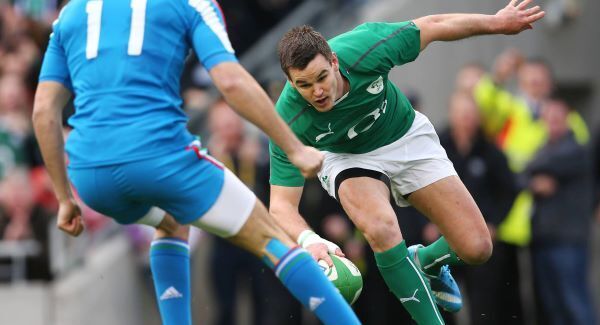
Differing contests in so many ways yet equally compelling.

‘You must trust in the quality of your own dressing room and in those special moments before taking the field, take a look around.’

Last weekend saw me on commentary duty at two of the three Six Nations games on offer and in both cases I struck it rich.

England are growing in stature all the time under Stuart Lancaster and Sunday’s game, played in a magnificent atmosphere at Twickenham was a belter.


Saturday’s encounter at the Aviva Stadium was a unique affair in so many ways with the game itself completely overshadowed by the emotional presence of Brian O’Driscoll in an Irish shirt for the last time in his native city.

His first outing, at the home of Queensland rugby at Ballymore Stadium in Brisbane three months short of 15 years ago, saw Irish rugby in a completely different space than it now occupies. Australia were only a few months shy of winning the World Cup for the second time and Ireland posed no more than useful warm-up fodder on their march towards destiny.

Keith Wood was the talismanic figure in that Irish side and the one demanding higher standards. He was a lone figure in many respects but a few notable allies were not far away. Little did he or anyone else in the Irish tour party appreciate that within two years the young 20-year-old on debut in the centre would not only grasp that mantle but raise the bar to unprecedented heights.

Returning to Australia with the Lions two years later, O’Driscoll showed the first glimpses in only his second appearance in the famous red shirt back at Ballymore that he was now ready for Lions greatness. The tourists defeated a star-studded Queensland Reds side which had just contested the semi-final of the Super 12 only a fortnight earlier but were blown away 8-42 by a brilliant display of attacking rugby from the Lions.

O’Driscoll had made his debut at full-back in the tour’s opening game against Western Australia a week earlier, with some of the Lions coaching staff still to be convinced of what the precocious young Dubliner could bring to the party. That debate was short-circuited by the Queensland massacre.

O’Driscoll cemented his place at outside centre in the Test side and proceeded to rip apart a famed Wallaby defensive system, which had yielded just a single try in the entire tournament when capturing that World Cup, just a few miles down the road at the Gabba a fortnight later.

Of far greater significance for Irish rugby was the lessons O’Driscoll absorbed on that tour from many of the English contingent on what being a professional rugby player was all about. The likes of Neil Back, Martin Johnson, Richard Hill, Jonny Wilkinson and Jason Robinson were at a different level when it came to training and preparing properly for professional sport.

Wood, O’Driscoll and Ronan O’Gara, who was also exposed to that same learning curve, absorbed the lessons and returned home with a clear picture of what needed to change for Irish rugby to compete with the best. When O’Driscoll assumed the captain’s armband on a permanent basis when Wood retired after the 2003 World Cup, he drove Ireland to unprecedented heights with his individual brilliance.

While he was augmented by some of the very best to don the green jersey throughout that era — the likes of O’Gara, Paul O’Connell, Shane Horgan, Gordon D’Arcy, David Wallace and Tommy Bowe to name just a few — the most sobering fact is that Ireland have only delivered a single championship success over the entirety of O’Driscoll’s glittering 16 seasons at the top.

As we know all too well, sport doesn’t do sentiment but Ireland don’t need sentiment in Paris on Saturday to sign off the career of our greatest ever player. What this Irish team needs to do is focus on the things that have placed them in such a commanding position in the first place and execute to the same level of precision and accuracy.

If they succeed in doing that and don’t get bogged down in the failures of the past, then Ireland will win. While our record against the French is poor, Ireland have drawn their last two Six Nations outings against them and should have won both.

This group of players shouldn’t in any way feel burdened by the history of this fixture. It is irrelevant. O’Driscoll, D’Arcy and O’Connell apart, this is an emerging Irish squad with many of the match-day 23 still finding their feet on the international stage.

In some respects it is similar to the 1985 Five Nations championship-winning side that prevailed in Cardiff for the first time since 1967. I played in the famous Arms Park for the first time in 1983 and was taken aback by the fact that so many outstanding players on that Irish side remained somewhat inhibited by the shadow of the brilliant Welsh side of the 1970s, even if the vast majority of those players had called time on their magnificent careers at that stage.

We lost that game and it ultimately cost us a Grand Slam. Returning two years later with a team energised by young players in their first championship season, the entire squad embraced the challenge of playing in the rugby world’s most atmospheric setting. No baggage meant no inhibitions. We won handsomely.

Ireland must adopt a similar approach Saturday evening. Forget the past.

As a player you must trust in the quality within your own dressing room and in those special moments before taking the field, take a look around you. In particular, feel privileged that you have the opportunity to influence the outcome of O’Driscoll’s last appearance in that iconic No 13 jersey. He now departs on his terms as befits his stature.

When Martin Johnson called time on his magnificent international career weeks after lifting the William Webb Ellis trophy in Sydney in 2003, I remember thinking, is there any better way to sign off on such a memorable career?

While not quite up there with winning the World Cup, Leinster’s finest has now been afforded the opportunity to experience something similar should Ireland capture the Six Nations trophy in, of all places, the Stade de France. For all kinds of reasons, it’s time to deliver.

More in this section

Sport

Newsletter

Latest news from the world of sport, along with the best in opinion from our outstanding team of sports writers. and reporters

Cookie Policy Privacy Policy Brand Safety FAQ Help Contact Us Terms and Conditions

© Examiner Echo Group Limited