Punishing Nash for success
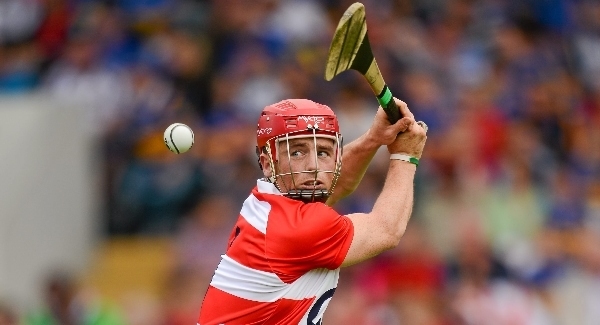
At the height of the often bitter Galway-Tipperary rivalry in the late 1980s, Nicky English’s free-taking technique was a bone of contention for many in the west.

Punishing Nash for success

It was decried by rival supporters that he balanced the ball too long on his hurley. Phone-calls were made to The Sunday Game, letters written to newspapers. Twitter, were it in existence back then, would have trended the bejaysus out of it.

In the following decade, DJ Carey’s similar style was also derided yet neither player were breaking any rules. Thousands of points were scored by their variations on the roll and lift. Croke Park didn’t bat an eyelid.


Anthony Nash hasn’t contravened any rule either, but for exposing or, depending on your view, exploiting a chink in the rulebook, there is a desire to see his epic execution of close-range frees ended.

In the build-up to Congress next month, the danger his rifling strikes pose to the safety of defenders will be mentioned but that was not the modus operandi behind this determination to stop Nash.

It was not the health and safety group but the referee’s group who made the representation to the playing rules committee and they are now proposing penalties and 20m frees be struck before the 20m line.

Referees chairman and rules committee member Pat McEnaney had supported the idea of penalties being a one-on-one situation between the striker and the goalkeeper. He was backed up by Nash’s predecessor Dónal Óg Cusack, one of two Cork men in the group — the other being county secretary Frank Murphy.

As McEnaney said in this newspaper last month: “In the consultations I was in favour of having the ball struck before that line and only having the goalkeeper on the line. Dónal Óg also favoured this. But it didn’t wash. At the moment we are legitimising fouling.”

For someone who should have nothing to do with hurling according to some, McEnaney was 100% accurate. Much in the way penalties in football were hardly an appropriate punishment when they were taken from the 13-metre line, permitting three men on the line is hardly an equitable price for an aggressive foul within the parallelogram.

Now that the penalty taker must check his run before the 20m line and strike in the semi-circle, chances of conversion have become longer.

Nash, of course, beat longer odds with his close-range frees. In the first All-Ireland final, he sent one past five Claremen. In the replay, no fewer than 13 of them failed to stop his rocket shot hitting the net.

It’s well within Nash’s powers to make light of another hurdle, should this motion be successful. But it’s not the point. Unlike English and Carey’s preference for the extended “safety first” roll and lift, the Cork goalkeeper’s own version on the jab lift is a skill fraught with failure. The rewards might be higher but on a difficulty scale it would read a nine out of 10.

English and Carey’s technique influenced the likes of Eoin Kelly and Joe Canning and so too might Nash’s inspire generations of hurlers should it survive the vote at Congress. After last year’s captivating season, it was the one act children were imitating in their back gardens and local GAA fields.

If he’s guilty of something it’s being inventive, not pioneering the subversion of the rulebook. That has been done by catalogues of free takers who have been stealing yards for decades.

Safety might be a concern but, as much as the motion will be sold on that premise in the weeks ahead, it is not on that basis which the proposed rule change is being put forward.

Nash’s misdemeanour hasn’t been his threat to the health of opposing players but in making the GAA rulebook look silly. Seemingly that is a worse crime.

* Contact: john.fogarty@examiner.ie

Black card risk will see new take on dark arts

Three games down this year and we, in this corner of the paper, are yet to see a black card. What was all the palaver about, eh? We jest as there were most definitely one or two situations when it should have been issued.

Even allowing for the lack of urgency in pre-season competitions, there are strong indications teams have already prepared themselves to expose a loophole in the new rule to avoid black card sanctions. Former Louth player Aaron Hoey in these pages last Saturday week mentioned it: “Cynical play is still going to happen. You take the deliberate pull down, lads will be strong enough to stop a player without pulling him to the ground.”

After Donegal’s defeat to Tyrone on Sunday week, Jim McGuinness said: “Somebody said to me as well that if you grab somebody and don’t let them by you, but don’t pull them to the ground, it’s not a black card. So if you’re strong enough to hold somebody up, it’s not a black card so all these things is interpretation of the rules and refs implementing them.”

On Wednesday, after Louth’s loss to Dublin, Aidan O’Rourke claimed: “If you’re strong enough to bear hug a player and not let him get to the ground then you don’t get a black card and that is being coached at the minute, I know well that it is.”

Even if it is early days, it’s noticeable just how many at games are shouting for black cards when the fouls committed don’t fall under any of the three deliberate fouls. Clearly, they are of the misunderstanding that something like a push to the ground is every bit as cynical as a pull. But as the season progresses, the GAA may discover there is a clamour to add more to the black card’s remit.

Plans to change coaching criteria make perfect sense

Croke Park’s decision to endorse the Football Review Committee’s recommendation for all managers/coaches to be qualified by 2018 must be one of the most logical steps taken by the GAA.

At inter-county level from 2016, every football and hurling management team must contain an Award 2 level coach.

If the measure encourages boards to look at candidates’ acumen ahead of playing pedigree or success of their county, it could contribute to changing the often-shortsighted culture of managerial appointments.

More in this section

Sport

Newsletter

Latest news from the world of sport, along with the best in opinion from our outstanding team of sports writers. and reporters

Cookie Policy Privacy Policy Brand Safety FAQ Help Contact Us Terms and Conditions

© Examiner Echo Group Limited