Subs need their chance to shine too
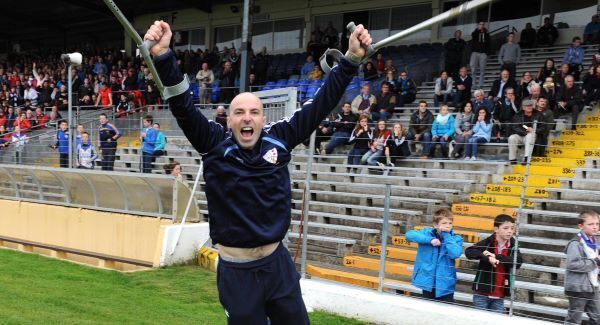
Interesting, then, to see the tweets from former Waterford senior hurler Brian Flannery about Walsh Park on Saturday night. Flannery posted a photograph on the internet which supported his suggestion that substitutes at the Waterford intermediate county final weren’t being admitted to the field at half-time to have a puck-around; this suggestion was strengthened by the wide open spaces in Walsh Park yesterday, lending strength to Flannery’s unofficial ‘open the gates’ campaign.
If true, this is a cruel imposition. Not on the players, but for the spectators. The half-time puck-around by a few lads along for the free tracksuit — er, sorry, treasured panellists is a treasured indulgence for the experienced observer.
If you’ve nothing better to do at the break during one of the aforementioned county finals, check out the range of characters on display during that 10-15 minutes: the lad who only tries ambitious cuts off the ground; the sub who produces an exaggerated limp at all times, subliminally suggesting he’d be on the team if it wasn’t for his wonky Achilles; and the chap who only catches the ball with his hand cupped at his waist as though he’s hiding a cigarette, which is a more accurate guess than you might imagine.
There are always a couple of the substitutes who park themselves on hurleys around the 21m line, the better to cast an evaluating eye over the others: this is meant to put it into your head that they have an unspecified brief from management to see which of the subs should be thrown on first.
Then there’s the poor soul who always stations himself near the entrance to the dressing rooms, in the vain hope that sheer proximity will get him onto the field of play. Invariably someone comes out (often to cadge a fag off the guy catching the ball with that upturned palm), and the sub working on elaborate pick-ups in that region looks up hopefully: he is almost always the youngest man on the panel and has not been knocked back by successive managers. He still believes he can make it.
Not so the lads behind the goal: to step behind the end line in order to puck the ball out is an unspoken admission that you are not going to figure on the team.
Why not hang around by the netting and get a sliotar or two to take home with you so it’s not a complete waste of a day? Finally, the sub goalkeeper, who never — absolutely never — parks himself in goal during the break. Does he think he’ll be put in as a surprise corner-forward? Is it a superstition on his part that he’ll ‘use up’ all his saves if he makes a couple of stops?
For county final anoraks like . . . myself . . . this silent theatre is one of the unspoken but cherished rituals of county final day.
If county boards are seriously contemplating an end to it, a la the Déise, then all of us — substitutes, panellists, and first-15 players — must unite to ensure the half-time pantomime continues.
Often it’s far more entertaining than the game itself, if truth be told.
Earlier this week you may have seen, in these pages, that a college hurling game was abandoned when one of the players suffered a suspected concussion injury.
There was a time not so long ago when a game would only be abandoned due to a catastrophic injury: I remember a referee once saying to me that this rule of thumb for such an injury was an audible break of a bone, which sounds both remarkably cold-blooded and shiver-inducing at the same time.
Concussion is an injury which is now treated with huge seriousness, however.
Earlier in the championship summer, Clare boss Davy Fitzgerald was loud in his concern over one of his players, John Conlon, whose head injury in the Munster championship game against Cork led to his withdrawal and worries about the wing-forward’s health. The fact there’s such a consciousness about the injury in hurling, a game which doesn’t tend to throw up concussion injuries generally, is revealing.
In a sport where there’s a set-piece which could lead to such injury, the scrum, there have been ongoing concerns about the effects of repeated head trauma and concussion protocol is well established in rugby.
The most serious debate about concussion, though, is emerging from American football, where the injury, and the long-term effects of repeated concussions, is a red-hot topic. ESPN reporters Mark Fainaru-Wada and Steve Fainaru have produced a book and documentary about the NFL’s attitude to concussion, and the title they’ve gone for — ‘League of Denial’ — tells you a good deal about that attitude.
It’s a chilling story of retired players suffering personality changes, pain-killer addiction and sundry other symptoms which accelerate into dementia; several have taken their own lives but specified their brains be examined for evidence of head trauma after their death.
I include this section in this morning’s column not to spoil your scone and coffee, but to point out to the large number of American football fans in the country that there’s a price to be paid for those shuddering collisions they watch every weekend: a price that’s too high in some cases, obviously.
American sport: the gift that keeps on giving.
Well, American sportswriting, to be more accurate.
I note that Rick Reilly, once generally regarded as the apex predator in the sportswriting jungle, is in some hot water about misquoting someone.
His father-in-law.
Now, Reilly is a great writer on his day, and he produced a killer top ten list once upon a time, his rules for sportswriting, which are well worth hunting out. But misquoting your father-in-law?
Apparently the man whose daughter Mr Reilly married is Bob Burns, a prominent member of the Blackfeet tribe. Reilly said that Burns had no problem with the name of the NFL team the Washington Redskins, and Burns took umbrage with that.
Quite apart from the impending frost at the Reilly-Burns dinner table, there’s an ongoing debate in the States about the appropriateness of that name. I suppose if the Boston Celtics were called the Beantown McPaddies we’d have a similar viewpoint over here.
Returning to the domestic arrangements in the Reilly household, I await a contribution from his good lady giving her views on this disagreement...
Noel King: His Republic of Ireland selection only conceded three in Cologne.
I didn’t watch all of Ireland-Germany, but I did catch some of the analysis on RTÉ, which seems to be dominating the agenda, as people say.
I know I shouldn’t, but . . . did I really hear someone say the Irish performance in Cologne was worse than Ireland’s display against Germany in the Aviva?
I thought Ireland lost that particular game 6-1, whereas they halved the total in the goals against column out in Germany with a weaker team and an interim manager just a couple of weeks in the job.
How could that be a worse performance?