The bottle and the damage done
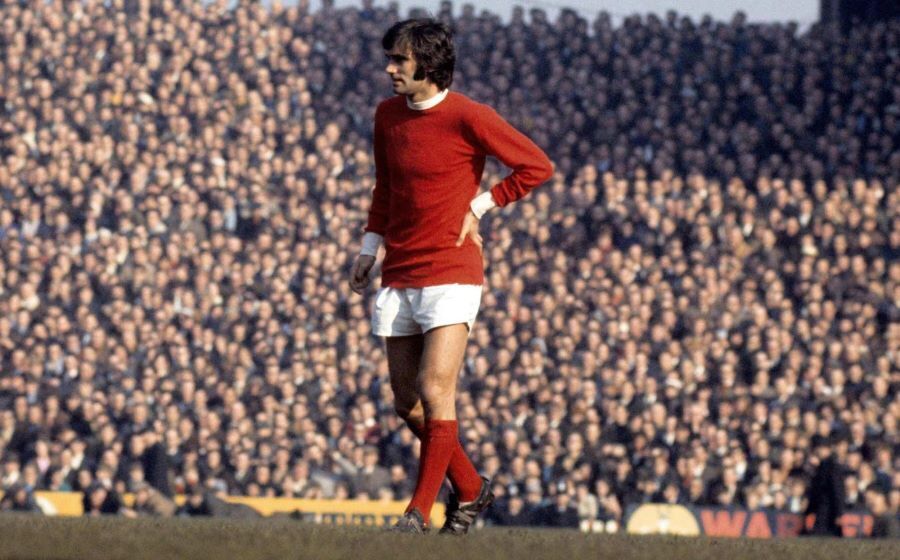

I reckon that must be close to one book for every one of those 50 years which may be why, in doffing a cap to the incomparable Georgie this week, I found myself happier to wallow in pictures rather than print.
Also marking that half-century anniversary, The Best Of Best — The Lost Images Of A Football Genius is in the magazine racks now and will, I promise, take your breath away. Of course, it helps if, like me, you were football-aware for at least some of the period covered, from that first appearance in ’63 through to the end of the decade. For here are colour and black and white images of huge evocative power: Best turning Bobby Moore inside out; exchanging a wary glance with ‘Chopper’ Harris; being hugged to within an inch of his life by Denis Law after scoring against Burnley at an impossibly packed Turf Moor; and, of course, drifting around the Benfica keeper under the Wembley lights to help Matt Busby realise his dream as United were crowned champions of Europe in 1968.
The off-the-field stuff is stunning too: Best, looking every inch the swinging 60s pop star, arriving back at Belfast Airport for a Northern Ireland international; playing football on a car-less street with a couple of kids in 1966; in dressing gown and slippers in his digs holding the toddler grandson of England’s most famous landlady, Mrs Fullaway; and, of course, posing in boutiques and clubs with a series of beautiful women back when his world was young and his life was still as bubbly as the champagne in his hand.
The magazine might be titled ‘The Best Of The Best’ but it could just as easily have been called ‘Remember Him This Way’ — either way, it makes a virtue of ending before the bubbles went flat and first his career, and then his very life, began that long, harrowing decline into terminal alcoholism.
Which brings us, with a grim inevitability, to Being Paul Gascoigne, ITV’s intimate documentary about the post-football life of another of the game’s fallen idols. In truth, Gazza was never in the same league as Bestie — not a harsh verdict by the way, since only a tiny handful in the whole history of the game ever were — but, for a period culminating in his 1996 European Championship tour de force, he was arguably the most potent football talent England had produced since Best’s United team-mate Bobby Charlton was in his prime.
But this documentary was not about ‘being Gazza’; it was, instead, about being a 46-year-old alcoholic who is baffled by how he got from there to here, from a boy with the world at his feet to — as captured in some particularly distressing mobile phone footage — a bloated, haggard figure on a stage who, even with two hands gripping the microphone, can’t subdue violent shakes as he slurs his way incomprehensibly through a public appearance.
Jane Preston’s documentary, shot over three months, began on a more hopeful note. That humiliating public scene was behind him, as was his brush with death while in rehab in the States. Now, he was living in a rented penthouse in Bournemouth, spending plenty of time with his counsellor, sharing his experiences at AA meetings and rebuilding his relationship with his ex-wife Sheryl and their son Regan and daughter Bianca.
Despite the reservations, one always has about the circumstances under which public figures invite the cameras into their private lives, there were some genuinely touching moments, not least when he suddenly burst into tears after Sheryl and the kids surprised him on his birthday by bringing him to the races at Windsor.
Yet, even as he extended his period of sobriety to over 100 days, there were always the tell-tale signs of an addictive character who was still far from comfortable in his own skin, like the press in his kitchen packed with bags of sweets to satisfy his sugar craving and the regime of botox injections and anti-aging creams with which he attempted to reverse the visible ravages of his alcoholism. Still, it was clearly better than resorting to the bottle. As he said of the jabs: “They cost £1,000 which is nowt really, ‘cos I could spend that in one day on drink. Half a day, really.” Said with a straight face, as it were.
And then, without warning, came the crash. After 114 days sober, he picked up that first drink again, the ensuing binge ending with his arrest on a charge of assaulting first a security guard and then his ex-wife. CCTV cameras caught him guzzling gin from a bottle in a shop in London, after which he collapsed in the street and was rushed to hospital.
Five days later he was filmed in conversation with Sheryl and the children, yet again attempting to rebuild all that he nearly destroyed. Daughter Bianca offered the most penetrating insight: “Everyone wants to save him but he can only save himself.” But a despairing Gascoigne didn’t really sound like he had the heart, the energy or the self-belief.
The film ended on an affecting note, Gascoigne reading out a child-like poem he’d written about his hopes and fears, the final image a freeze-frame as he lifted his head and offered a lovely boyish smile. It left you hoping for the best but haunted by the thought that Paul Gascoigne could, finally, belong in the same league as George Best.