Just reward for year’s shining lights
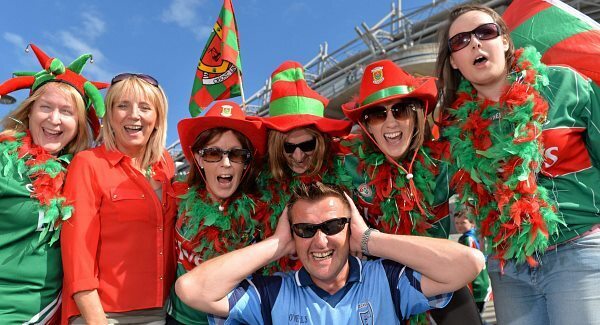
Prospective analysis welcomed the promise of a highly entertaining, combative shoot-out between the two best teams in the country and the opportunity to witness a fitting climax to a superb year for Gaelic Games.
On one side, a Dublin team moulded to play apparently an all-out attacking style with ample disregard for how much the opposition scores ‘as we will score more’. On the opposing side a Mayo team whose strength of character has never been as strong, as witnessed by their semi-final win over Tyrone.
Retrospectively, what were we all thinking? All-Ireland finals are about winning and the idiom is ‘any which way but loose’. The game, through my eyes, was anything but a spectacle, encumbered by repeated technical errors, irrational decision-making resulting from blind panic and narrow vision, tactical ineptitude from players and possibly management and finally off-the-ball fouling which went unpunished for the entire match.
Entering these big occasions the expectation is that five players will be exceptional, five will be their usual self and five will be below par. The team that lifts the trophy usually alters this statistic in its favour.
Mayo had exceptional performances in Lee Keegan and Keith Higgins. While Tom Cunniffe (during his stint on Eoghan O’Gara), Donal Vaughan, Aidan O’Shea, Alan Dillon and Alan Freeman performed below expectations.
A scan though the starting 15 for Dublin suggests two were exceptional, Stephen Cluxton and Cian O’Sullivan. Those below par included Jonny Cooper, Jack McCaffrey, MD MacAuley, Ciaran Kilkenny, Diarmuid Connolly, Paul Mannion and Paddy Andrews. This is irrational. How can so few be so good and so many so bad, and here is the crux, they still won!
This is the part that I’m finding difficult to explain.
Dublin and Mayo largely cancelled each other out. Paul Flynn marked Donal Vaughan or as I viewed it he dragged him down at every opportunity during the first 20 minutes to ensure Vaughan couldn’t get himself into the match.
Strangely only Donal Vaughan seemed to bring this to the attention of the referee, Joe McQuillan. Likewise Mayo’s Lee Keegan with Dublin’s Diarmuid Connolly, Keegan the antagonist in this duel.
Already we have four of the valued pay-per-view stars reduced to a side show. Rule 1 under the Rules of Control in the GAA official guide states that “Control of the game shall be entrusted to a referee, four umpires and two linesmen who shall decide on the field all matters affecting play”.
Under what interpretation of these rules did they believe that this deliberate fouling didn’t affect play?
Then there was the young Dublin stars of Jack McCaffrey (substituted), Ciaran Kilkenny (substituted) and Paul Mannion (injured) who failed to get into their stride at any stage. There is no shame in this, for there is nothing like our national anthem on All-Ireland final day to weaken the legs of even the strongest man.
Furthermore this combative duel was without a clear strategy, a system of play whereby the All-Ireland virgins would find some solace, a comfort blanket if you like which would enable them to find a rhythm and work their way into the game though patterns or stage plays.
This game was full of raw energy, work-rate, power and pace but it lacked consistency in application of skills and brilliance in flair as demonstrated by many in the semi-finals. The distribution into the Mayo full-forward line was to the corners, then sky-high and finally in low where a Dublin sweeper brushed it up. It was certainly variable but unpredictable to even the Mayo forwards themselves.
The withdrawal of Alan Freeman, which seemed a correct decision at the time, robbed Mayo of any height and strength to the inside line. Michael Conroy who replaced him was later joined by Enda Varley, who replaced Andy Moran.
The problem for James Horan is that this is the same full-forward line (when you include Cillian O’Connor) as started last year’s final against Donegal. The same full-forward line that was unable to win their own possession, take on the opposing player, use it wisely or score. The same line that James Horan refused to play all year as he presumably expected the same response.
When something magical was needed today in the last 10 minutes, neither Varley nor Conroy was able to conjure it. Horan’s new refreshing full-forward line of O’Connor, Freeman and Moran had been obliterated and as Mayo were pressing hard and hoping for a break, the ghosts of 2012 were there to haunt them again.
Maybe there was merit in placing Aidan O’Shea in full-forward when Barry Moran was introduced. Or maybe Richie Feeney could have added some shape to the half-forward line when the excellent Keith Higgins was moved to full-back to mark O’Gara. This introspective phase is something Horan will already have been through. The pain of so many questions which cannot be answered. Regrets.
When things settle down for Jim Gavin he will also ask himself some questions. How did a visibly injured Eoghan O’Gara remain on the field so long when he still had one remaining sub to use? Likewise Rory O’Carroll who appeared concussed. These decisions could have been costly.
So how did Dublin win? Clinical conversion of opportunity. In a nutshell, Bernard Brogan’s ability to score 2-3 from a limited supply.
Mayo may have reasons including missed opportunities, questionable refereeing and injury-hampered preparations for their inability to succeed but the real answer lies within: they simply didn’t perform when it mattered.
Dublin are worthy champions. They have been the shining light for the GAA all year and their application to the more attack-minded approach has been refreshing. Congratulations to Jim Gavin, his backroom team and all the Dublin players. This has been a most enjoyable year.