Ripple effect of a 5pm throw-in
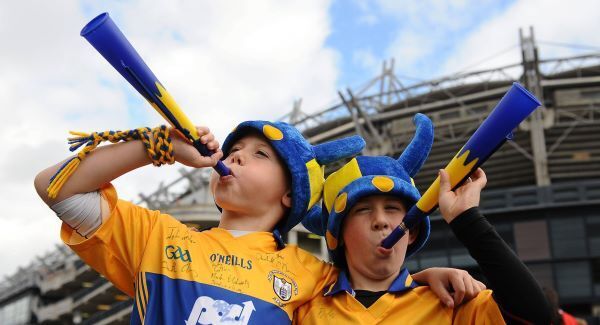
That shouldn’t be overstated, of course. Someone coming from Bantry or Miltown Malbay to support their county on Saturday week faces a pretty unpleasant trip home in the pitch dark, no matter what time Cork-Clare (Mark VI, is it?) finishes. A game that throws in at 5pm doesn’t finish until the guts of 7pm; if you parked out by the Red Cow you’re talking about the bones of 8pm before you sit back in and point the motor south.
Then there’s the potential sight of an All-Ireland final being played under floodlights, at least in part.
Expect a bit more chat about that in the next 11 days or so, as one team — to put it mildly — has a good deal more expertise under artificial light than the other.
Something nobody seems to have touched on is the economic knock-on effect.
Allow me...
In TV circles, Saturday afternoon is a bit of a write-off.
It’s a working day, and a shopping day, which means the available audience is a good deal smaller than what’s available on a Sunday afternoon. Or a Wednesday evening, if you follow the Champions League.
As a result, having the All-Ireland final played when people are finishing a day’s slog, or searching for just the right accessory in an out-of-town shopping centre, means a potential blow to ratings.
Bad news for broadcasters? Yes. Bad news for the GAA? Yes again. If viewing figures wobble for big games, that affects the GAA’s negotiating position when it comes to hammering out broadcasting agreements.
(Having said that, you can probably find people stalking the corridors of RTÉ and kicking waste-paper baskets that the GAA didn’t go the whole hog and schedule the game for 7 pm altogether; that would put Jimmy Barry-Murphy and Davy Fitzgerald in direct conflict with Simon Cowell and the X Factor, which is the kind of competition everyone would welcome.)
The scheduling doesn’t do anybody any favours either when it comes to sponsors, either: having your blue-chip event held at an inconvenient, if not off-putting time for spectators and broadcast at an unexciting time in the schedules, isn’t what big companies have in mind when they sign on the dotted line either. Lessons there to be learned for a lot of people, methinks.
Right after the drawn All-Ireland, there was a focus on the refereeing of Brian Gavin.
The Cork supporters weren’t happy he played 30 seconds over the two minutes signalled by the fourth official.
The Clare supporters weren’t happy he left Shane O’Neill on the field of play after getting involved with Darach Honan.
On the first count, people seem to have forgotten that the apparently pro forma announcement of the additional time covers the extras: the wording is always along the lines of “at least” two, or three, or four extra minutes being played.
On the second count, people seem to have forgotten that Gavin dealt with O’Neill — and Honan — immediately after the incident, issuing both with a yellow card.
Something he didn’t deal with was how Anthony Nash was confronted by opponents as he came up field to take 21-metre frees.
During the week Cork selector Ger Cunningham suggested Clare had a prearranged plan to jostle Nash and to put him off his stride as he approached the far end of the field, but jostling seems a little euphemistic for what went on at Croke Park.
You could exonerate Gavin on the most obvious grounds: if the referee is on one 21-metre line and something is happening on the other 21-metre line, he can’t be expected to pick out what exactly is going on.
But at the same time it leaves a bad taste when a player is being confronted by opponents as he goes to take a free. If it happened anywhere else on the field, punishment would be swift and appropriate; that this was allowed to go on during the biggest game of the year is even more disappointing, because if it can happen under the watchful eyes of the officials in Croke Park, what pitch is exempt from it?
Cunningham referred to Stephen Cluxton, Dublin’s accurate football goalkeeper, and the fact that he can make his way unmolested from his own goal to hit 45s and frees in the opposition half.
It was a very relevant comparison: after all, it’d be interesting to see the reaction if Cluxton were treated the same way Nash was next weekend when he comes up the field against Mayo.
It’s a commonplace that hurling people feel their game’s rules don’t need as tight a rein as football’s. Here’s proof of the opposite.
The decision of English and French rugby clubs to go it alone, or without the Heineken Cup at any rate, in setting up their own league has attracted just the spectrum of reaction you might imagine: dismay, disappointment and acceptance. Not quite the seven stages of grief, but certainly a process recognisable as coming to terms with reality.
Still, you can’t avoid an unpleasant feeling about the whole thing.
For instance, if it were French and English clubs dominating the competition the way Irish teams have in recent years, would there be quite the hunger for reform?
It’s easy for the French and English sectors to point out the causality between the Irish side’s success and their safety from relegation and so on, but any reasonable person would point to the relative financial strength of a Toulouse, say, in comparison with an Irish province and acknowledge that that goes some way towards levelling the playing field.
Finally, Philip Browne of the IRFU made a very valid point when he asked what the IRB was up to in all of this, and why they weren’t all over this issue. That’s a good question. The professional club tournament acknowledged as the market leader for its sport is about to fall apart but the sport’s governing body is doing... nothing? What’s wrong with that picture?
This columnist almost missed the throw-in for yesterday’s Cork SFC double-header — the lovingly crafted match reports are elsewhere in this publication — due to a vast gathering of women blocking his way, not to mention some dubious ladies who would have challenged the most liberal IOC gender-testers at the joke-shops known every four years as the Olympic Games.
You think of sport in elite terms, of course, with the usual buzz words — technique and aggression, attitude and preparation.
The ladies participating in yesterday’s Evening Echo Women’s Mini Marathon weren’t in the elite category for the most part, it’s fair to say.
Well, not in the traditional sense. But in terms of community spirit, charity fundraising and a sense of togetherness, what did they contribute to the area?
A good deal more than that offered by many supposedly elite sports people. The sense of camaraderie was palpable around the Monahan Road and its environs yesterday. Cross-dressers included.