ENDA MCEVOY: We can’t turn back the hurling clock
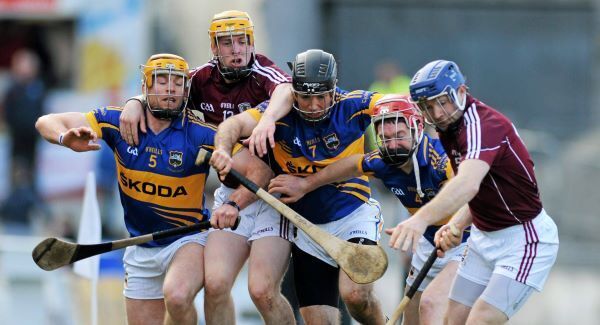
Eamonn Cregan recently expressed concern with the growth of “hurling scrums”, claiming that players are determined to get the ball into their hand instead of pulling first-time. Is this true? Is ground hurling gone forever? Or is today’s game much more precise and controlled than the game of old?

ENDA MCEVOY: We can’t turn back the hurling clock

Let us take as our starting point one of the most spectacularly trite observations made on the 2012 hurling championship, or indeed on any hurling championship.

“Hurling,” declaimed a Down footballer on Twitter during the Kilkenny/Galway replay last September, “is a game of hit and hope?”


A game of hit and hope? A sport where you simply get the ball and lamp it down the field as fast, as hard and as far as you can? It may have been the case half a century ago; it hasn’t been the case for a long time now. Regardless of what outsiders may choose to believe, hurling has never less been a game of hit and hope. To what extent this is a blessing — well, that’s a different matter.

Think of mid-’00s Cork and their possession game. Think of Davy Fitz’s teams with their short passing and quick offloading. Think of Galway last year with their deployment of Damien Hayes as an auxiliary midfielder and their automatic systems reboot on building up a lead, packing their half of the pitch with bodies.

Now contemplate the following sequence of play from the All-Ireland quarter-final meeting of Cork and Waterford at Semple Stadium last July (Warning: readers of a nervous disposition should look away now). A Cork attack towards the Killinan End is halted when Brick Walsh intercepts a delivery in the centre of his defence about 30 metres out. He handpasses it forward to Philip Mahony, who comes back in the direction of his own uprights in order to assist. Mahony turns, runs sideways a few metres and offloads it to Stephen Molumphy on the right wing of the defence. Molumphy directs a low ball up the Old Stand touchline to Maurice Shanahan, who takes up a position on the extreme right of midfield. Shanahan rounds his man, cuts infield, gets swallowed up in traffic and retreats. Philip Mahony, having run 30 metres up the field, pops up to help but can’t retain possession. The sequence ends with Brick Walsh, the man who started it all, putting the sliotar out for a lineball to Cork.

Would that Field Marshal Haig had been alive to see it. He made more ground on the Somme for less attrition.

Look no further for evidence for Eamonn Cregan’s recent lament for the demise of ground hurling and his harsh words for ’scrums’ and ‘mullocking’, or for the basis for Donal Óg Cusack’s contention that the next big development in hurling will be “the quick ball into space”. Anything to prise open the tin and bypass those posses of players standing over the sliotar, rooting for it like pigs hunting truffles.

Yet even if the modern forward, being by definition capable of winning his own ball, shouldn’t mind how imperfectly it’s served up to him, can the clock be turned back at this stage? Almost certainly not. Here’s Tom Kenny on his midfield understanding with Jerry O’Connor for Cork in 2004-’05. “Our game was all about possession, about holding onto the ball and not hitting it away.”

Holding onto the ball and not hitting it away: an utterly different universe to Ye Olde Midfielde Worlde of first-time hurling and overhead pulling, where the object was to hit it away.

What it did for ground hurling was that it necessarily entailed loss of possession in an age where control of the sliotar became everything. Get the ball into your hand, look up and pick your pass. This was a battle of ideologies, and Cregan and the old timers have been stranded on the wrong side of progress.

Not that one side was wholly wrong and the other side wholly right. Were Donie Nealon a corner-forward these days he’d go mad, the Tipp star of the 1960s says. “So much picking and passing out the field. When are they going to hit it into me? These days you have to stop and rise the ball. You have to get possession. You have to solo. You have to handpass. The upshot is that the ball is moving a lot slower than it used to.”

The Semple Stadium sequence mentioned earlier indicates the degree to which the old positional requirements have been abandoned. Centre-backs who lay off the sliotar rather than hit raking clearances. Midfielders who are as likely to materialise in their own half-back and half-forward lines (the opening goal in the 2011 All-Ireland final was scored by a midfielder steaming through from deep). Short passes, whether by hand or by stick, carefully sculpted to a colleague instead of long balls that lead to 50-50 contests for possession.

Remember the flourish of trumpets with which Brian Corcoran took the inter-county stage, beating Pat Fox in the run to an incoming delivery in the 1992 Munster semi-final and flaking on the sliotar first time to send it flying down the field? That was it; nothing more complicated. Today Corcoran would be obliged to lift the ball, get it into his hand, solo for as long as it took him to be sure Fox couldn’t hook him, then deliver it via a handpass or a flipped pass off the stick to a midfielder who’d drifted back to create an option for the man in possession.

And another thing. In the inter-county game of the second decade of the 21st century, a defender must be fast enough to get hold of the ball in the first place. Quick hands but slow legs is a combination that spells doom.

Liam Sheedy and Anthony Daly both lined out at wing-back in the 1997 All-Ireland final. Sheedy reckons he wouldn’t make the current Tipperary team on the grounds of his lack of pace. Daly is adamant he wouldn’t make the current Clare team in his original position of corner-back, whatever about at wing-back.

Athleticism is everything in so many ways, Daly argues: “I wouldn’t survive at number two or number four any more. Back then the joke would always be that you’d put in a slow lad in at corner-back and he’d be okay. And he would. Nowadays your corner-backs are faster than your wing-backs. They nearly have to be quicker than the two corner-forwards, whereas a slow wing-back will survive if he’s a covering player.”

The body shape of the elite hurler has evolved concomitantly. The Kilkenny team that won the 1957 All-Ireland had one six-footer. The Kilkenny team that won the 2011 All-Ireland had ten of them, of whom one man was 6’4, another 6’3 and three were 6’2. The Olympic arena is not the only place where the phrase Citius altius fortius applies. And players built like Robocop are not going to pull first time when they can go through their marker for a shortcut and recycle possession.

The modern hurler doesn’t have to be huge but he can’t be small. He needn’t be Usain Bolt but he mustn’t be a tortoise. He may not be barrel-shaped but he has to be able to break the tackle — one area in which hurling has come to ape rugby, previously among the least apparently similar of sports. Cork won the All-Ireland in 1999 with the pixie-sized pair of Seánie McGrath and Joe Deane — swift of brain, sleighty of wrist — in their forward line. We’re not going to see a repeat of that any time soon. More’s the pity.

To suggest hurlers are being supplanted by athletes may be overdoing it nonetheless. To Anthony Daly there isn’t a minimum height requirement for inter-county hopefuls. A player with strength, timing and rhythm in his wrists will, he asserts, always get by. In Daly’s eyes the primary contemporary essential is speed, or at any rate the ability to get around the field.

If you’re lacking a bit of wrist work, you definitely need to compensate in other ways. That may be by being a big lad who can win high balls, or being a wing-forward who can get up and down and cover. Look at Galway last year. They had four guys going back defensively, then breaking at speed. Will Cork, the county that eventually came to terms with the possession game of Kenny and O’Connor, not to mention Donal Óg’s short puckouts, ever again produce someone to score a goal like John Fenton’s 50-metre ground exocet against Limerick in 1987? Ger Cunningham, the county’s netminder that afternoon, doubts it.

“Evolution will always happen. People want to get the ball into their hands. And that has implications at underage level, because coaches are influenced by what they see at inter-county level. If they don’t see ground hurling being used by county teams, they won’t coach it to young players.” Done properly, Cunningham adds, ground hurling is not to be sniffed at. If you want to vary your game, especially if you’re a forward, it serves a purpose. To be able to hit the ball on the ground or in the air instead of picking it and running the whole time. It asks different questions of defenders. Cregan would agree.

A game of hit and hope? It’s been a long time since hurling was that. And getting longer.

More in this section

Sport

Newsletter

Latest news from the world of sport, along with the best in opinion from our outstanding team of sports writers. and reporters

Cookie Policy Privacy Policy Brand Safety FAQ Help Contact Us Terms and Conditions

© Examiner Echo Group Limited