How little entertainer takes his task deadly seriously
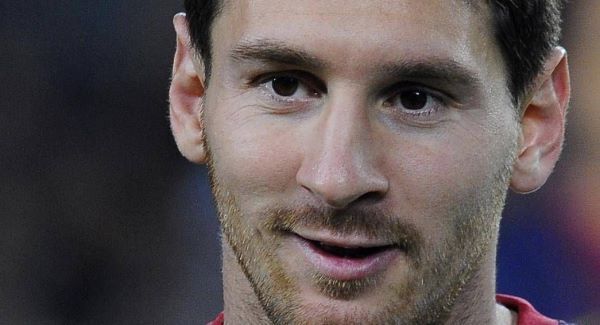
Lionel Messi has gone home to Argentina to fry in the Christmas sunshine with his partner Antonella, infant son Thiago and all the other Messis.

How little entertainer takes his task deadly seriously

Reflecting on his record-breaking year before he left, he told El Mundo Deportivo: ā€œI’m happy about the goals I’ve scored and the records I’ve broken, but this year could have been better in terms of silverware. I’ve always said that if the team isn’t winning things my goals are meaningless.ā€

Such sentiments are consistent with all of Messi’s boring public pronouncements. He always emphasises his awareness that the team is more important than the individual, and claims indifference to personal dramas as the goalscoring rivalry with Cristiano Ronaldo, which he dismisses as a media confection.


Ronaldo is more straightforwardly emotional and we saw what the Messi rivalry meant to him in the summer in Ukraine, after Danish supporters wound him up by chanting ā€œMessi, Messi, Messiā€.

ā€œDo you know where Messi was this time last year?ā€ Ronaldo demanded of reporters in the mixed zone. ā€œDo you know or don’t you? He was getting knocked out of the Copa America in his own country. I think that’s worse, don’t you?ā€

Guillem Balague’s recent biography of Pep Guardiola, A Different Way of Winning, suggests that while Messi may be too subtle to let slip how much the contest really means to him, he is every bit as focused on the individual battle as Ronaldo is.

In May 2011, Messi was named as a sub for Barcelona’s match at home to Deportivo. Guardiola’s thinking was that since the title was already won, he wanted to keep his best player fresh for the upcoming Champions League final against Manchester United.

That night, Ronaldo scored twice for Real Madrid against Villarreal, taking him decisively clear of Messi in the race for the Pichichi top scorer award. Messi was so annoyed that he initially wanted to go home, taking no part in the title celebrations. Barca’s physio Juanjo Brau eventually coaxed him out to pose for photos with the silverware his goals had helped to win. Footage from the night shows Messi standing in his tracksuit with the top zipped up to his nose, the only Barcelona player who hasn’t changed into his playing kit for the trophy presentation.

Under Guardiola, Messi’s progress described a scarcely believable upward arc. He scored 16 goals the season before Guardiola took over, 38 in the manager’s first season, 47 in 2009-10, 53 in 2010-11, and 73 in Guardiola’s final campaign, a record for a European-based player.

One thing is clear: Messi will not miss out on any more Pichichi awards because he was sitting on the bench. Balague describes how in September 2011, Messi was named as substitute for a game against Real Sociedad because he’d recently returned from international duty and Guardiola figured he needed the rest. Messi was so angry that he barely tried a leg after coming on, then didn’t turn up for training the next day. From that moment on, he played every minute of every game.

It is also a fact that no other striker has really prospered at Barcelona since Messi embarked on the superhero period that has so far lasted four years. A series of world-class forwards — Eto’o, Ibrahimovic, Villa, Alexis — have had to either learn to serve Messi or leave.

The one who kicked and screamed the most about it was Ibrahimovic, who wrote in his autobiography that Messi effectively pushed him out of the club by demanding to be played in the middle, forcing Zlatan to the periphery.

Balague provides the following arresting account of a conversation between Guardiola and Messi: ā€œWhen Ibra received the plaudits after his first few months at the club, Messi spoke with Pep and said either he played as a number nine or he didn’t play at all. ā€˜And what am I supposed to do with Ibrahimovic?’ said Pep. Messi was adamant. ā€˜I play here, or I don’t play at all. Stick the others out on the wing.ā€™ā€

You don’t score 91 goals in a calendar year without certain self-assurance. Still, it was difficult to imagine a player addressing Alex Ferguson in those terms. Guardiola seems to have handled Messi’s growing assertiveness by giving in to him at every turn, reasoning his responsibility to the player’s genius superseded everything. Balague wonders whether the growing imbalance of power with Messi may have been a factor in Guardiola deciding to quit when he did.

Whatever the rights and wrongs of that theory, Messi’s goals have helped to make Guardiola the world’s most sought-after coach. While nobody can doubt that he did an exceptional job at Barcelona, persuading some of the world’s most talented players to work harder than any other team and winning 14 out of the 19 trophies he competed for, it must also be noted that he had at his disposal some exceptionally intelligent and reliable footballers.

Few managers are lucky enough to have players like that, and obviously no other team has a Messi scoring more than a goal a game. In the foreword to the book, Alex Ferguson writes that ā€œ[Pep] was at a fantastic club in Barcelona and it is not going to get any better for him wherever he goes.ā€ Not for the first time, Ferguson’s not wrong.

More in this section

Sport

Newsletter

Latest news from the world of sport, along with the best in opinion from our outstanding team of sports writers. and reporters

Cookie Policy Privacy Policy Brand Safety FAQ Help Contact Us Terms and Conditions

Ā© Examiner Echo Group Limited