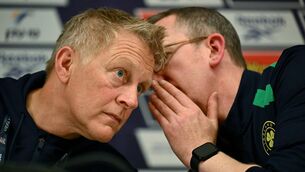
Sobering times for Johnson and McGeechan
Declan Kidney’s first three games in the job have been haunted by the prospect of finishing outside the top eight seeding position for the world cup draw which takes place next Monday. The resultant pressure had a definite impact on the performance of the team. In the end, it doesn’t guarantee a whole lot except to ensure that there will not be two teams in our pool ranked higher than us at present.
With Argentina still clinging on to fourth spot despite defeat in Croke Park, and looking likely to stay there after next weekend’s games (England v New Zealand and Wales v Australia), there remains a 25% possibility that Ireland could be in their group. Despite the furore that would accompany such an outcome — especially with the level of animosity that still clearly exists between the sides — in my opinion it would represent a better prospect than drawing one of the other tier one seeds New Zealand, Australia or South Africa.
There is also the possibility of drawing the host country, in this case New Zealand, for the third successive tournament after sharing a pool with Australia and France in the last two competitions. The benefit of finishing eighth could also be reversed if Scotland were drawn from the group of third tier countries. The other sides in that third tier at present — Fiji, Italy and Samoa — would also provide a very strong challenge. Remember the Fijians blew Wales out of the tournament last year in Nantes.
At least by the next time Ireland see competitive action against France in February, both the team and management will be able to concentrate on the immediate task at hand without any reference to events that will take place two-and-a-half years down the track. With the exception of Wales, who played very well for long periods against both South Africa and New Zealand, none of the Six Nations sides have produced a performance of sustained quality.
Scotland did recover from a very poor performance against a largely second-string All Black side to give the Springboks a serious run for their money. Italy have lost all three of their games against Australia, Argentina and the Pacific Islands (who won a test for the first time) while France, despite two wins, have failed to impress. Marc Lievremont’s selection policy is even more bizarre that his predecessor Bernard Laporte as a host of proven internationals continue to remain outside his squads. One hopes he continues with that policy for their opening game in Dublin.
The biggest losers of all this autumn so far are England. Over the last week it has been impossible not to note the ironies sport can throw up — compare the fortunes of Martin Johnson with that of the young unheralded rugby careers of James Coughlan, Timmy Ryan, Niall Ronan and Billy Holland. That quartet have just experienced a night that will stay with them for the rest of their lives and be a defining moment in their careers, regardless of what they go on to achieve from here.
Johnson, a giant of a man in every respect, has, in just his third game at the helm, presided over an English side who succumbed to the biggest defeat in Twickenham in their proud history. For someone so familiar with life at the other end of the international spectrum, that defeat must have been hard to take. Johnson is in a very difficult place. There are those who by virtue of his unprecedented level of achievement as national captain expected that his mere presence would rejuvenate this English team. He doesn’t have a magic wand and is already under pressure.
International sport can be an unforgiving place. Johnson, who I greatly admire as a person and a leader of men, is about to find that out. Even success offers no guarantees. Look at Jake White. This time last year he was on top of the world having delivered the William Webb Ellis Cup. His reward was an invitation to reapply for his job without any guarantees, an offer he declined. He is still actively seeking a role in rugby and even offered his services to the Lions on a consultancy basis for next summer’s tour which, to date, has not been taken up.
Johnson now faces one of the toughest few days of his rugby life in attempting to pick his side up off the floor against a New Zealand team chasing a Grand Slam. It doesn’t come any tougher than that.
The other coach to leave Twickenham with the prospect of a few sleepless nights after last Saturday’s performance was Ian McGeechan. With eight of his Wasps side in the starting England lineup, their confidence will hardly have benefited from the experience. Come to think of it, it seems crazy that a side who have only won a single game in the Guinness premiership could warrant so many players.
Danny Cipriani’s fledgling international career is being filleted by an over-expectant press and you wonder what effect it will have on him. He has already been demoted to the bench for Saturday’s clash.
In addition, McGeechan witnessed a clinical performance both in attack and defence by a South African team that many, myself included, felt was on the wane. After less than impressive performances against Wales and Scotland, the Springboks looked beatable. Yet they contrived to deliver the consummate performance on the last game of their season that will give McGeechan and his management team plenty to think about.
Every now and then they produce a performance characterised by pace, brutal physicality and manic defence that underlines their greatness. On Saturday they left a message for the Lions and McGeechan in particular: Be prepared, we will be ready and waiting.