Kieran Shannon: Patience in the process pays off with Stephen Kenny and Andy Farrell
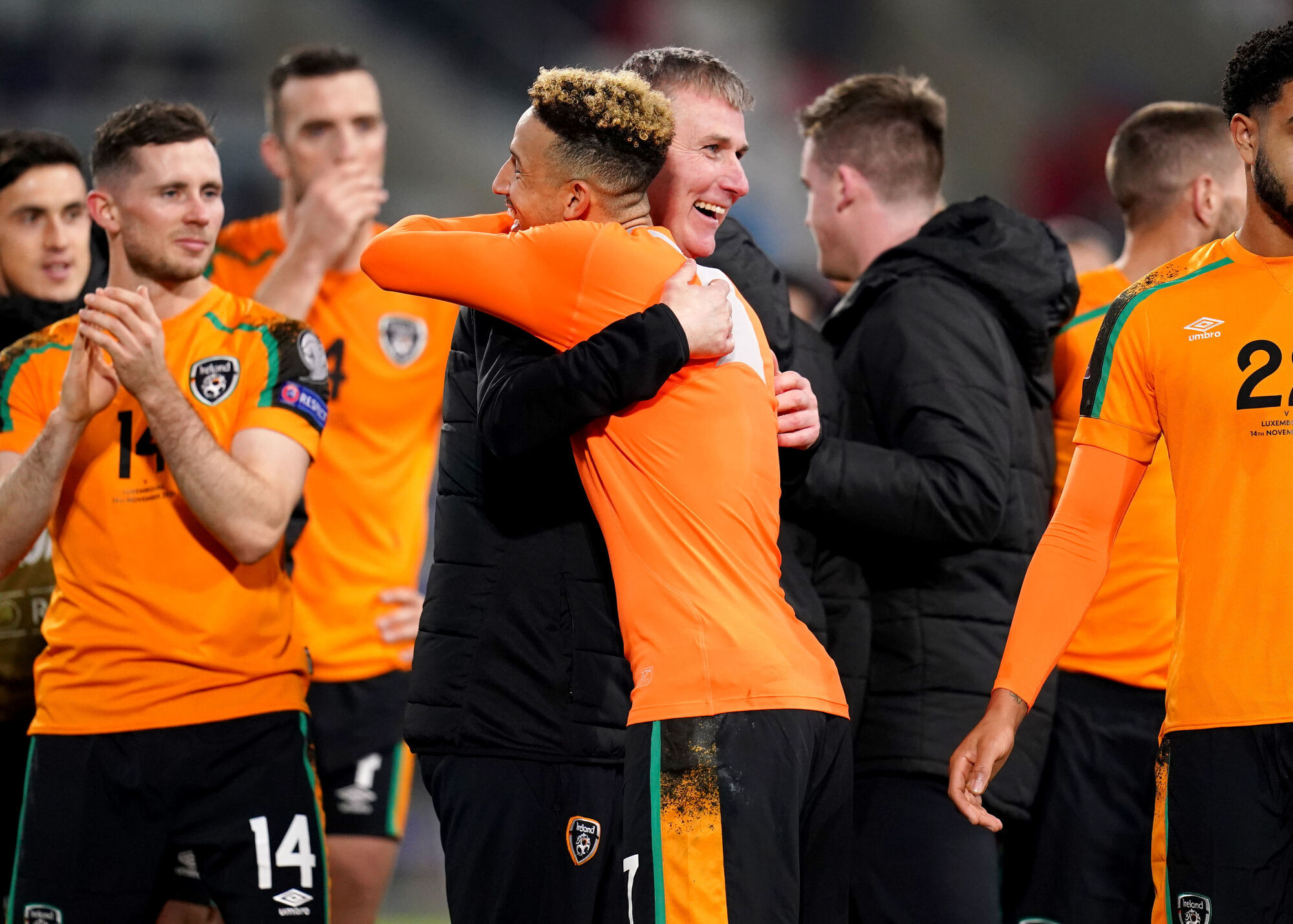
Ireland manager Stephen Kenny hugs Callum Robinson after Sunday’s 3-0 win over Luxembourg. ‘Kenny had the courage to deviate from the tyranny of the normal,’ writes our columnist. Picture: John Walton/PA

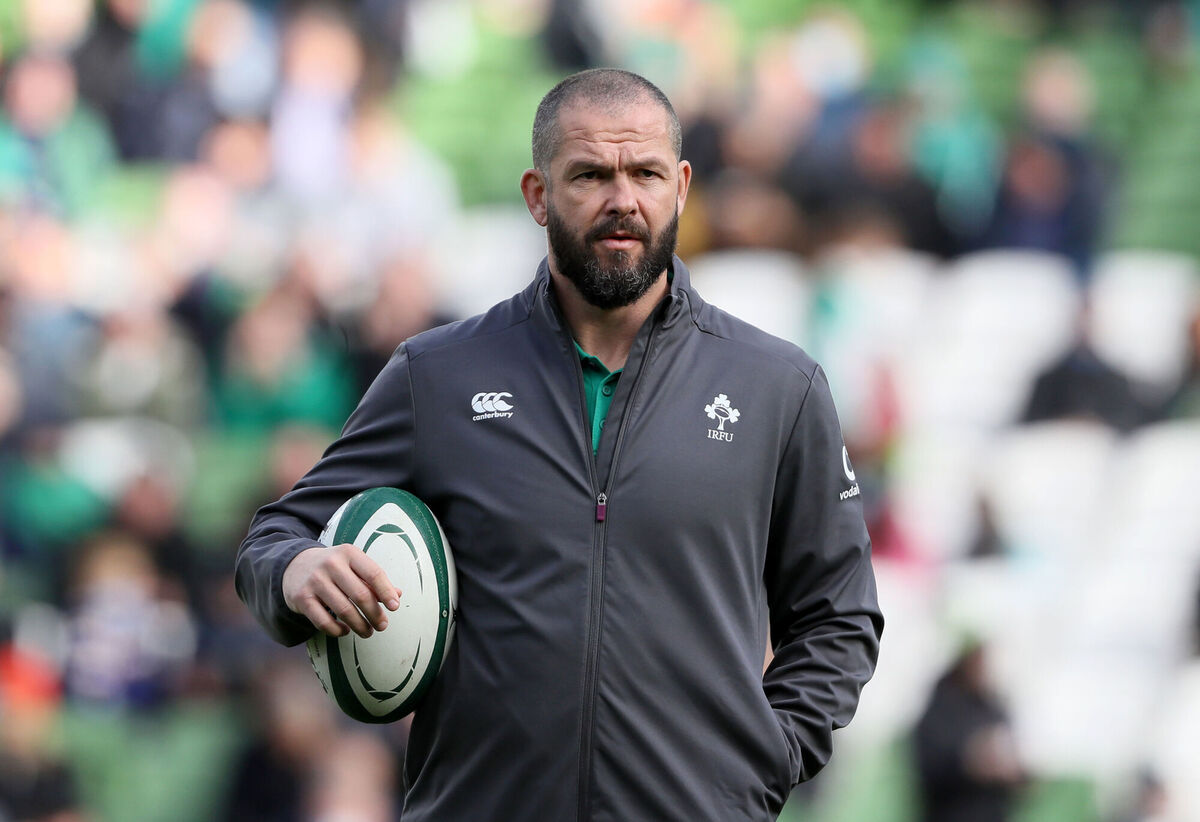
So at least that’s settled then. After the results and not just the performances of the last 10 days that finishes any chat or conjecture about whether Andy Farrell is or isn’t the man to lead Ireland into the 2023 Rugby World and if Stephen Kenny should be over the other boys in green — or orange — for not just the Nations League but the Euro 2024 qualifiers. They’ve each earned at least that much time.
It’s worth remembering though that not that long ago there were calls for them to not even be given the time to win the right to that extended time.
Kenny obviously doesn’t hold any grudge against Paul McGrath as evident by him name-checking God himself in his strong retort to Luxembourg manager Luc Holtz’s “denigrating” comments about Ireland’s “British-style” of play, but after the countries met in the Aviva back in March, McGrath deemed the result so “unacceptable” that he recommended Kenny should be sacked and replaced by a hardened hack of the British pro game like Neil Lennon.
Even as recently as September when Ireland were still only halfway through this qualification campaign there were reports that if Ireland didn’t beat Serbia at home, FAI chiefs were ready to cut their losses by cutting Kenny.
Farrell had it a bit easier in that there was never a question whether he should be allowed to finish the 2021 Six Nations campaign but after Ireland lost their first two games in it there were plenty doubting he should be retained after it.
Such discourse, of course, is often the way of the world. We keep being told, especially by veteran pundits who pride themselves on their pragmatism, how elite sport is a “results business”.
But in a way, those supposed pragmatists are the dreamers. In the real world, especially in high-performance sport, it’s a lot less straightforward and more complex than that.
The Irish rugby team barely lost those two opening games of the Six Nations. If Billy Burns had kicked that last-minute penalty into the corner they might have won in Cardiff, a game where they were down to 14 men for most of it on account of an ill-judged tackle by Peter O’Mahony. Against France they rallied from 12 points down to lose just by two. There were clearly things still to work on but obviously — at least to those inside the camp — there were things like Paul O’Connell’s coaching on the lineout that had been already worked on and done well.
Kenny likewise couldn’t get a win, even though in general, outside of a couple of games like the loss to Luxembourg, the performance levels had been at least decent. It wasn’t like when they were on that winless run of games that they were suffering defeats like Norwich have this season.
All these games into the Kenny era and only once has side been beaten by more than a goal — a 3-0 loss to England in a friendly.
Of course Kenny made mistakes, like leaving at least one veteran too many on the bench at home against Luxembourg; fine if you feel Shane Duffy is too out-of-sorts up in Glasgow to throw into international football, but recognise the experience deficit that leaves. But it was merely a hard lesson, hardly a sackable offence.
And the thing is Kenny did learn from it. He recalled — and has rejuvenated — a Jeff Hendrick. He’s blooded or recalled and above all improved virtually every player currently in his squad, something very few Irish managers, at least in football, can claim.
The reality is that after the disappointing end to the Schmidt era and the way the second coming of Mick McCarthy anaemically played out, our two biggest flagship teams needed regeneration, reinvention. And unfortunately part of the regenerating and rebuilding process involves — even requires — temporary regression. Sometimes you’ve to pick the wrong team to learn it’s the wrong team, try out what proves to be the wrong formation to learn for sure it’s the wrong formation and what’s the right one.
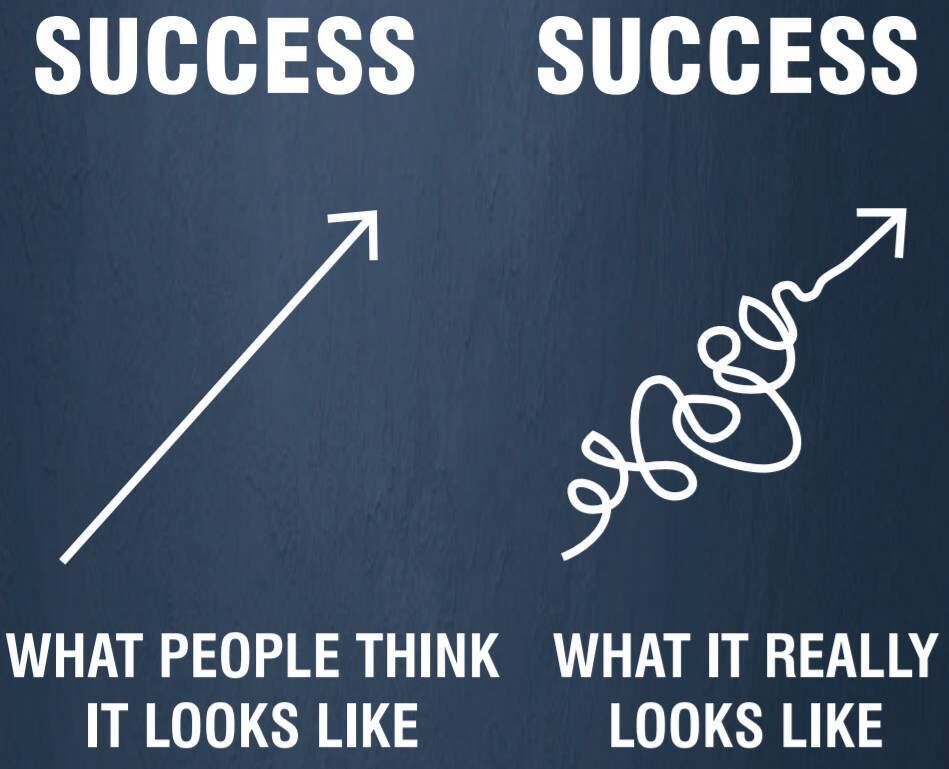
Three years ago as part of Joe Schmidt’s staff Farrell would have been at the HPX High Performance conference in Abbotstown run by Sport Ireland where two different speakers showed a slide. On the left-side of the screen was a line starting on the O point where the X and Y axis meet which ran in a straight 45 degree line. That’s how most people think success works, the speakers claimed: That it’s linear, straightforward.
But it isn’t. As the image on the right side of the slide illustrated, success is usually messy. Often, especially early on, you’re going sideways, even downwards; the odd blip of improvement then followed by another stepback until eventually you finally are on an upward trajectory and sustain it for sometime.
If Stephen Kenny at times during this campaign had to pick a team to win that next game like his life and job depended on it, the country would not know who Gavin Bazunu is. He would have stuck with Darren Randolph; he had the experience and it wasn’t what as if he had done much wrong. Shane Long would have been preferred to the strikers we’ve tried out. Thankfully Kenny had the courage to deviate from the tyranny of the normal.
In other professional sports they understand this. In the NBA, it’s common for teams to rebuild. While up to eight teams in each conference, both east and west, can make the playoffs, continuously finishing as a sixth, seventh and eighth seed is known by league insiders and front offices as purgatory. You’re neither one thing nor the other. If you were to take a gamble to rebuild, go with youth, you might miss out on the playoffs for a couple of years. Even the talented lottery picks you draft have to take their lumps and losses. But eventually it’s worth it.
When you do get back to being a sixth seed, you’re on an upward trajectory, putting you in a position to challenge for a top-three seed, to challenge for a championship.
For the last 20 years, bar France 2016, Irish soccer has essentially been in purgatory, fluctuating between being a second and usually a third seed. This year Kenny flirted with being a fourth seed, but avoided it, as his team improved and he finally got the luck due to him: Play enough games and it usually balances itself out.
And so we finish third, looking like a side that could seriously challenge for second in the next campaign, and in a manner that will make the journey something to enjoy, not just endure.
Not every manager, of course, deserves more time. Often bad results are due to bad practices and bad processes behind the scene. But crucially when Kenny and Farrell were losing games they never lost the dressing room. The players believed in them and their project and the work they and their staff were doing behind the scenes, from a Gary Keegan as the rugby team’s performance coach preaching about the process to Anthony Barry’s work on the training ground with the soccer team. Barry is a man who this week is back working with Chelsea and Thomas Tuchel; think what if Kenny had been dismissed in September and how we’d be craving to have a student with Barry’s profile as part of any new staff.
There will be further bumps between now and then for both teams before and in 2023; as Farrell noted straight after last Saturday’s win over New Zealand, the All Blacks will now be seriously focused for Ireland’s southern tour next summer. But though there’ll be the odd detour and road block, they’re heading in the right direction.