Tommy Martin: Roy Keane the manager is a relic, Keano the content creator is the future
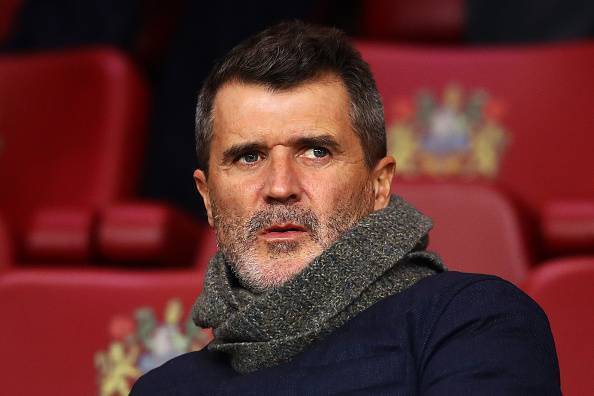
Roy Keane: Has not managed a club for more than a decade.
Recent reports linking Roy Keane to the job of Celtic manager have been based on two key selling points. Firstly, that he is a Celtic fan and, secondly, that he is âbox-officeâ.
By these criteria, you might as well add Rod Stewart and Billy Connolly to the Parkhead shortlist â both well-known Hoops supporters and both of whom have done about as much in football management as Keane in recent years.
The idea that Keane is the perfect candidate for the Celtic job is being put about mainly by people who donât really care who gets the Celtic job. They view the clubâs predicament through the prism of their apathy: Celticâs problem is that they play in the backwater of Scottish football, therefore appointing someone who it is impossible to ignore seems like a good idea.
This logic suggests the job of football clubs is to generate headlines rather than win trophies. Take the endorsement of Keane by his colleague Graeme Souness. âIt would light the touchpaper and be great for the Scottish game,â Souness said, âbecause people far beyond Scotland would be talking about the rivalry with those two personalities [Keane and Rangers manager Steven Gerrard] in charge.â
Souness, a lifelong Rangers supporter, craftily sidesteps any reference to Keaneâs actual managerial abilities, perhaps noting Napoleonâs advice not to interrupt your enemy when they are making a mistake.
The thing is, whatever about his ability to command the news agenda, Keane as a football manager is an anachronism. Everything we know about the Corkmanâs managerial style, from the early successes at Sunderland to the fractious end of his stint as Republic of Ireland assistant, suggests the type of old-school football man now consigned to obsolescence.
This version of the football manager is similar to the camel coat-wearing, all-powerful, wheeler-dealer of 20th-century legend; the man who bought the players, sold the players, wrote the theme tune, sang the theme tune.
Canny man-management and a keen eye for talent were their stock-in-trade. Knowing the right time for a bollocking or an arm around the shoulder. By force of personality, they set the tone; therefore, the bigger the personality, the better.
As shown at Sunderland and Ipswich, with a personality like Keaneâs, this makes for an eventful ride. When things are good, they are very good, but when they are bad, they are horrid. Alas, putting your investment in the hands of a bearded volcano is not considered best practice these days.
That Keane may be considered out of touch is hardly surprising given that it is now a full decade since he was last in charge of a team. Nor does it seem likely he is a genuine contender for the Celtic job. As well as a new manager, the club have declared their intent to appoint a sporting director, with 44-year-old Donegalman Fergal Harkin strongly linked to the position.
A former Finn Harps and Bohemians midfielder, Harkin is currently Football Partnerships and Pathways Manager at Manchester City, the sort of job title unthinkable when the Jurassic beasts of football management walked the earth.
Football clubs are now increasingly complex organograms populated by all manner of analysts, specialists, and boffins. Where player recruitment once consisted of pouring a large Scotch and getting Sir Alex on speed-dial, now it involves vast bureaucracies churning out xG stats for the Belgian lower leagues.
These days the ideal coach is not even a famous former player. In fact, he neednât even have been a player at all, as long as he is German and can do a PowerPoint.

So, the die appears cast for the likes of Keane. And there is something poignant about it, as if football management has gone the way of the mining, shipbuilding, and steelworking as another working-class trade rendered obsolete by modernity.
Indeed, the departure of the previous Celtic manager brought an end to a dynastic succession of Football Men that reached back into the middle of last century. Neil Lennon drew his inspiration from Martin OâNeill, whose quirky one-liners and oddball psychology were learned at the feet of Brian Clough, who in turn was heavily influenced by long-forgotten figures like Alan Brown and Harry Storer.
The motto of the House of Clough, whose stately pile lies crumbling for want of a suitable heir, was that the manager was god, football was simple, and directors were idiots. Keane himself was a scion of this aristocratic line, unlucky to live in a time when shouting at people in the treatment room is no longer part of the desired skillset.
But unlike so many less fortunate professions, the Football Man is not yet doomed to the scrapheap. Keane is the perfect example of an unlikely career change that gives hope to many of his ilk. For though his Wikipedia page still informs us that Roy Keane is an Irish football manager, he has long since changed direction and chosen that most flakily modern vocation: the content creator.
Keane was churning out killer content even while still a player. What TikTokker or Instagram influencer could match âPrawn Sandwichesâ or âStick It Up Your Bollocks!â? A generation of Twitter comedians could only weep at the build-up of suspense and comic timing of the âIpswich reporter phone ringing press conferenceâ. His role on Sky Sports is the sort of tie-in that shouty YouTubers could only dream of, giving cross-platform exposure and shareable engagement to beat the band.
The irony is that the very quality which made Football Men great managers â force of personality â is eminently marketable in the modern attention economy. Itâs no surprise that most of them are excellent TV pundits: witty, outspoken, and able to communicate to ordinary folk in a way the laptop lads cannot. But they shouldnât stop there.
Which is why Keane, ever the driver of standards, has set up his own Instagram account. Needless to say, heâs brilliant on it. Call it a mid-career pivot. His days in the dugout might be over, but Keano the content creator is only getting started.