Kieran Shannon: The League of Ireland is truly Ireland’s toughest competition
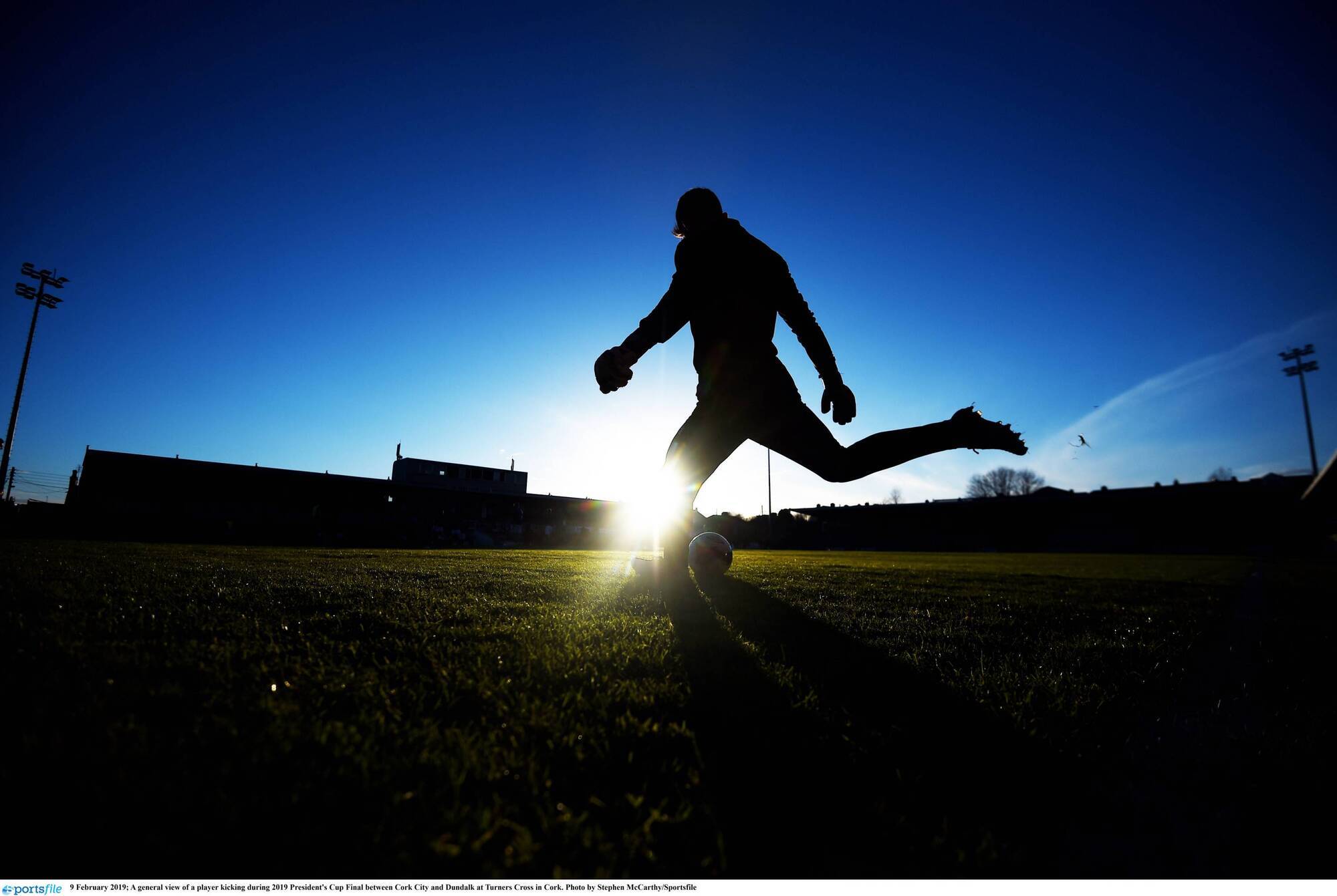
With the GAA season at least another six weeks away, the League of Ireland will give us a chance again to root for someone other than a province or a club across the sea, writes Kieran Shannon. Photo by Stephen McCarthy/Sportsfile

It’s still here.
For all the clubs it has seen come and go, for all the time it has been dismissed as a problem child, endangered species, derelict institution, the League of Ireland, like Elton or one of the terraces in its modest grounds, is still standing after all this time, 100 years to be precise. Weathered and tattered, perhaps, but resolute and defiant and proud. Feeling like a true survivor, yet, with it being the eve of another kick-off, feeling like a little kid.
You probably didn’t even know it was its centenary. Maybe it’s because in these days of Covid, all celebrations have to be minimalist and understated.
Or possibly it’s because given the recent revelations about how lavish and ostentatious the 50th birthday of a certain other member of the football family was, Irish football is a bit sheepish about clinking any further glasses of champagne, no matter how worthy the milestone might be.
But chances are even if none of us were going around in masks or John Delaney was still at the helm and in his pomp, there’d have been no one booking a helicopter for some big LOI love-fest, or for Larry Mullen to be commissioned to produce a soundtrack to accompany some firework display like he did back in 2009 when Croke Park was lit up to mark the 125th anniversary of the foundation of the GAA.
Whatever about being a problem child, the League of Ireland has never been the golden child of Irish sport. Even in its heyday, in the late ‘50s and all through the ‘60s, Official Ireland did not embrace it. Flocking through the turnstiles at Milltown or Flower Lodge along with thousands of others to watch it meant you risked being locked out somewhere else: Croke Park, the old Athletics Grounds.
And then when the Ban was eventually abolished, the crowds dwindled. More and more people may have taken up the game but fewer watched the league; was rarely Rovers against Bohs. It still had its diehards but theirs was a love in a cold climate, unfathomable to those who’d prefer to devote their allegiances to teams across the water.
And yet for all that, it is a remarkable institution in Irish sport, indeed in Irish life, one for which there has to be a certain fondness for and an undoubted admiration.
For one, it is the longest-running national league in all of Irish sport. The GAA didn’t begin its national leagues until the mid-1920s; while the likes of Bohs and Shels — two clubs that have been there since day one — were playing up to 18 games a season, an inter-county team might have had only a match a year should they have lost their opening championship match.
(Mind you, calling it a national league in the early days would be a bit of a stretch. All eight clubs in the inaugural league of 1921-22 were from Dublin. The following season Athlone Town became the first country club to participate but until Fordsons from Cork — made up of players from the Ford Motor Factory — and Bray Unknowns joined in 1924-25, it was just Athlone and all the Dub clubs).
But it’s not just that it’s the longest-standing league in the country. Every season it is the longest, most demanding league in Irish sport. Dundalk’s Pat Hoban may have had a bit of a dig at rivals Shamrock Rovers last week, asking if an 18-game programme could qualify as winning a league, but it was still 18 games. Even Jim Gavin’s all-conquering Dublin team played just short of that in any of their league-and-championship double-winning campaigns.
Ever since that inaugural league 100 years ago, there has been at least 14 games. From its second season up until last year, there has always been at least 22. A lot of competitions in Irish sport are, if not sprints, mere middle-distance events. The League of Ireland is Irish team sport’s marathon.
And it’s not just gruelling in its duration; it’s massively demanding and tough to play in, to stay in. While it will always be in the shadow of the big show in England, its players aren’t so much those that didn’t make it across the water as those who were good and tough enough to get back playing after they came home.
For every 10 kids cut by an English club before their teens are out, eight or nine of them don’t even have the heart to keep playing the sport, or at least at the standard of the League. To play in the league is to be one of the resilient, not one of the rejected.
It is also a league rich in history and characters. You don’t have to be a child of Galway, just a child of the 1990s to know Johnny Glynn won the Cup in 1991. Whatever era you grew up in Cork is to be able to name a full XI who played with Cork. Waterford, Limerick, Sligo: at one point or other the soccer team was the team in that town.
It is all the more important now. Ever since the All-Ireland football final the Saturday before Christmas, about the only Irish team sport athletes we’ve been able to watch are rugby players.
With the GAA season at least another six weeks away, the League of Ireland will give us a chance again to root for someone other than a province or a club across the sea. And while we can’t be there — and in truth, weren’t always there when we could — we’ll be following it. We always have.
It might not be the greatest league in the world but it’s the bloody toughest in this land. And we’ll be bloody glad to have it back.