Daniel Storey: Nuno Espirito Santo finding out management is an unforgiving business
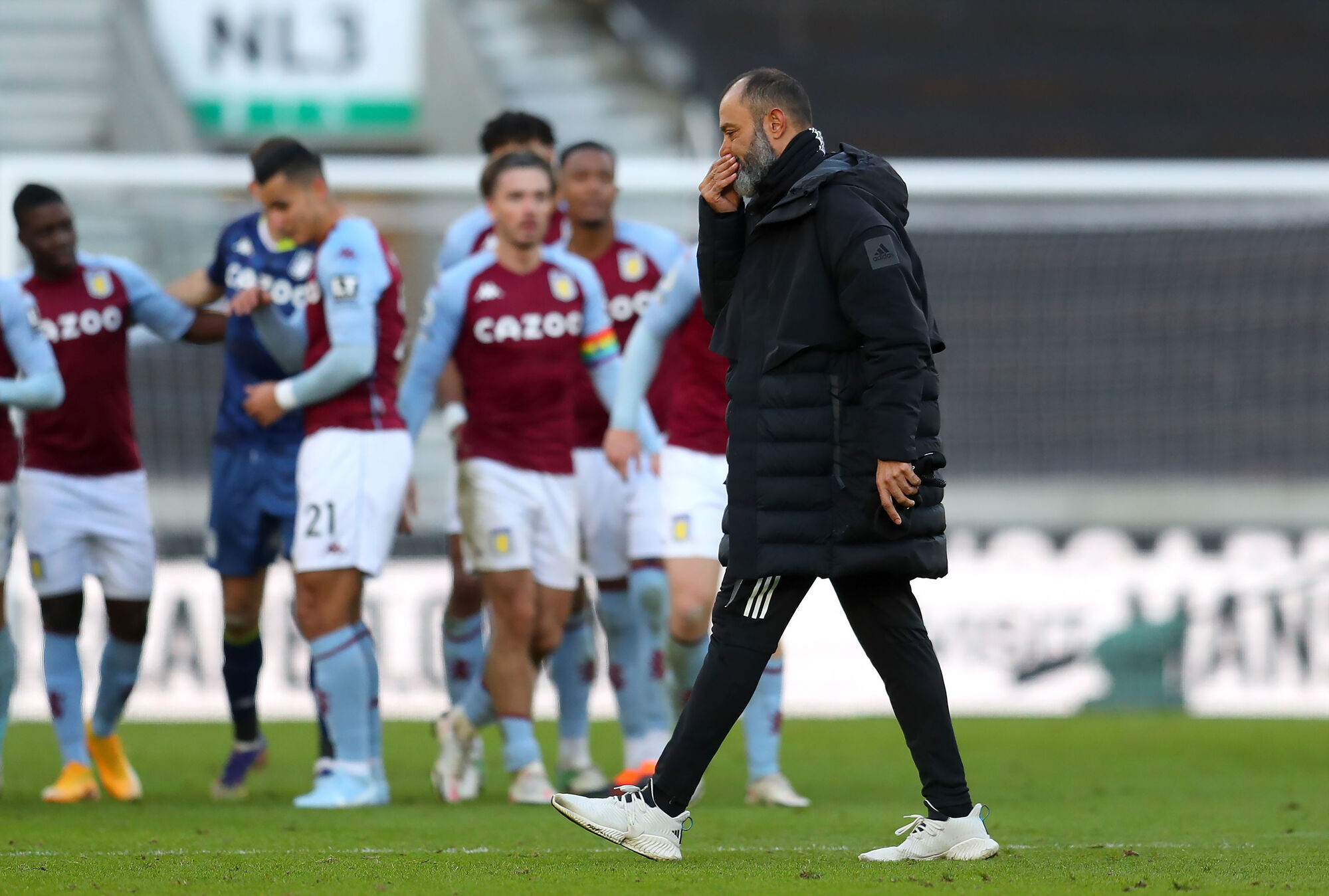
UNDER PRESSURE: Wolverhampton Wanderers manager Nuno Espirito Santo dejected after the Premier League loss to Aston Villa. Picture: Catherine Ivill

Football management is an unforgiving business.
During his time at Molineux, Nuno Espirito Santo has become the greatest manager in Wolves’ history since Stan Cullis. But in consolidating this club in the Premier League, Nuno is in danger of making himself a victim of his own success.
If you finish seventh two seasons in a row, supporters expect to finish seventh again.
There are signs that Wolves are not quite at it this season. On Saturday, Nuno surely got his team selection wrong. Without the presence of Raul Jimenez as the focal point in the final third, it became vital for Wolves to win the midfield battle against Aston Villa. Instead he paired Leander Dendoncker with Joao Moutinho and saw their visitors impose themselves as the match progressed.
Wolves became known as the slayers of elite clubs during their first two seasons back in the top flight. With Chelsea, Manchester United and Tottenham to come in their next four league assignments, Nuno must rediscover that trick if Wolves aren’t to lose ground in their mission to finish in the top eight again.
In hindsight, perhaps this was inevitable. Ole Gunnar Solskajer knew that home defeat in the Manchester derby would ramp up the pressure on his continued employment.
Pep Guardiola could ill-afford another defeat to a Big Six team. Prior to Saturday, City had lost four straight away matches at Tottenham (twice), Manchester United and Chelsea.
Guardiola may feel that his side could have nicked the win; their expected goals figure was almost double Manchester United’s. But his side set up to frustrate United and guard against the obvious counter-attacking threat. City have now kept six consecutive clean sheets in all competitions. Guardiola may reason that a new defensive solidity will be key in re-establishing themselves as title contenders when Sergio Aguero regains full fitness.
But this was still a dispiriting spectacle for those of us waiting to be entertained. The entire game was played at the pace of a friendly, reminiscent of those World Cup group stage matches where both sides know that a point will see them through to the knockouts.
For Solskjaer, a point gained but a pattern is emerging.
Manchester United’s manager cemented his place as the club’s permanent manager through a series of excellent results against elite opponents in the Premier League, but that reputation is in danger of fading away. His last six matches against ‘Big Six’ opponents have produced three draws and three defeats. United have scored three goals in those six games.
Marcelo Bielsa has earned universal praise for his work in taking Leeds United back into the top flight; this week saw him reach the final three to be named the best manager of the last 12 months by FIFA. The meagre performance of those clubs currently below them makes relegation a distant possibility.
But Bielsa has a problem on his hands. Leeds have allowed their opponents to create chances from set-piece situations with alarming regularity this season.
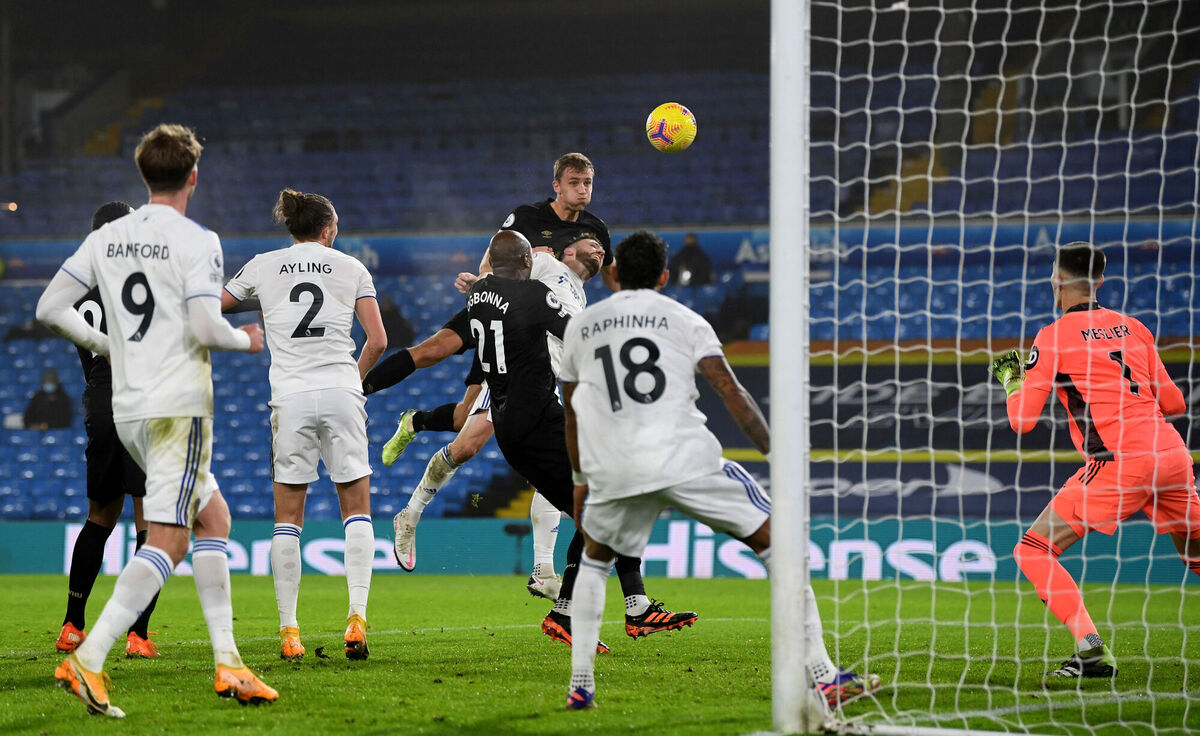
On Friday night, West Ham exposed those flaws with devastating effect. It’s all very well naming your starting XI publicly 48 hours before the match, but if your team is then undone by simple lapses of concentration and defensive positioning, it reflects badly on you.
Frank Lampard’s reputation has improved markedly in recent weeks, not least because Chelsea sauntered through a difficult Champions League group by rotating their group of attacking assets to wonderful effect. Lampard has also answered the doubts of last season about Chelsea overloading the final third and being caught on the counter by bottom-half opposition.
But solving one problem has merely created another. In their seven matches against current bottom-half opponents, Chelsea have won six, drawn the other and scored goals at a rate of more than three per match. But their five matches against top-half opponents have produced just three points and, more worryingly, only three goals. All three were at Stamford Bridge against Southampton.
The resources at Lampard’s disposal make a title challenge an expectation, not distant ambition. He has spent £260m on new players and inherited the £60m Christian Pulisic. At some point he’s going to have to start producing against high-level opponents if Chelsea are not to fall back into the chasing pack.
And that is probably that. There is no shame in Sheffield United losing to a Southampton team that went third in the Premier League at full-time, but this was another display without any obvious fight and resolve to match the critical nature of their situation.
No team since 1930 has taken one point or fewer from their opening 12 matches of a top-flight English league season. Even if Sheffield United match their performance from across the whole of last season they will still only reach 37 points. Both of those statistics suggest that beating Derby County’s record low points total is the only realistic aim.
Do not allow that to overshadow the magnificent work Chris Wilder did in getting Sheffield United into a position where they could fall so sharply, but everything he was doing has stopped working. It began with fine margins and is ending in a blur of destroyed confidence and misplaced player recruitment.