Kieran Shannon: Cork may have made Roy Keane but Dublin shaped him too
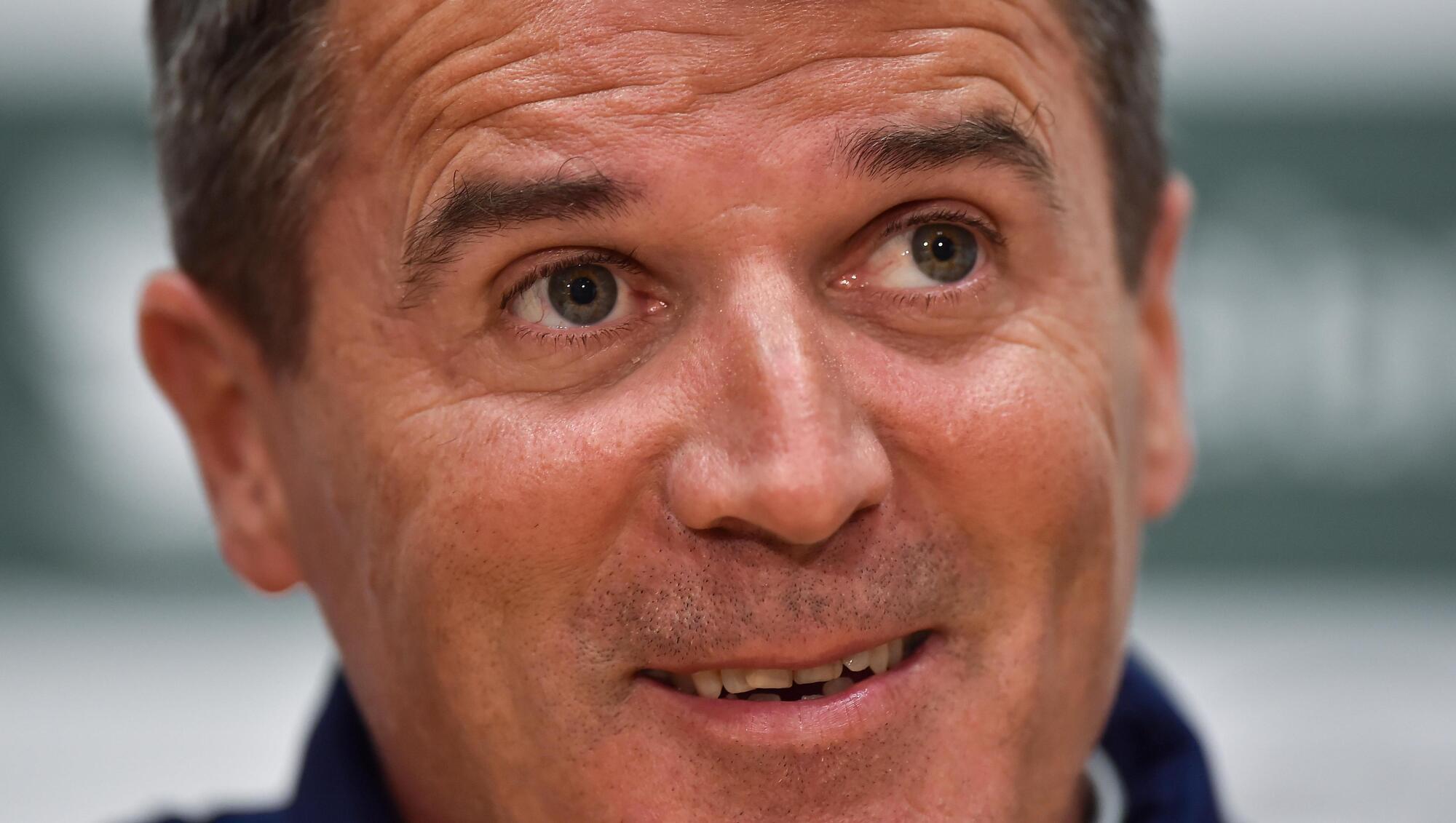
Roy Keane

There are many striking scenes in Eoin O’Callaghan’s often-fascinating book, , but a particularly vivid one is when an 18-year-old Roy is taking the Monday train from Cork to Dublin, where he’s undergoing a year-long full-time FÁS course.
Jamie Cullimore, a classmate as well as a teammate of Keane’s with Cobh Ramblers, is on the same train when they pass a load of workers on the side of the railway tracks. Keane, who didn’t even pass his Junior Cert, or Inter Cert as it was known then as, remarks, “Look at them [poor] f**kers out there and they’re going like the hammers. I HAVE to make it as a footballer.”
As Cullimore and O’Callaghan observe, Keane had no interest in being anything else or doing anything else. On the FÁS course he’d turn off his computer right in front of the teachers, just so they were under no illusions. He was only there for the ball. He had to make it at the ball.
Biographies, as opposed to autobiographies, are an underrepresented genre in the Irish sporting canon, but O’Callaghan’s offering here is a welcome addition, offering a magnificent character study into one of the most compelling figures in Irish and indeed British sport of the last 30 years.
Not unlike the man it investigates, it has its flaws. Despite its title, it has little more than a paragraph on his parents, only a few more on his brothers who played at a decent level themselves, including Denis, who was considered the more talented, and only a few pages on his time at Rockmount. Considering how garrulous and gigantic a character his father Mossie was, and how formative and exceptional that Rockmount set-up was, it’s a surprising and disappointing omission.
A couple of chapters on each at the expense of a couple of chapters less on his time at Nottingham Forest could have earned this effort classic status. But as it is, there is plenty here to savour.
While it underplays how Cork made him, it more than compensates in telling how Dublin helped make him too.
The year on the FÁS course is recounted in magnificent detail as O’Callaghan tracks down some of Keane’s old classmates and extracts pure gold from them: the aforementioned Cullimore, Tommy Dunne, Richie Purdy, and John Donegan. There is a screenplay in the material here on late 1980s-early 1990s Ireland, just as there was in the work of Keane’s later ghostwriter, Roddy Doyle, around that time.
Cullimore strumming his guitar on the train up with Keane promising he won’t forget about him when he makes it in England, he’ll go to Cullimore’s gigs and Cullimore can come to some of his matches; the lot of them walking around Palmerstown in tracksuits “you’d wear to a rave”, Keane’s face in a sex education class when the teacher puts a condom on a banana; the Kylie Minogue posters on Keane’s bedroom wall in the house where he lodged; it’s like , with no doubt as to who was the most committed.
And it also depicts how even then the essence and complexity of Keane had already been virtually formed, with both his cutting, confrontational manner but also his more endearing and caring side on display.
Two years before he’d savage Mick McCarthy’s first touch on a senior team tour of the USA, he’d lay into Packie Bonner in Malta while being an unused squad member of the U18 national side — “You’re a shit keeper and only for Gerry Peyton being shit as well, you wouldn’t be playing!”
And yet when a classmate lost his FÁS cheque, Keane bought him their usual few pints before they each went home for the weekend. As one old classmates observes, as quick as he’d be to stand up to a teammate, he’d be even quicker to stand up for one.
O’Callaghan’s writing and journalism also contains other nuggets of detail. Like the message imparted by Nicky English, the then Hurler of the Year, when he was the guest speaker at this paper’s 1989 Munster Youth Sport Awards at which Keane was the winner in the football category.
Like the Cobh Ramblers’ youth team bus getting lost and being late on the way to the critical cup game in which Keane was spotted by the Nottingham Forest scout, Noel McCabe: good thing both he and the bus both made it to Fairview Park that day.
That level of detail continues in recounting Keane’s time in Nottingham. Some of it we maybe didn’t need — and this column says that as a Forest die-hard who often wondered what possessed the club to sign Robert Rosario at the 1993 transfer deadline and gets his answer here.
But there are gems in those parts too. Like Keane having to learn where Mass was taking place in Nottingham on a Sunday morning for his visiting family, being from an Ireland still months out from the Bishop Casey scandal; a still teenaged Keane candidly asking senior England international Steve Hodge if he’s gay ahead of them rooming together; and Steve Chettle recounting how Keane would call him the day after the night before apologising for how he might have behaved with a few beers on board.
In his legendary scouting report, McCabe would surmise that Keane was, “in my opinion, a player to go on trial to Forest right away”. So it is with this book. In our opinion, it is worth going down to the bookstore for, right away.