John Fogarty: Kilmacud - Glen a sorry saga with no winners
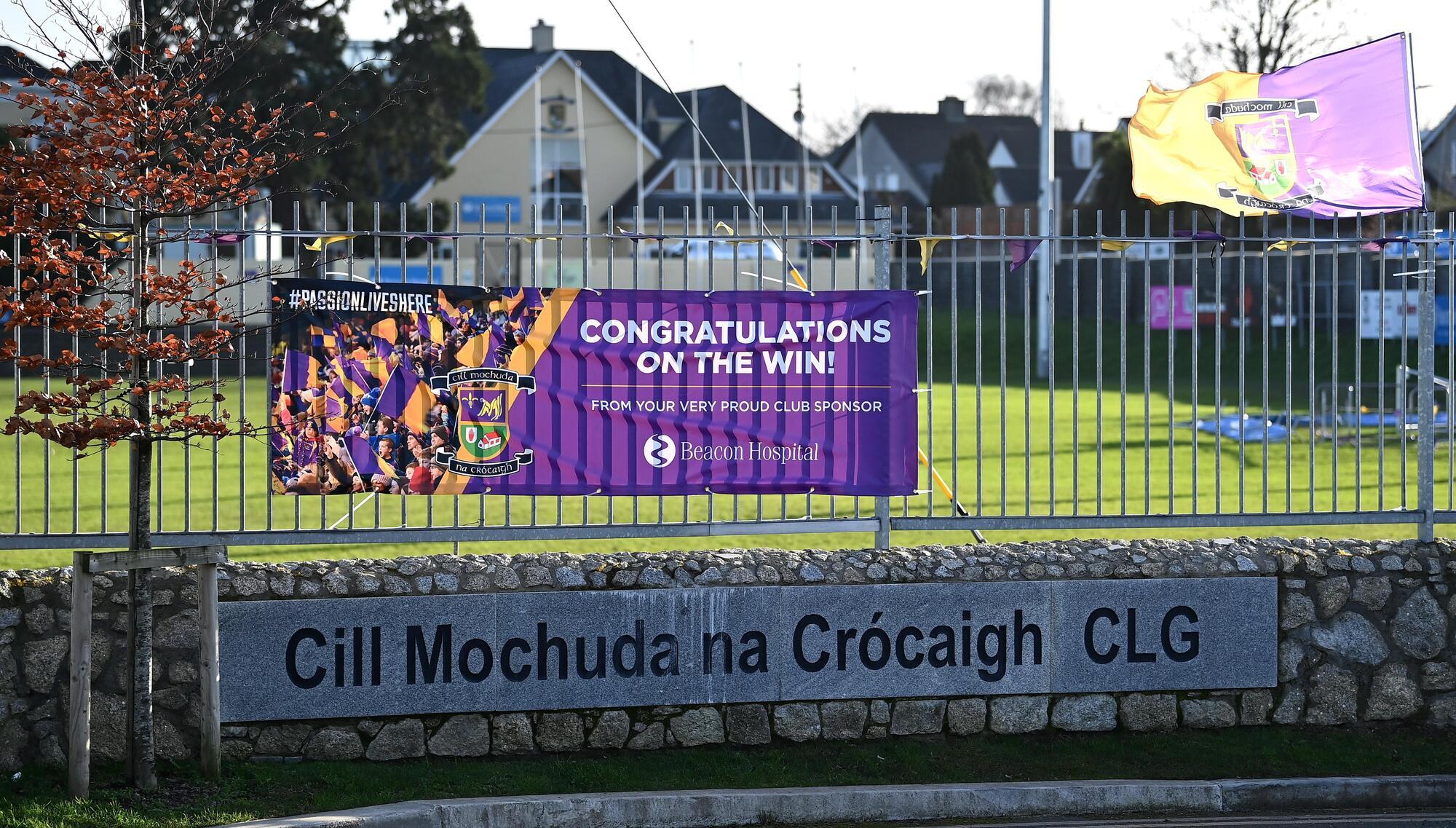
CHAMPIONS: A Kilmacud Crokes congratulations poster and flag on the outside the club in Stillorgan, Dublin. Pic: David Fitzgerald/Sportsfile

And so all that remains of the sorry tale of the 2023 All-Ireland Club SFC final is a point of principle.
Just as Glen made theirs in contesting the outcome of the game before withdrawing it (having been proven correct by the GAA), Kilmacud Crokes will insists that they are allowed to state theirs.
That the Andy Merrigan Cup remains in Stillorgan isn’t enough. That they were found to have breached the rulebook is plenty of cause to continue the fight. It might stop at the Central Appeals Committee (CAC) or advance to the Disputes Resolution Authority (DRA). Either way, they will strive to restore their success and underline an acknowledgement by the GAA that an officiating error had contributed to their numerical advantage in stoppage time.
Crokes have kept a dignified silence throughout the process but don’t be surprised if there is a stinging statement released when their case concludes. Their reputation has been put through the ringer. There were outrageous and unproven claims that they cheated. From memes to comments about their annual All-Ireland Sevens tournaments, they have become the butt of too many lame attempts at jokes.
After withdrawing from the process last Friday, Glen’s cred has unfairly taken a hit too. They knew they were on a hiding to nothing. Once it was confirmed by the GAA that the CAC had received an appeal from Crokes, that was them done. Just as it was known at the outset that Crokes wouldn’t countenance a replay, sources close to the Glen club had indicated objecting was one thing but agreeing to a rematch was another.
If it feels like there are no winners, it’s because there probably aren’t any, the GAA included obviously. That the offended team has to initiate an objection if the incident isn’t mentioned in the referee’s report is not a rule they are likely to jettison completely but it will require visiting.
On BBC’s GAA Social podcast last Wednesday, GAA presidential candidate Jarlath Burns gave an excellent account of why the Central Competitions Control Committee (CCCC) had to do what it did. “You might say to yourself, ‘But everybody knew there were 17 players on the field’, and nobody is disputing that. But you have to remember that the rulebook that is relevant on the day of an All-Ireland also has to be relevant in an U13 match between Silverbridge and Cullyhanna next week where there are no umpires, no linesmen. And you have to allow an initiative there within the rule that if somebody wants to object that they can and come and make their case.
“Now, in all the Congresses that I have ever been at nobody has ever sought to change that rule. And the reason for that is if you introduce a rule that gives an initiative to the CCCC to make a retrospective adjudication on something in the match, you get into the business of re-refereeing the game and you have to be very careful about that.”
A day after Burns made his appearance on that podcast, GAA director general Tom Ryan politely pushed away president Larry McCarthy’s “sub-judice” concern by explaining the pair were right not to interfere in the disciplinary procedure.
But wouldn’t he make an exception for an All-Ireland final? “No is the answer because to my mind if you’re playing junior D football in west Kerry or are an All-Star from Antrim it’s the same disciplinary system and people are entitled to have the same rigour applied to irrespective of how good you are or the level you’re playing at.”
That’s a difficult argument to make when games of such magnitude like an All-Ireland club final are recorded by umpteen cameras. And wasn’t it because the 2015 All-Ireland semi-final replay was of such import that Diarmuid Connolly was freed to play in it? DRA panel members Hugh O’Flaherty and David Nohilly adjudged a “very high standard should apply” in the case against the Dublin footballer. However, Brian Rennick, the panellist who dissented with the majority decision, has since served as the GAA’s CAC chair and currently heads its Central Hearings Committee.
Aside from rule and regulation changes which might include tidying up the substitution exchange (so long as it can’t be used as a vehicle to time-waste), this sad saga should prompt proper investment in officiating. Referees should have every resource available to them to make the right decision providing it doesn’t impinge too much on the continuity of the game. If, for example, Derek O’Mahoney wasn’t able to hear his linesman tell him to hold the 45 until Crokes’ substitutes were made, then new and improved audio technology should be bought.
The GAA don’t have the luxury of saying never again but there are plenty of those notorious learnings from this episode.
Across the eight Division 1 and 2 football games this past weekend, there were 30 late changes to announced teams. Kerry were the only county to line out their starting 15 as per programme, as they had done against Donegal the week previous. In contrast to football, there were just three personnel switches in the eight Division 1 hurling fixtures.
Perhaps suspicious of handing their teams to opponents for match programme purposes on away days, football managers have long been more inclined to make 11th-hour alterations than hurling bosses. It’s not as if they don’t have players’ college commitments either, although the added significance of this year’s football league may be added reason to keep their cards closer to their chests.
Nothing stops them from doing so although counties are supposed to release a team to the media four days — by Wednesday noon — before non-championship games. None do so, understandable given all that can happen between midweek and match day. Where it gets ridiculous is when teams are released on the morning of games only to be undermined by actual line-ups for throw-in. That such erroneous information is often given to supporters’ clubs first as part of a subscription is insulting.
As the championship’s transformation into league continues and game schedules intensify, rules around naming of teams and panels are to be relaxed in the major competition too. The Central Competitions Control Committee is looking to allow changes to championship panels after the 9am Thursday deadline based on injury or other exceptional circumstances. As well as that, injuries in warm-ups are to be reflected in a new proposal. In championship, teams have had to be named 40 minutes before throw-in and a panel replacement had not been permitted. Sensible moves. Relaying dummy teams or inaccurate ones isn’t promoting games but neither is handcuffing managers to unrealistic demands.
On Sunday, new Meath manager Colm O’Rourke raised valid points about what is being asked of college-going, inter-county players at this time of year.
“The timing of the Sigerson is all wrong,” he said following his side’s Division 2 win over Clare. “We have six players tied up in it and we had to take off five of them today. There’s two of them now injured with hamstrings. They’re pure overuse injuries. It’s a disgrace.”
O’Rourke wrote on this very subject in his column this time four years ago.
“Now with the league starting earlier, the players find themselves as the meat in the sandwich with county managers demanding their attendance at training and challenge matches,” he said. “Another solution is all county players are exempt from league action until their team is out of third-level competition. You can guess how that would go down with managers.”
O’Rourke is getting a bird’s-eye view of how the other half lives right now but to be fair, those comments were made before Division 2 became essentially a Sam Maguire Cup-qualifying competition and he has long been supportive of pushing the Sigerson Cup back to December.
Either that happens or the league starts earlier because it’s the game’s brightest young players who are suffering as they simultaneously serve two masters.