John Fogarty: Drug testing club players may open a Pandora’s box
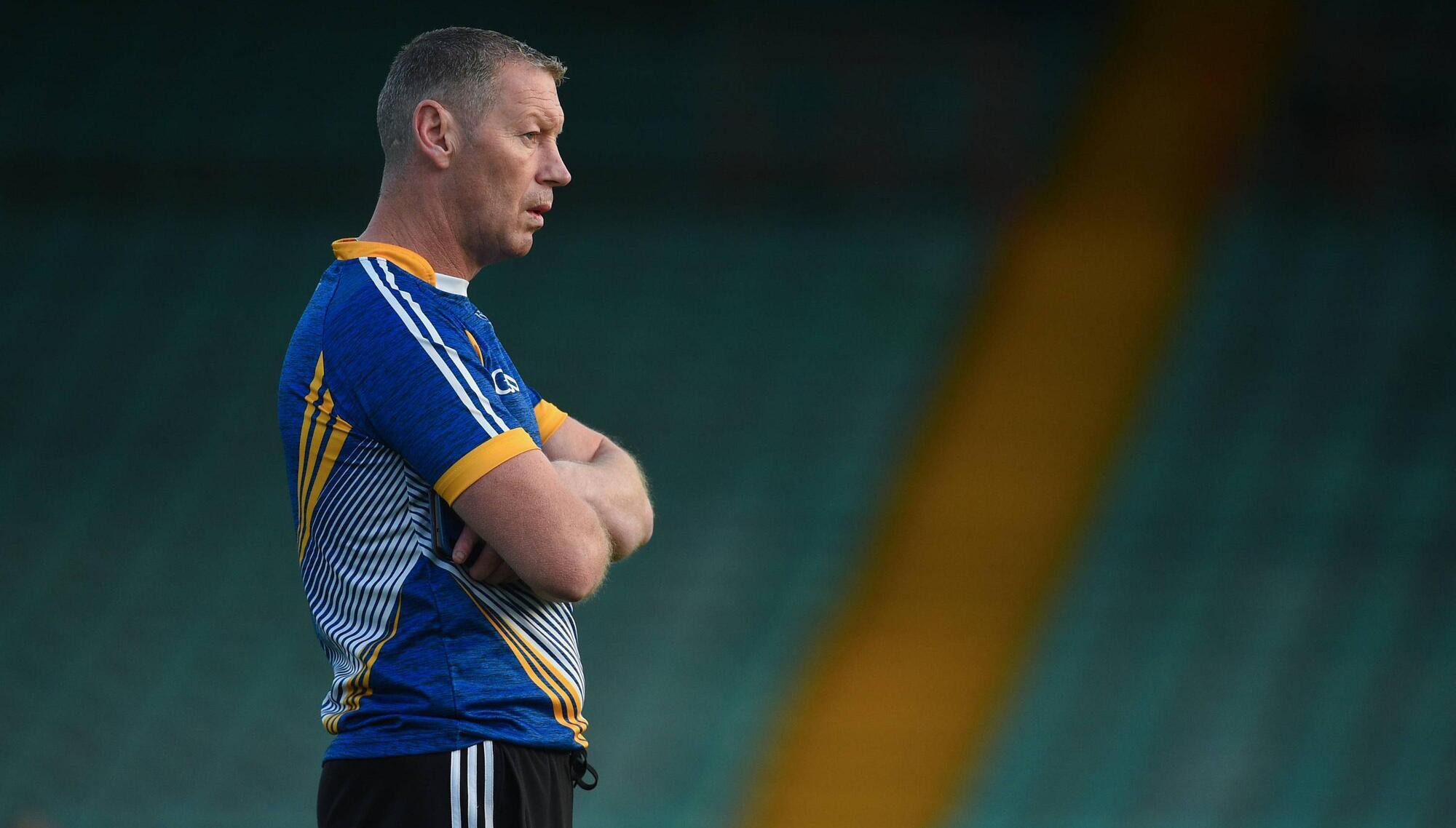
MAJOR ISSUE: Limerick great and addiction counsellor Ciarán Carey says cocaine is a huge problem among young players. Pic: Diarmuid Greene/Sportsfile

Last week’s Irish Examiner story about Tipperary club Drom & Inch’s proposal to extend anti-doping testing to GAA club players prompted plenty of comment on the airwaves and column inches over the following days.
One national phone-in radio show was driven by a combination of outrage at amateur sportspeople being subjected to such scrutiny and anger that players could either be put in danger by opponents taking cocaine. Two contributors messaged the programme to say if such a measure was introduced half of their club’s team would test positive.
Never mind that the motion has yet to be passed at annual county convention next month or may in fact be ruled out of order as technically the rule is already in place. As the couple of sentences in the opening clause of Rule 1.16 reads, “The Association forbids the use of prohibited substances or methods, a practice generally known as doping in sport. The Rules of the Association regarding doping are the Irish Anti-Doping Rules as adopted by Sport Ireland and as amended from time-to-time (“the ADR”).”
Nevertheless, when the rule is not applied at club level it and the claim on the official GAA website that “all GAA members are subject to the anti-doping rules as adopted by Sport Ireland” is hollow. That’s not to say the GAA doesn't mean well by it – the healthy club initiative and awareness campaigns back that up – but unless the rule is administered across the board it is merely decorative.
As much as it is presented by logistical challenges, Sport Ireland’s hesitancy in testing club players must be noted too (inter-county players’ co-operation with testing and anti-doping education are requisites in obtaining their Government grants). If Sport Ireland were to insist on in-competition tests in next season’s All-Ireland Club championships, the GAA couldn’t exactly say no.
Three months after Leinster chairman Pat Teehan raised the issue of cocaine use in society and in turn the GAA, Limerick great and addiction counsellor Ciarán Carey was mentioning its prevalence at the grassroots.
“Coke is a huge problem among younger players especially at club level, if a player, and it can be a boy or girl, at 17 or 18 years of age is using cocaine they will drop out of sport, walk away from relationships and have problems at home. That is inevitable.
“My experience in recent years in both my professional capacity and as someone involved in hurling is that cocaine abuse has become a phenomenon within the GAA and that is something that is almost accepted and understood by all involved.”
It wasn’t the first time Carey has spoken about something that clearly alarms him as it does his My Move Counselling colleague Niamh Blackburn who in March of this year described drug use in the GAA as “an absolute epidemic” when speaking to county councillors in Wexford.
But does the GAA dare look under the rock? Should they have to? If so, are they ready for what they might find? Do they, perhaps, draw lines between the heightened aggression seen at games in recent times and the feedback coming from people who are at the coalface of this escalating societal concern?
Annual Congress’ decision last February to defer Rathdowney-Errill's motion to the organisation’s community and health committee for further development was a sensible one. The Laois club had called for drugs and gambling addiction and anti-doping awareness programmes to be made compulsory for any adult player wishing to play championship football or hurling.
Education is certainly the most sensible means of attempting to address what is a problem that can camouflage itself almost as successfully as gambling. Rathdowney-Errill's proposal is one that warrants care and attention and will hopefully manifest itself in something tangible and meaningful to players.
Nevertheless, it shouldn’t be forgotten that as recreational as it is largely considered, cocaine is listed by the World Anti-Doping Agency as performance enhancing. There is an argument that the definition is outdated. Similarly, a case could be made that an anti-doping test with the objective of deterring the use of recreational drugs is the equivalent of taking a sledgehammer to crack a monkey nut.
Yet the GAA can’t not open it. Putting club games on a higher pedestal by redirecting undivided attention to them from August to December brings with it responsibilities for those that organise and play them. For a variety of reasons, the keener analysis and the brighter lights put on participants mightn’t be things the club scene is altogether comfortable with, but the standards expected of a player off the field as well as on it have been raised.
Testing club players may open a Pandora’s box but as Drom & Inch secretary Trevor Hassett said last week, “The main thing is to start the conversation.”
Based on the past seven days, they have certainly achieved that.
Just when we thought we were out and aghast at the contemptible arranging of it in Qatar, the fulfilled promise of competition and plethora of piquing story lines means the FIFA World Cup has pulled us back in.
From Tuesday until Friday, the finishing places of the eight groups will be determined. Those who finish on the same number of points will first be separated by goal difference rather than the head-to-head result, which contrasts with the GAA’s criteria for such split decisions when two teams are involved.
As forthcoming motions at annual conventions would suggest, the preference for the head-to-head in the likes of the Allianz League and forthcoming Sam Maguire and Tailteann Cup round robin stages and score difference when three or more sides can’t be divided by points is not as universally supported.
A bonus points system is something that has been supported on this page previously with the sole objective of keeping things interesting and avoiding dead rubbers. With three teams from each group in next year’s football championship qualifying for the knock-out stages, there shouldn’t be too many of them. However, extra points for winning margins or goals scored could be exactly what the ailing Allianz Leagues need if they aren't going to be cut in size.
That Qatar and Canada are the only countries from the 32 confirmed as knocked out of the World Cup after two rounds illustrates the allure of the competition but much like its staging, it is freakish.
As Kilmacud Crokes’ joint hurling manager Kieran Dowling said, it’s unfair that Brian Sheehy has to play two senior provincial club finals in the same afternoon. However, one dual player was never going to be enough to shift a Leinster double-header fixed for Croke Park going back weeks.
Sheehy will probably embrace the uniqueness of the situation this Sunday, the heady possibility of picking up two medals. Should he see action for both the footballers against The Downs and hurlers in the main event against Ballyhale Shamrocks, he will join a short list of players who lined out in two finals on the same day.
In recent times, Tony Brosnan and Jack Savage for MTU Kerry and the county’s seniors, Kieran Molloy for Corofin and UCD in 2018, Paddy McBrearty and Benny Coulter for their county’s minors and seniors, have played in two games on the same day but the examples of male adult players lining out in two finals in immediate succession are rare. Here are a few:
(Tyrone), 1972 – Red Hand County great McGuigan began the Ulster minor decider win over Cavan in Clones and came off the bench later at St Conleth’s Park in the seniors’ loss to Donegal.
(Leinster), 1962 – One of the great dual players, Dublin legend Foley togged out for both Leinster teams in that year’s Railway Cup finals in Croke Park, beating Munster in the hurling showdown and Ulster in the football fixture.
(Kerry), 1956 – Not two but three finals in one day for possibly the Kingdom’s greatest dual player. Collins opened July 29 with a Munster junior hurling win against Waterford and repeated the trick with the junior footballers against the Déise. However, the hat-trick was denied in the Munster senior football final replay when Cork edged out Kerry in Killarney, the Kilmoyley man coming on as a half-time substitute.