John Fogarty: Split season still divides opinion
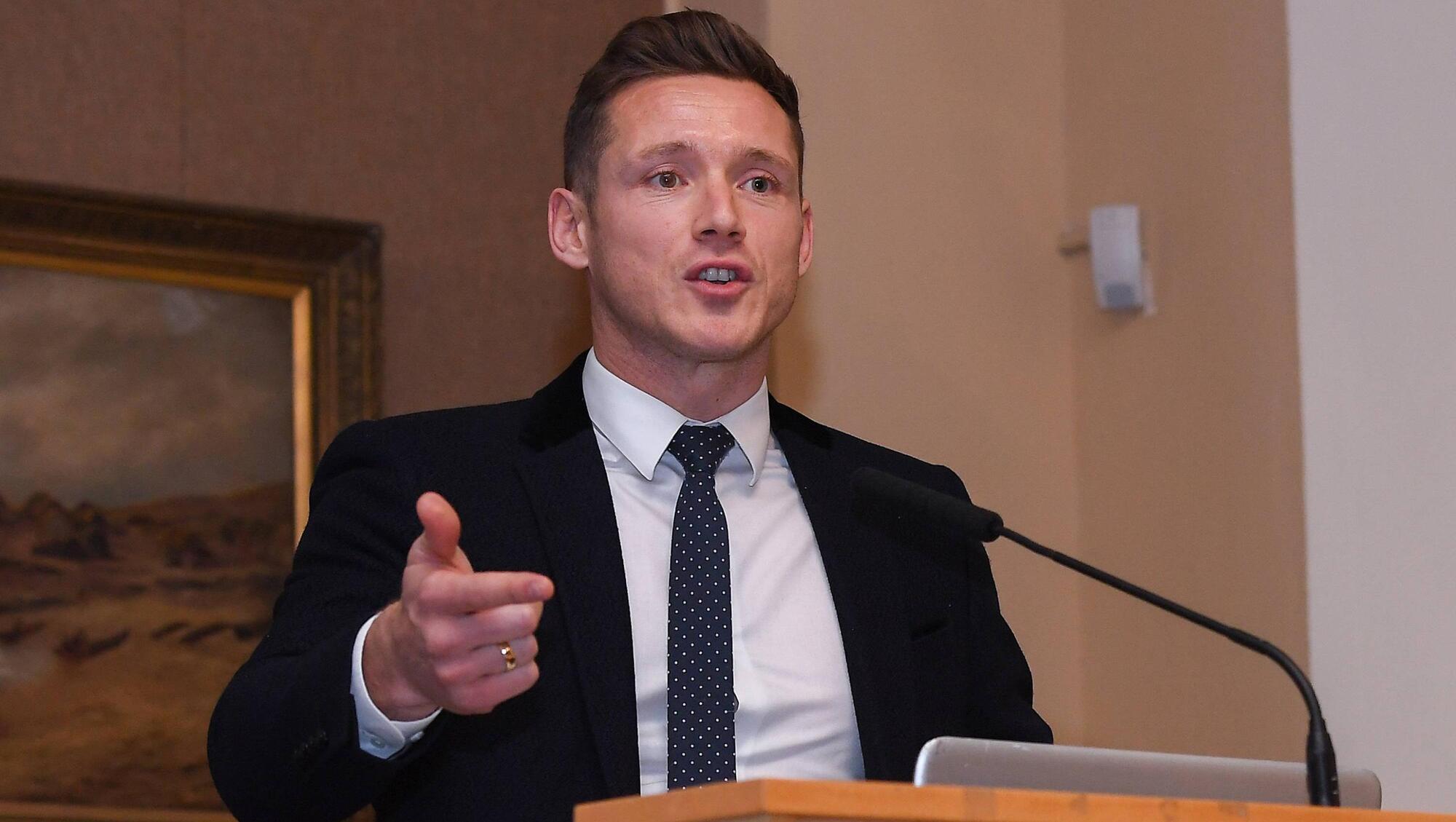
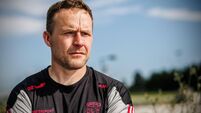
BUYERS REMORSE: Former GPA chief Paul Flynn rejects the part he played in the creation of a split season. Pic: Matt Browne/Sportsfile

High on a happy vibe after seeing his Ballygunner team see off Na Piarsaigh in a most excellent Munster senior semi-final on Sunday, manager Darragh O’Sullivan was only delighted to declare it an advertisement for the split season.
“I think the club player has to have his time and that’s his time now and that’s the way it should be,” he said. “If you ask people in RTÉ, maybe they’ll say ‘no’ because hurling isn’t getting the profile when it needs to have it but that was phenomenal today. It’s what the association is about, the club, the spirit, and the heart. They should put that (game) on a video and send it around the world and say these are club sides getting nothing for it. Phenomenal.”
Games of such substance are not in abundance but as the weekend’s sport went, its quality cast a long shadow over the offerings in the Aviva, Al Bayt, and Centenary stadiums (so did the first half of The Downs-Ratoath game).
Yes, we are fully aware comparing sports is trite but when the club game is poopooed as not deserving the time it has been afforded such truths should be told. What is just as factual is how divided people remain about the split season. Recent comments only bear that out:
— Former GPA chief executive Paul Flynn in last month.
“Buyer’s remorse” has been a phrase thrown at those few wishing they didn’t support the split season akin to those who now realise they were fed lies in voting for Brexit.
Here, ex-Dublin star Flynn is exhibiting all the symptoms of seller’s regret. If he is correct and the divide between the county and club championship seasons is the GAA’s equivalent of Britain’s departure from the EU, he was more like Boris Johnson than “indirectly complicit”.
In August 2020, Flynn was opportunistic enough to beat then GAA president John Horan to the punch by endorsing a condensed season when declaring to members that “it is our firm-held view that this shows we should be capable of completing an inter-county season in the much-reduced timeframe”.
When the motion was passed the following February, he was happy enough to describe the split season as “a significant positive step forward in providing defined structure to the GAA calendar”.
— Kerry chairman Patrick O’Sullivan in the last week.
We know where O’Sullivan is coming from here as much as his comments about Croke Park were possibly exaggerated for dramatic effect. Other than locally, big county championship games have little build-up as much as they might have household names involved. If the last five months of the year are to be occupied by club championship action then their billing must improve.
A game as attractive as Ballygunner v Na Piarsaigh was worthy of a press event if not organised by Croke Park then the Munster Council. In the past, the GAA took the approach of drumming up attention around low-profile league games by arranging interviews with participating players. There are some club matches that deserve the same treatment.
— Limerick manager John Kiely when accepting his honorary doctorate from UL last week.
This was nothing new from Kiely who said something similar the day after he led his county to a fifth All-Ireland title in July. Of course, there have to be changes. Some of those are bound to come in the league where there could be less games in future, especially in football. We hold the view that the All-Ireland finals will eventually return to August.
— Cork chairman Marc Sheehan in last month.
Are participation and promotion two separate entities? Shouldn’t they be the same thing? Sheehan was speaking before just over 15,000 turned up in Páirc Uí Chaoimh for the St Finbarr’s-Blackrock premier senior hurling final, a massive crowd that would arguably have been bigger but for the dismal weather conditions.
Cork now have products in the form of streamlined, highly competitive championships they are confident of selling. It’s not a stretch to say giving club players confirmed dates up to a certain point in the knock-out stages has won them back.
Galway may consider itself a dual county, but not only was their senior football champions’ Moycullen’s Connacht semi-final against Strokestown fixed for the same day as the county’s senior hurling final, they both had 1.30pm throw-ins on Sunday.
Genuine supporters may have wished to take in both matches, but until such time as the hurlers enter a provincial championship such a fixture clash is a live possibility.
When it came down to it, Fossa had to pick their battles, and so they sent out the next best against Dr Crokes in Saturday’s O’Donoghue Cup (East Kerry) quarter-final.
Beaten by 21 points (2-21 to 0-6), the Clifford brothers were kept in reserve, with this weekend’s Munster junior semi-final against Castlemahon in mind.
Limerick GAA’s best financial investment has been their academy — and after that the centre of excellence in Rathkeale — but the money put into the reconstruction of LIT Gaelic Grounds’ pitch could prove to be another one for the All-Ireland SHC champions.
The new sod on Sunday was in pristine shape despite the wintry conditions.
Speaking of excellent playing surfaces, Croke Park will host the second set of Leinster senior semi-finals this weekend, and what an advantage it is to play on the hallowed turf at this time of year.
Staging the provincial finals there at the end of last year mightn’t have worked in Kilmacud Crokes’ and Ballyhale Shamrocks’ favour come the All-Ireland finals last February, but the province’s champions will have an extra outing there this time.
Ben Cunningham will come back bigger and brighter. If he needs some inspiration after that late placed-ball effort failed to hit the target in Cusack Park, the St Finbarr’s man can look to the man who starred later down the M18 on Sunday afternoon, Pauric Mahony, and what happened to him in the 2016 All-Ireland semi-final replay as his shot came up just short for Waterford.
There was no better person than Neil Gallagher — Michael Murphy’s great friend and Glenswilly club-mate — to pay tribute to the seemingly perpetual captain of Donegal.
In a splendid interview with last week, Gallagher spoke warmly of how Murphy made others like him look good.
“By the time the ball actually reached Michael, it looked like you’d found him perfectly with the pass. But it was what Michael did in between the ball leaving your foot and landing on his chest, that was the real magic of him.”
As totemic and talismanic as he was, Murphy was, first and foremost, a team player. Oisín McConville spoke in 2019 of him tending “to leave the young [Donegal] boys to it” when Donegal were in the ascendancy. “He only sort of takes responsibility if he thinks the game is in the melting pot and he is happy to just do his job otherwise.”
In his autobiography, Jim McGuinness spoke about how he had to remind Murphy to be careful because he was so determined to play through the pain barrier and felt as if he couldn’t succumb to injury because he was captain.
That determination was evident in the 2012 Ulster quarter-final win over Tyrone in Clones when he broke down in the warm-up only to grin and bear it for the following 70+ minutes.
The whole package, Donegal may not see his like again.