John Fogarty: Golden visas carry health warning for GAA
Last month’s news that Louth GAA had secured €14.8 million funding for its new stadium via the Immigrant Investor Programme was met with 'why the hell didn’t we think of that'
John Fogarty: Golden visas carry health warning for GAA

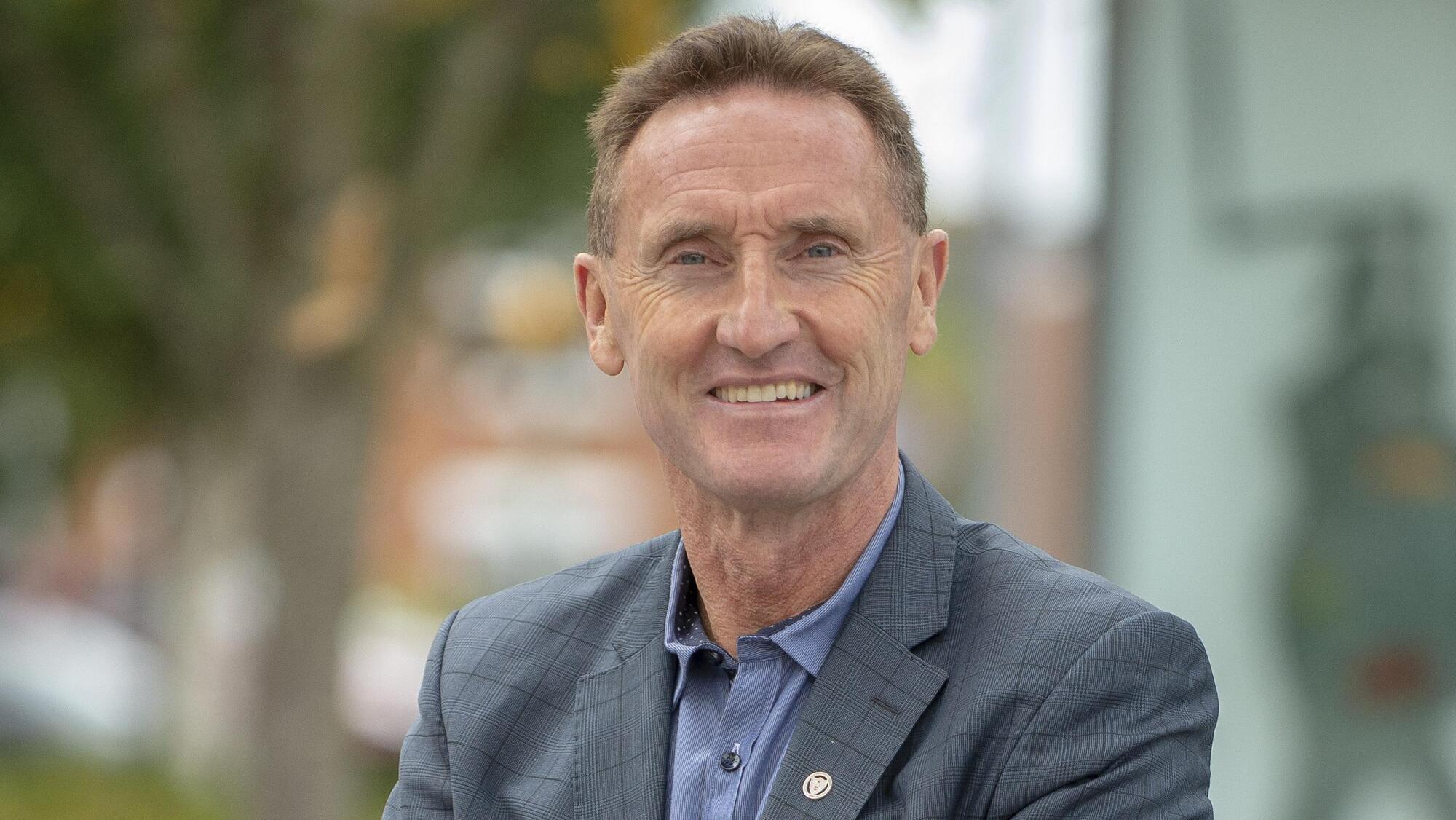
FUNDING: Louth TD and county chairman Peter Fitzpatrick was cock-a-hoop in making the announcement about securing funding for Louth GAA's new stadium. File pic: Ciara Wilkinson

In county executives across the country, last month’s news that Louth GAA had secured €14.8 million funding for its new stadium via the Immigrant Investor Programme (IIP) was met with “why the hell didn’t we think of that”.

The likes of Kildare and Meath had looked into securing investment via the same source but nothing to the extent that Louth achieved. Having a TD for a county chairman in Peter Fitzpatrick sure helped, you would imagine, and the county’s former senior football manager was understandably cock-a-hoop in making the announcement.


“Our dream has come true. We have been waiting for the last 60 years since we lost our stadium and now the GAA people of Louth will have a stadium to be proud of. Over the last two to three years, our management team have put in trojan work to see this dream become a reality.” 

He continued: "We’ve been saying for the past 18 months that we do have a plan B and this is it. We’ll be getting €14.8m from 37 investors, the approval came through last Thursday, and there shouldn’t be any reason why we won’t have a stadium built in the next 18 months or so.” 

The IIP, often referred to as a “golden visas” scheme, allows people from outside the European Economic Area residency rights in Ireland in return for long-term investment in this country. The individuals must have a personal wealth of at least €2m. Once accepted, they and their immediate family members are entitled to an initial two-year residency.

One of the four investment options is endowment, which is explained as “a minimum €500,000 (or €400,000 where five or more applications are received) philanthropic donation to a project which is of public benefit to the arts, sports, health, culture or education in Ireland”.

The 37 donors that have committed to the 14,000-capacity stadium outside Dundalk represent almost 5% of the total number of IIP applicants this year. Since its inception 10 years ago, 94% of applications have come from China.

Both here and in Europe, questions have been raised about the programme, which People Before Profit TD Richard Boyd Barrett has described as “very concerning.” He added: “It is quite offensive the idea that somebody would gain a residency status purely by virtue of the fact that they’re very wealthy.” 

Speaking to RTÉ last month, Dutch liberal member of the European Parliament Sophie in 't Veld said: "You also have to ask yourself if you are a Chinese businessman, is this really your aim to come to Europe to fund a local sports club? I don’t think so.

"Sports is something of general interest and we have to ensure proper funding. We should do so with European money, with money for our own community and I don’t think we should rely on Chinese and Russians to fund our local clubs.” 

Desperate for a place they could proudly call home, Louth GAA might be forgiven for not exactly caring where the money is coming from. Besides, the IIP process is supposedly stringent, and each applicant must have no criminal conviction in any jurisdiction and be “of good character”. 

Fitzpatrick told Newstalk last month: “I personally think it’s a win-win for everybody. It’s all above board. They’re not going to be gangsters; they’re not going to be laundering money.” 

Endowment shouldn’t be an ugly word either and yet the footloose, transactional nature of the investment in Louth’s case leaves an unusual taste. It may be sold as a philanthropic exercise but when the donors are granted the official right to live here it clearly is not. Strings are most certainly attached.

The GAA isn't used to such offerings but clearly they don’t see any issue given that Louth have been celebrating their coup and hope to have the stadium built in 18 months. However, the secrecy surrounding the programme should be enough cause for alarm, while a similar initiative in Portugal was jettisoned last year as it had become manipulated by money launderers. 

Also, The Business Post recently reported an interim review of the programme found it is “likely to be of very little benefit to the Irish economy, and could be negative if they push up prices for domestic investors”.

Louth GAA will argue that their new stadium is contrary to that belief and Fitzpatrick will undoubtedly have fielded calls from other chairpersons about following their example. Yet this looks and feels as genuine an exercise as the time Louth's ill-fated crest featured The Mary McAleese Bridge, which is situated in Meath.

Quizzed about the origins of his funding, the infamous fictional Baltimore politician Clay Davis replied: “You think I have time to ask a man why he giving me money? Or where he gets his money from? I’ll take any (expletive’s) money if he giving it away!” 

Time is one thing the GAA should have in such matters.

Day of managerless sideline is coming 

Only freed from a suspension that would have kept him away from the sideline in Navan on Sunday, Ratoath manager David Brady was embroiled in another skirmish.

“Look it, I think someone actually thought I did something and I didn’t – someone else did it,” he said of the flashpoint with Rhode player Anton Sullivan. “But sure give a dog a bad name anyway.” 

Brady had successfully contested a red card arising from a clash during the Meath SFC final with Summerhill manager Conor Gillespie, which had also saw the former Royal County midfielder dismissed. 

The trouble for ex-Mayo star Brady is that not only is it the second successive game in which he has clashed with an individual from the opposing group but GAA authorities are watching like hawks the behaviour of team officials towards each other and referees. If Greg Kennedy was the poster boy for getting rid of the maor foirne, Brady is dangerously close to becoming one for taking away managers' sideline privileges.

While there may be a return of the maor foirne role on a limited basis next season — certainly if the likes of Kerry footballers and Limerick hurlers get their way — don’t be surprised if something else has to give, if not in 2023 then later, in the form of managers moving to the stands.

This month 10 years ago, after similar incidents at club games, then GAA president Liam O’Neill was calling for management representations on the sideline to be limited to one person. 

“Most of the people involved in those incidents are, in their normal lives, great people. But, whatever happens on the sideline, they don’t show themselves to be the great people they are,” he said at the time. “Let’s get them off the sideline. Put them in the stand. I am in a position now where I can at least suggest that we do it.” 

O’Neill’s proposal didn’t find a lot of support at the time but as history repeats itself the GAA may ask itself again what the definition of insanity is.

GAATV a step closer to reality 

In an interview with The Irish News at the weekend, GAA presidential candidate Jarlath Burns was asked about the recent media rights deal.

“People have a strange attitude towards pay-per-view,” he remarked. “Counties charge for streaming and people are happy to pay for one camera, no replays as such, analysis by unpaid commentators… Regardless of how you view Sky, it is an international giant of broadcasting and we belong there, the GAA belongs in there.” 

Burns is correct that people’s appetites in that regard have changed, although much of that was brought on by the pandemic when they had no other choice but to pay for a stream. They will only continue to do so if the quality of the coverage improves and expectations of GAAGO would be far greater than anything at local level.

Prior to the pandemic, the GAA had been weighing up the idea of transforming the Elverys store on the Jones Road side of Croke Park into a multimedia studio. That could now become a reality seeing as the GAA will have to do more of the broadcasting lifting now that Sky Sports are out of the picture and taking into account the additional marquee games courtesy of the changes to next year’s All-Ireland senior football championship.

Without Sky’s money, the need to generate money from GAAGO will be urgent but investment in the streaming service is badly needed.

Email: john.fogarty@examiner.ie

x

More in this section

Sport

Newsletter

Latest news from the world of sport, along with the best in opinion from our outstanding team of sports writers. and reporters

Cookie Policy Privacy Policy Brand Safety FAQ Help Contact Us Terms and Conditions

© Examiner Echo Group Limited