Morocco: A world away from home
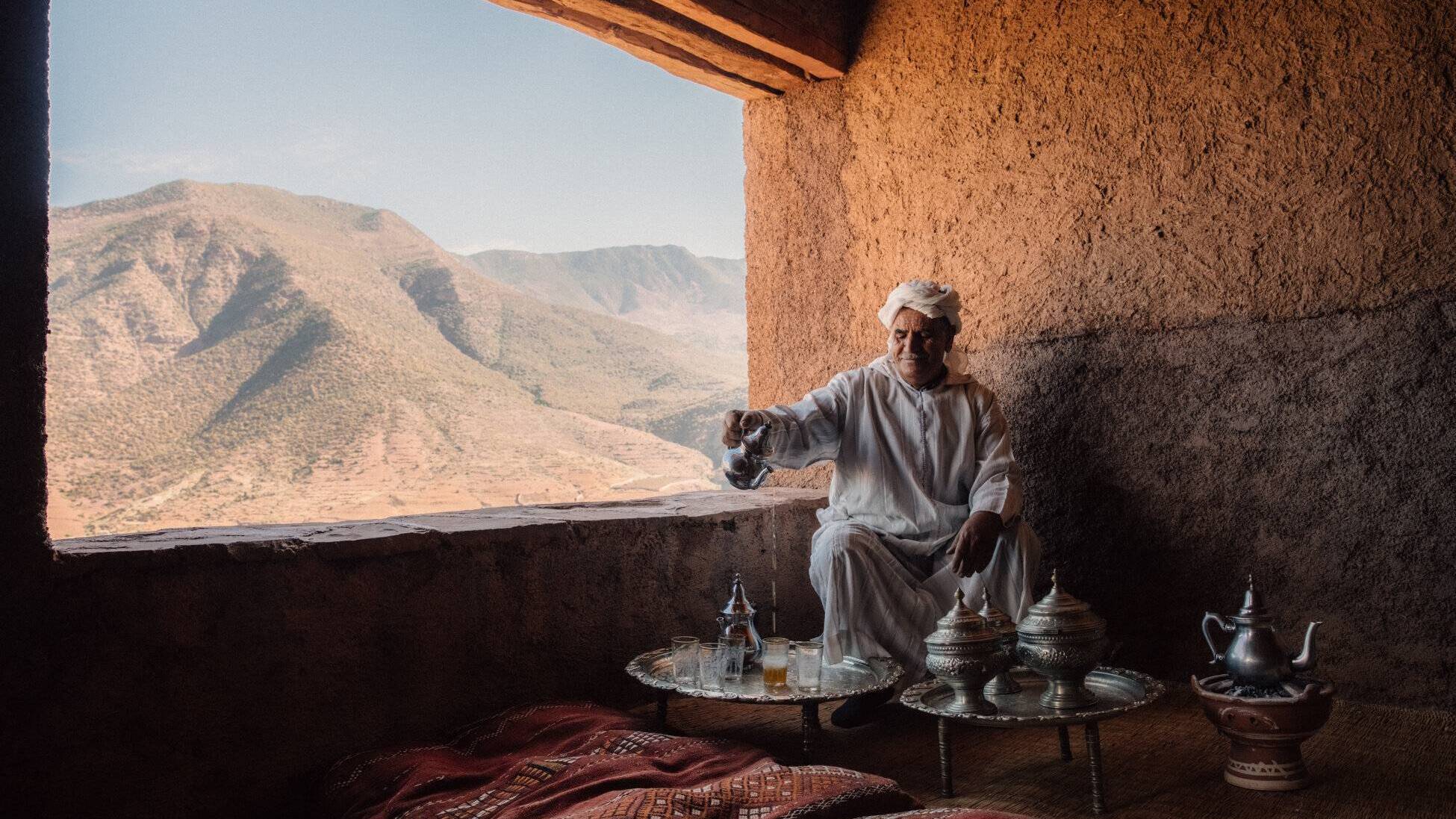
Authentic moments, from traditional mint tea to Berber hospitality, reveal the Morocco Oroko Travel's designers return to time and again.
Beyond Marrakesh lies a country of striking contrasts, best discovered through a journey shaped around the right places, people and pace.
Few destinations deliver such a complete change of scene so close to home. Just over three hours from Ireland, Morocco moves effortlessly from the energy of Marrakesh to the silence of the High Atlas Mountains and the open skies of the Agafay desert. Within a single week, it can feel as though you have experienced three entirely different journeys.
The temptation is to fit inasmuch as possible. We believe Morocco is better experienced differently. Its most memorable moments are rarely the ones rushed between landmarks: breakfast on a riad rooftop before the town wakes; a conversation with an artisan whose family has practised the same craft for generations; or mint tea shared after a morning walking through a mountain village. The country reveals more when the journey has been carefully considered and when there is time to notice it.
It is why Morocco remains one of the destinations our travel designers return to year after year. Marrakesh may be the natural starting point, but it is the contrast between the city, mountains and desert and the way each chapter prepares you for the next – that makes the journey so rewarding.
October midterm is particularly well suited to families, although Morocco’s season extends from late October into early spring. Warm days, cooler evenings and quieter trails create ideal conditions for exploring the Medina, walking in the Atlas Mountains and lingering over long lunches on a rooftop terrace.
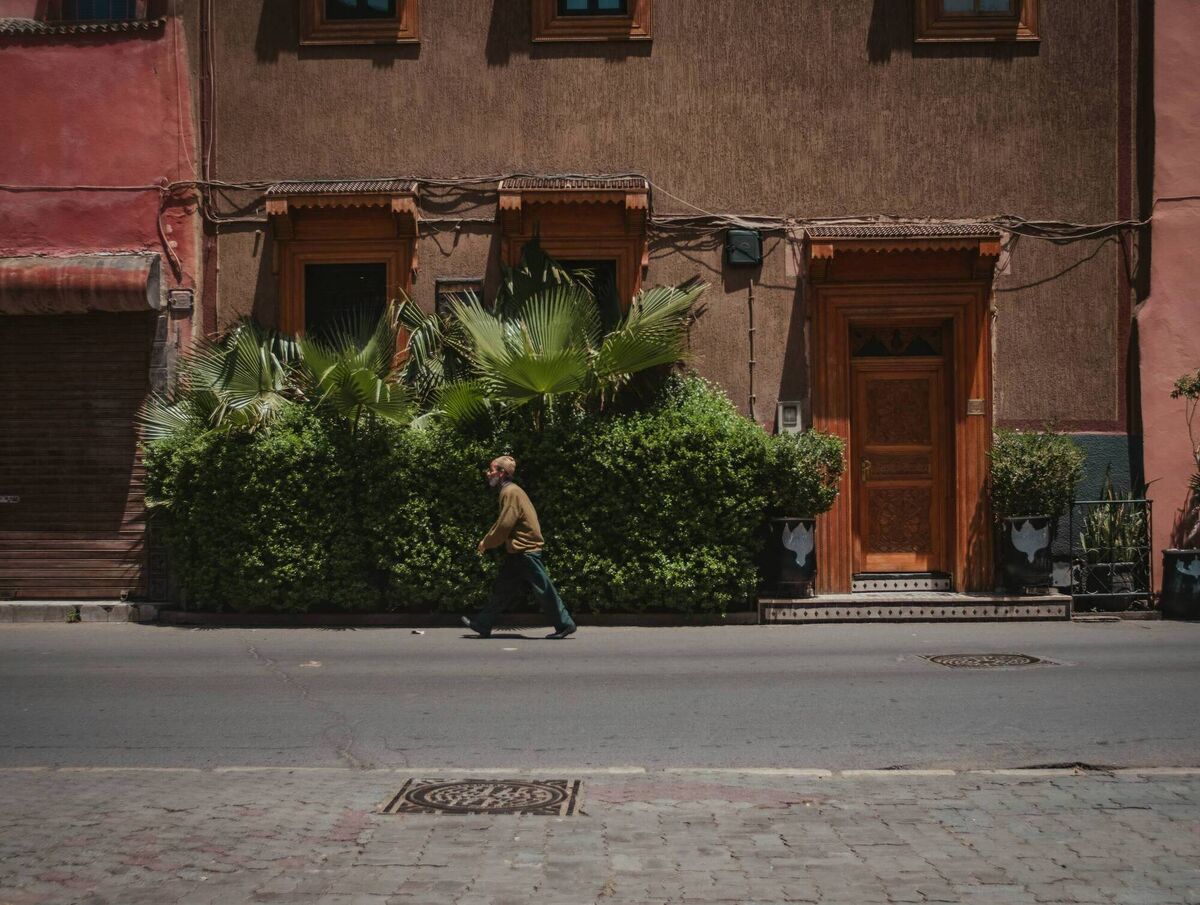
Marrakesh is where most journeys begin, but it’s a city best experienced at an unhurried pace. Jemaa el-Fna, Jardin Majorelle and Bahia Palace deserve every bit of their reputation, yet the city’s character often reveals itself in the quieter moments between them. We like to begin in the Kasbah, entering through the monumental Bab Agnaou before wandering streets where neighbourhood bakeries, traditional hammams and generations-old artisan workshops sit behind unassuming doorways. Continue into the Mellah, the city’s historic Jewish quarter, where jewellers, spice merchants and beautifully restored synagogues tell another chapter of Marrakech’s story.
A local guide changes the experience entirely. Rather than simply navigating the Medina, they introduce you to the people behind it: the ceramic artisan whose family has worked the same kiln for decades; the stall where warm briouats emerge throughout the morning; or the traditional herboristerie where shelves are lined with jars of saffron, verbena, black seed oil and dried herbs, each with its own story and purpose.
Food is often one of Morocco’s biggest surprises. Many arrive expecting rich tagines at every meal, but the cooking is lighter and more varied than that.
One lunch spot we return to time and again is L’Mida, overlooking the rooftops of the Medina, where Moroccan ingredients are interpreted with a contemporary touch. Mhamsa arrives prepared like a risotto with spinach and courgette, while Berber gnocchi is served in fragrant tomato sauce with soft j’ben cheese, herbs and hazelnut butter. Fresh mint, coriander and preserved lemon appear throughout the menu, giving dishes a freshness that many first-time visitors don’t expect.
Breakfasts become just as memorable, particularly on a riad rooftop where home-made yoghurt, seasonal fruit, local conserves and warm msemen flatbread are served as the city slowly comes to life below.
Where you stay has as much influence on Marrakesh as what you see. We spend as much time understanding how our clients want to feel as we do discussing the places they’d like to visit, because the right riad shapes the entire experience of the city.
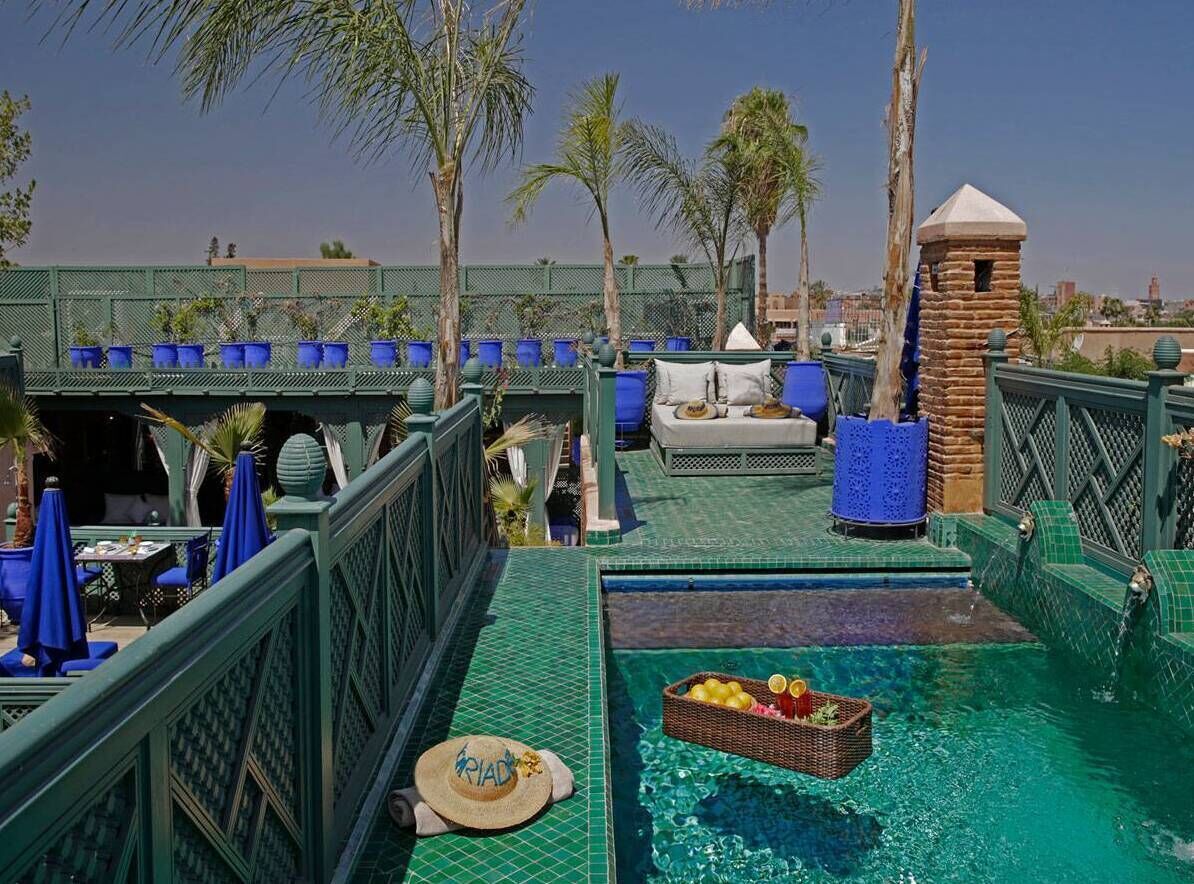
For couples looking for somewhere quietly romantic, Riad Élégancia remains one of our favourite hotels. Hidden behind an unassuming doorway, it feels entirely removed from the pace of the Medina outside. Returning before sunset for a swim in the blue-tiled rooftop pool quickly becomes part of the daily ritual, while mornings begin with birdsong, home-made yoghurt, fresh fruit, local conserves and warm msemen served in peaceful alcoves overlooking the rooftops of the old city. Families travelling with children may prefer its sister property, La Maison Arabe, which offers the same timeless character with larger rooms and a more family-friendly setting.
El Fenn has an entirely different personality. Created by restoring a collection of historic riads and filling them with contemporary art, vintage furniture and bold Moroccan textiles, it has long attracted artists, designers and creative minds. Time disappears between its courtyards and rooftop terraces, where the views stretch across the Medina to the Atlas Mountains beyond.
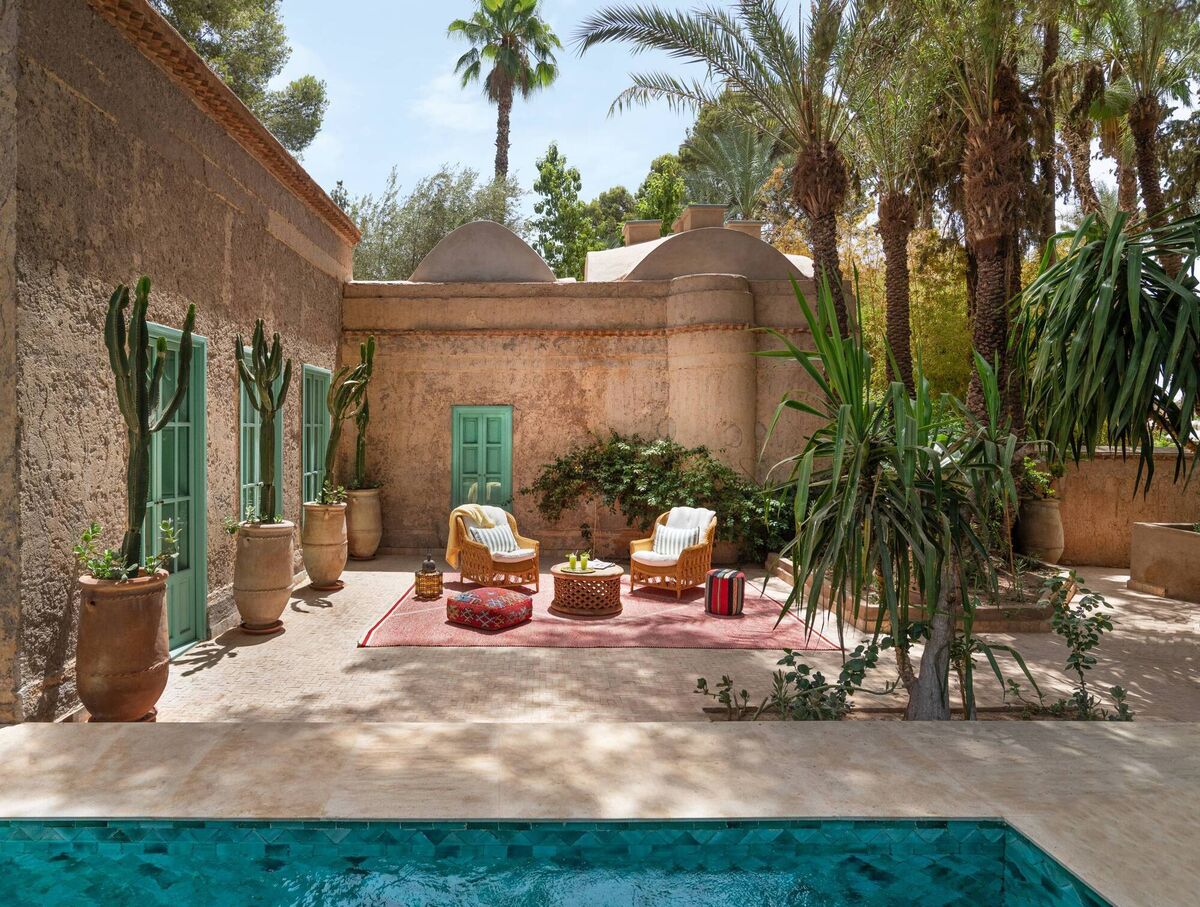
For larger families or milestone celebrations, we love to recommend Jnane Rumi in La Palmeraie. Originally designed by renowned architect Charles Boccara, today it feels more like a beautifully curated private residence than a hotel. Gardens filled with palms and olive trees surround spacious suites furnished with Moroccan craftsmanship, European antiques and contemporary design pieces sourced from Marrakech’s finest ateliers. Service is wonderfully intuitive, allowing everyone to settle into the slower pace that makes this part of the city so appealing.
Three nights is usually enough to understand Marrakesh. By the fourth morning, most people are ready for space. An hour south, the High Atlas Mountains reveal another side of Morocco entirely. Terraced hillsides replace alleyways, walnut groves replace souks and the soundtrack becomes birdsong rather than scooters.
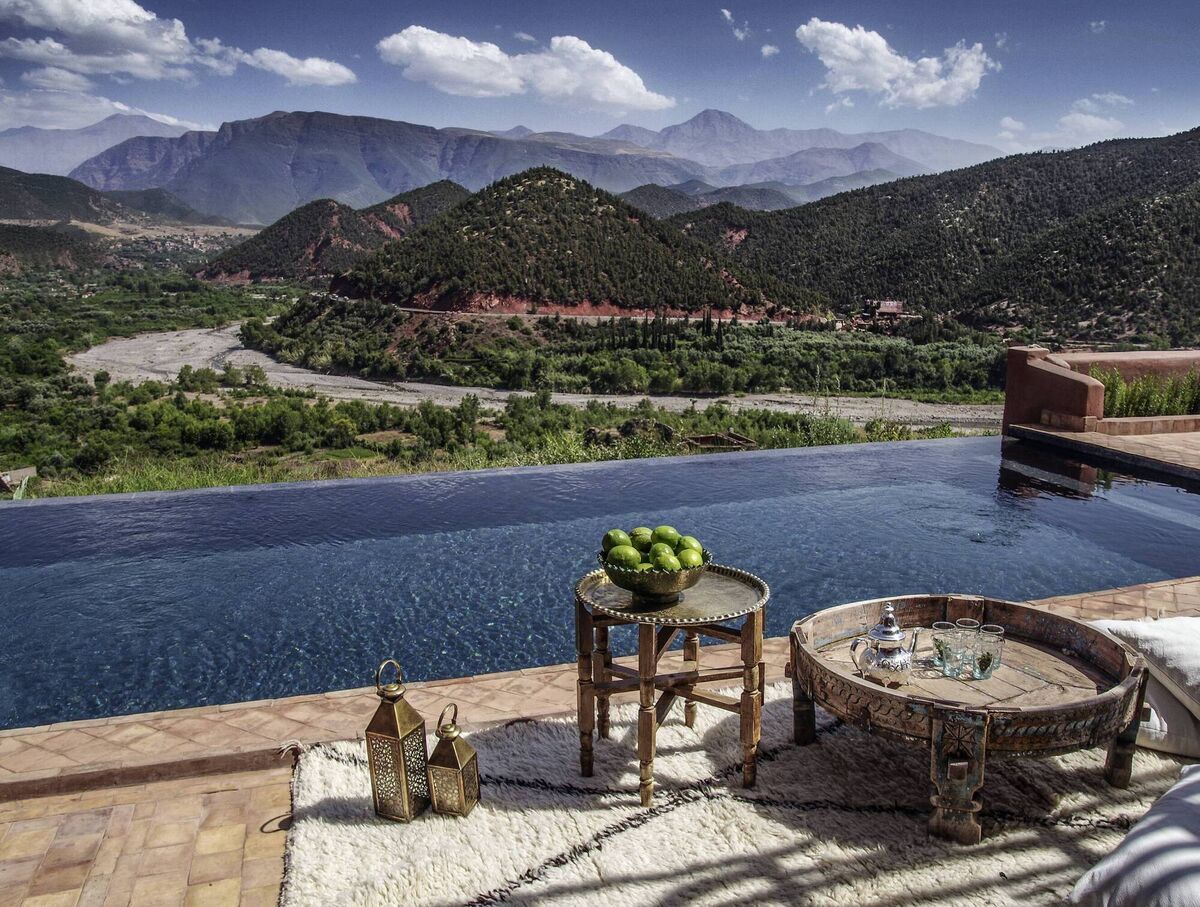
Kasbah Bab Ourika has long been one of our favourite places to pause, sitting high above the valley with panoramic views across orchards and traditional Berber villages. Spend a morning walking mountain trails with a local guide, stopping for mint tea with a family along the way, before returning for an afternoon beside the pool or in the gardens. It’s remarkable how quickly the silence becomes one of the highlights of the journey.
The final chapter belongs to Agafay. While the Sahara has its place, Agafay works beautifully as part of a weeklong itinerary, particularly for families, allowing more time to experience Morocco rather than spending it on the road.
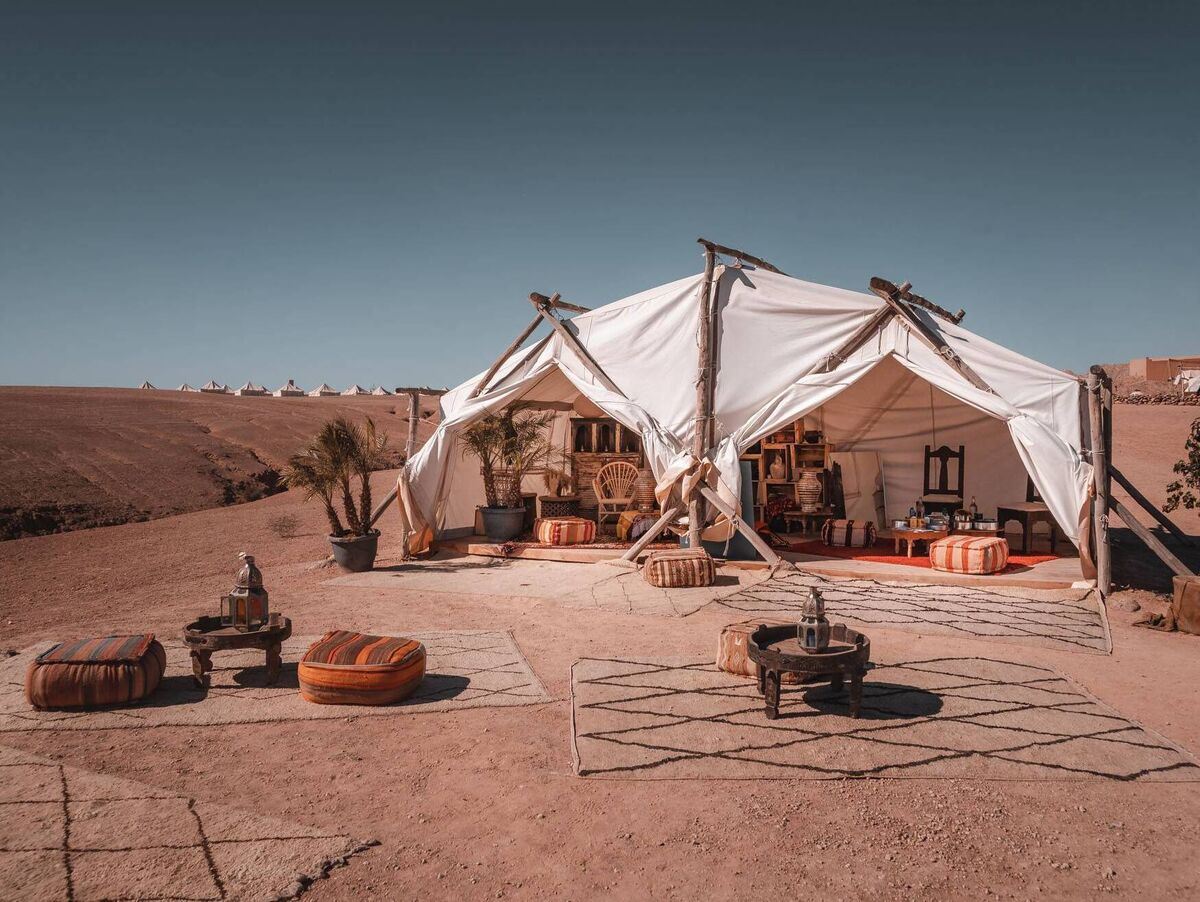
Inara Camp captures everything we love about the desert. Arrive in time for lunch before the afternoon unfolds between the pool and shaded terraces overlooking the stone desert. Camel rides are best left until the sun begins to fall, when the changing light stretches across the landscape and the Atlas Mountains become silhouettes on the horizon. Back at camp, Berber musicians gather around the fire while fresh bread is baked over glowing coals. Dinner is served beneath the stars, beginning with crisp chicken pastilla before slow-cooked tangia and vibrant seasonal salads. Afterwards, retreat to your private fire pit with little more than the sound of the breeze and a sky filled with stars.
For us, Morocco has never been about seeing more. It’s about experiencing the country at the right pace, allowing each place to reveal a different side of itself before moving on to the next. It’s why Morocco remains one of the journeys our Travel Designers return to more than almost anywhere else. Not because we’ve perfected a route, but because no two journeys should feel the same. Every holiday begins with a conversation about the kind of holiday you want to have, then unfolds at a pace that feels entirely your own.
To begin planning your own Morocco journey, arrange a private consultation with one of Oroko Travel’s designers on 01 260 0240 or visit orokotravel.ie