How Gas Networks Ireland’s Scotland project will reduce its carbon footprint by 42%
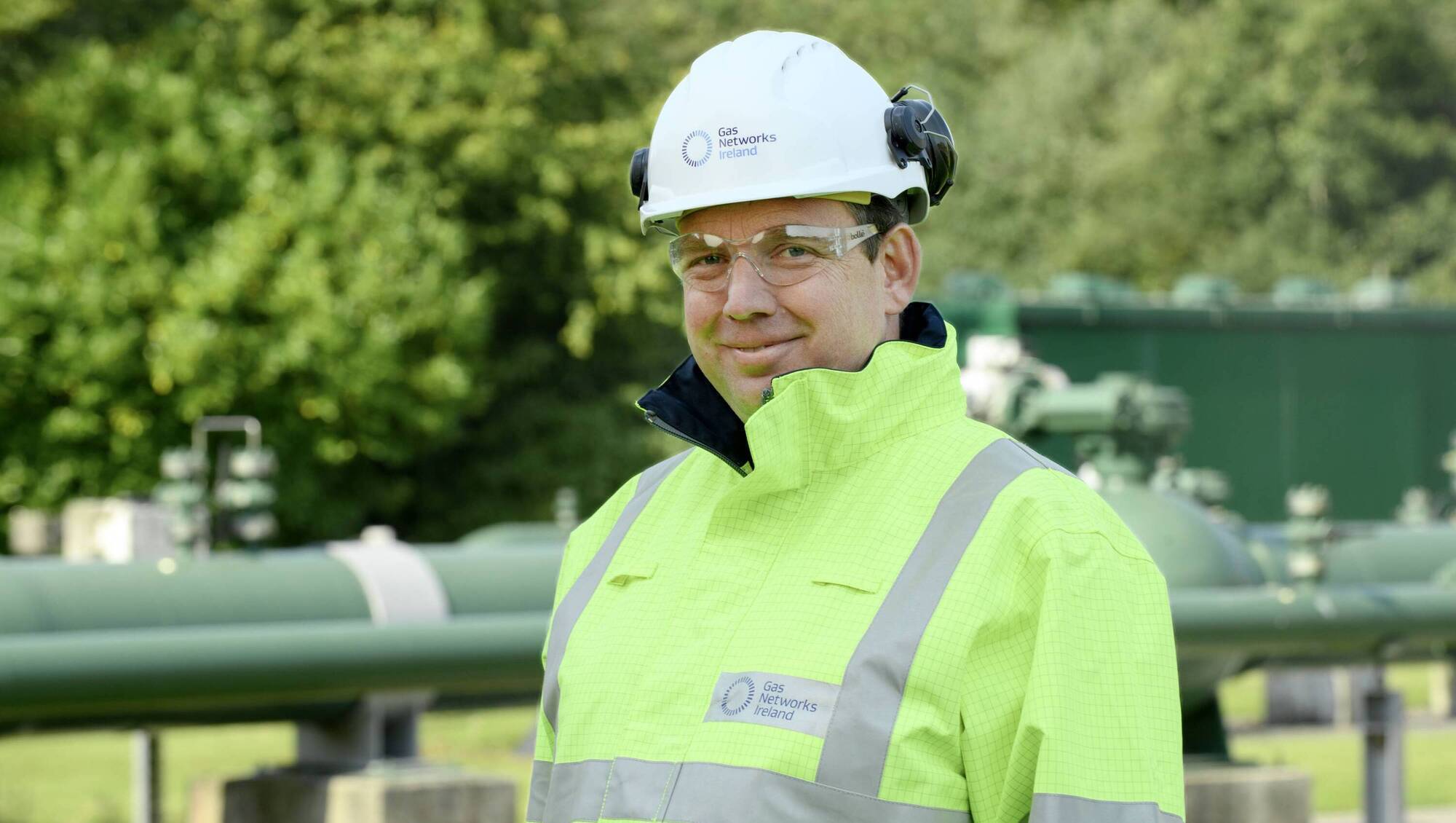
Brian Sheehan, director of assets and infrastructure, Gas Networks Ireland. Pic: Daragh McSweeney/Provision
When people think about climate action, they often picture wind turbines, solar farms or electric cars. But some of the most important changes happening in the journey to a lower-carbon future are taking place quietly behind the scenes and underground in the infrastructure that keeps 720,000 homes heated, businesses operating and energy flowing every day.
One such project is now underway for Gas Networks Ireland, which has unveiled plans for a major €200m investment to decarbonise two compressor stations in south-west Scotland that are central to Ireland’s gas supply network.
The ambitious project, which was announced earlier this year during the UK-Ireland Summit in Cork, forms a central part of our wider sustainability commitments and represents a significant step in our planet-focused ambitions. It is expected to reduce the organisation’s operational greenhouse gas emissions by 42%, while also enhancing the long-term resilience and sustainability of Ireland’s gas infrastructure, underscoring our dedication to creating a more sustainable future for both people and the planet.
The compressor stations, owned and operated by Gas Networks Ireland at Beattock and Brighouse Bay in Scotland, play a critical role in Ireland’s energy system. Together, they help supply almost 80% of Ireland’s natural gas requirements through the interconnector network linking Ireland and the UK.
Compressor stations are essential pieces of infrastructure that help maintain the pressure needed to transport gas safely and efficiently across long distances through pipelines.
Gas Networks Ireland now plans to replace traditional gas turbine-driven compressor systems at both Scottish sites with modern Electric Motor Drives (EMDs) a technology which is already widely used across Europe.
EMDs use electricity instead of combustion engines to power the compressor systems. Because they eliminate on-site combustion emissions, they can significantly reduce carbon dioxide and other pollutants.
The environmental benefits are substantial. In addition to reducing carbon emissions, the technology also lowers atmospheric pollutants such as carbon monoxide, nitrous oxide and methane emissions. The systems are quieter, more energy efficient and designed to operate with greater flexibility than traditional compressor technologies.
When powered by renewable electricity, the environmental gains become even greater.
Gas Networks Ireland says the project forms part of its sustainability commitments to reducing operational greenhouse gas emissions by 51% by 2030 and support Ireland’s Climate Action Plan.

Major milestone in Gas Networks Ireland’s sustainability journey Brian Sheehan, Director of Assets and Infrastructure at Gas Networks Ireland described the project as a major milestone in the organisation’s sustainability journey.
“This year Gas Networks Ireland celebrates 50 years in operation, and it is our hope that this decarbonisation project will be recorded as another important milestone moment in our organisation’s history,” he said.
“From a company that started out with town gas five decades ago, we are now working to deliver a net-zero carbon gas network run on biomethane and green hydrogen. As we transition Ireland’s network toward a renewable gas future, we are simultaneously working to identify solutions to reduce our own organisation’s carbon emissions, and this €200m investment is a major step forward in that regard.”
Gas Networks Ireland operates more than 14,700 kilometres of gas pipelines and two subsea interconnectors linking Ireland with Scotland. The infrastructure not only supports homes and businesses across Ireland, but also supplies gas to Northern Ireland and the Isle of Man.
The Scottish compressor stations are connected into the UK’s National Transmission System at Moffat, creating a vital link in the broader regional energy network.
For Sheehan, the decision to move toward Electric Motor Drives followed extensive analysis and market review.
“When considering the options to decarbonise our primary supply sites in Scotland, we completed a thorough review and analysis of the market and identified Electric Motor Drives as a tried and tested technology across Europe,” he said.
“They also provide greater operational flexibility as we transition to renewable power and become coupled with renewable electricity generation.”
Sheehan added that while the project is at design stage, significant progress has already been made in planning and stakeholder engagement.
“We have made significant progress in planning and positive engagement with key stakeholders in both Ireland and Scotland,” he said.
The project is currently progressing through detailed design and planning phases, with the planning application submitted to Dumfries and Galloway Council in Scotland. Tender processes for both the EMD supply and compressor hall construction are also underway.
The new systems are expected to become operational in 2030, subject to the necessary project and regulatory approvals.
Beyond emissions reductions, the investment is also expected to improve network resilience and operational reliability. The additional flexibility provided by EMD technology will allow compressor infrastructure to be upgraded and maintained more efficiently, helping strengthen the long-term security of Ireland’s gas supply system.
That resilience will remain important during the transition toward renewable gases such as biomethane and hydrogen, which Gas Networks Ireland sees as part of the future energy mix.
The transition to lower-carbon infrastructure is not only about reducing emissions figures, but also about creating cleaner, more efficient and more reliable systems capable of supporting the energy needs of future generations.
Although much of this transformation may happen out of sight in compressor stations, underground gas pipelines and engineering facilities far from public view, projects like this demonstrate how climate action is increasingly becoming part of the foundations of everyday infrastructure.
Gas Networks Ireland operates and maintains Ireland’s €3bn, 14,728km national gas network, which is considered one of the safest and most modern renewables-ready gas networks in Europe.
Almost 725,000 Irish homes and businesses trust Ireland’s gas network to provide efficient and reliable energy to meet their heating, cooking, manufacturing and transport needs In addition to the onshore Irish gas grid, Gas Networks Ireland’s transmission network also includes two subsea interconnectors between Ireland and Scotland, one of which also serves the Isle of Man, two compressor stations in Scotland at Beattock and Brighouse Bay and twin onshore pipelines in Scotland. The interconnector system is connected to the UK’s National Transmission System (NTS) at Moffat in Scotland. Gas is also supplied to the Northern Ireland market via Twynholm, Scotland.
The gas network is the cornerstone of Ireland’s energy system, securely supplying more than 30% of Ireland’s total energy, including 40% of all heating and over 40% of the country’s electricity generation.
Gas Networks Ireland is aiming to deliver a repurposed, resized and fully decarbonised gas network. Its “Pathway to a Net Zero Carbon Network” envisions transforming the existing gas network into two separate systems carrying 100% renewable gas, one dedicated to biomethane and the other to green hydrogen, with the potential to carry approximately 30% biomethane and 70% green hydrogen, as well as offering significant long-term energy export opportunities.