Diabetes in your family: tips for managing the festive season

Enjoy the Great Outdoors: Remember that you need 15-20g of carbohydrate for one hour of activity. So be sure to make the most of eating goodies by staying active.
Christmas is a time of great excitement for children. It is a time of wonder and seasonal magic with lights, decorations, presents and the arrival of Santa.
As well as enjoying school holidays, new gifts and supercomputer games, it can also be a time of over-indulgence with rich foods and treats tempting us all at every turn — and particularly enticing for younger folk.
Healthy eating for people with diabetes is the same as for everyone else. All of the traditional Christmas foods such as mince pies, puddings and cake can still be enjoyed — but just don’t eat too many or too much in one go. The trick is to spread them out over the Christmas period and keep your portions as small as you can.
There are approximately 250,000 people in Ireland living with diabetes. Progress in treatment, support options and technology has made diabetes much easier to manage, however, it is still a relentless condition to live with.

The HSE recommendation is that people with diabetes are seen by a clinician 2 to 4 times a year, meaning that for the vast majority of the time they are responsible for managing their condition by themselves.
Medical advances over recent times have revolutionised diabetes care, allowing for changed lifestyles and better lives.
“Despite progress made over the past century, there is still much to be done to ensure that everyone with diabetes has access to the care and support they need,” says Kieran O’Leary, CEO of Diabetes Ireland. “Highlighting the day-to-day personal burden of managing diabetes is an important step in prompting discussion on the need for change.”
Keep a lid on the chocolates and sweets. Selection boxes and tins of sweets don’t have to be eaten in one day — restrict them to small amounts after meals. Put away some boxes until January — a treat around back to school time.
Pedal and push yourself healthy. If Santa is bringing a bike, skates or scooter, get out and play with them for at least an hour every day.
Family walks in the great outdoors. Dress for the weather and go for a decent woodland walk — all the best to help digest big dinners.
Keep to sugar-free or diet drinks as much as possible. Sweet beverages have similar content of sugar and carbohydrates, so even if you drink a healthy fresh fruit drink, just limit it to a small glass taken with a meal. Remember, water is the healthiest choice!
Taste the delights of fruit and veg. Fruit salad, melon, satsumas and dried fruit are a tasty substitute to crisps, chocolate and cake. But it does not mean that you should eat/drink without limits!

Keep temptation out of sight. Goodies within easy reach present an enormous temptation, and for a child the temptation can be a particularly difficult struggle.
Take your time at the table. We usually eat more when we eat quickly and — slowing down will help reduce the amount taken in.
Get grilling. Fried food can be easily avoided by roasting or grilling. Avoid adding butter to vegetables, and keep an eye on the sauces.
Check what’s on in your area on Christmas or St Stephen's Day. Why not sign on for a local sponsored walk or even a swim? A brisk walk before or after a meal will help reduce blood glucose levels.
Remember that you need 15-20g of carbohydrate for one hour of activity. So be sure to make the most of eating goodies by staying active.
Type 1 diabetes is the most prevalent chronic condition in children in adolescents, although it can be diagnosed at any age.
It develops because of a lack of insulin production, and without treating it with insulin (injections or insulin pump), it can be fatal without insulin therapy.
In the early stages, the signs of diabetes in young children and teenagers type 1 diabetes can be vague, which makes it difficult for parents to recognise and for doctors to diagnose.
“Delayed diagnosis of type 1 diabetes can result in a condition known as diabetic ketoacidosis (DKA), and is a life-threatening problem,” explains Edna Roche, Professor in Paediatrics at Trinity College and senior paediatric endocrinologist at CHI at Tallaght University Hospital.
“Insulin is a hormone that lets glucose get into cells where the energy is made. If there is no or insufficient production of insulin, instead of feeding the cells with energy, glucose builds up in the bloodstream. Body and cells still need glucose to function, and to compensate the lack of glucose in the cells, the body breaks down fat at a rate that is too fast.
“The liver processes this fat into ‘ketones’ and this causes the blood to become acidic. If not treated with insulin can result in a diabetic coma.” The symptoms are dehydration, vomiting, abdominal pain and breathing problems. If untreated, these can progress to coma and can be fatal. The earlier recognition of elevated blood glucose levels, the lower risk of developing DKA.
“The symptoms of type 1 diabetes can be subtle. Parents and health professionals need to ‘think diabetes’ and work within our community to reduce the number of children and young people presenting with DKA.”
Ireland has a high incidence rate of type 1 diabetes in children and adolescents, and is in the top 25% for diabetes incidence worldwide.
The number of new cases in children under 15 years in Ireland increased from 16.3 cases per 100,000/year in 1997 to 27.1 cases per 100,000/year in 2018.
Professor Roche adds: “Our rate of diabetes appears to be stabilising, but still remains at this high incidence rate. Annually there are on average 285 new cases of type 1 diabetes in those under 15 years. However, each individual GP or practice may not see a newly diagnosed child for many years.”
The focus of the ‘Think Diabetes’ campaign is to encourage people to recognise the symptoms early and come forward for testing and treat early.
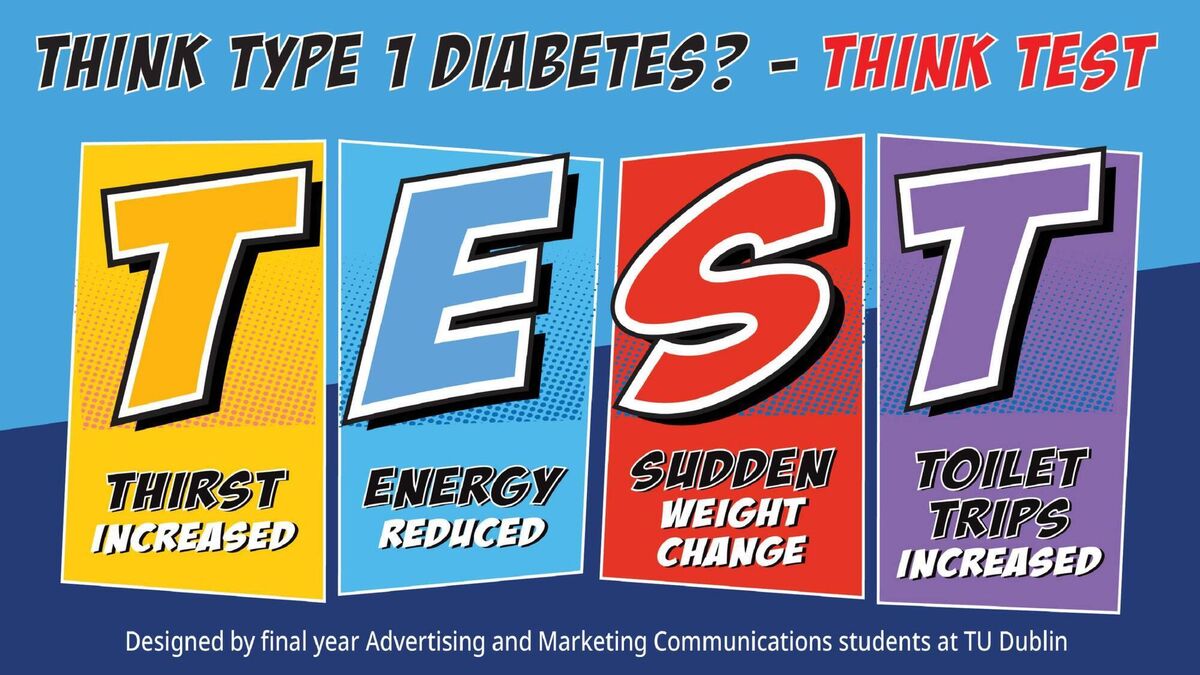
The acronym ‘TEST’ is a reminder of the key diabetes symptoms:
- — thirst increased.
- — energy reduced.
- — sudden weight change.
- — toilet trips increase.
If you recognise these symptoms, contact your GP or local pharmacist and request a blood glucose test.
Diabetes Ireland also wants to highlight to people with diabetes that they can still avail of the flu vaccine, available for free from their healthcare professional.

A survey by Diabetes Ireland of almost 900 people with diabetes showed that only 44% have been recommended by their healthcare professional to take the free flu vaccine, while 21% were not aware of the fact that the flu vaccine is available and recommended for all people with chronic conditions, including diabetes, free of charge.
With so many people choosing to self-isolate due to Covid-19, Diabetes Ireland is concerned that many people are seeing their GP or healthcare professional less frequently. Many people with diabetes may not have seen HSE notices advising them that they should get the free flu vaccine.
Dr Kate Gajewska, research and advocacy manager, Diabetes Ireland, said: “Flu vaccine can protect you from unnecessary complications and hospitalisations, and the risk of both is increased for people with diabetes. We would like to raise the awareness of the need for people to take the flu vaccine this season, and let people with diabetes know that they can avail of it free of charge in pharmacies and general practice. We hope that this message will reach those who have not heard about it from their healthcare teams."
The HSE recommends flu vaccines to all people with underlying conditions, including diabetes. To avail of the free flu vaccine, ask your pharmacists or call your GP.


