People are paramount for Vodafone and Deloitte
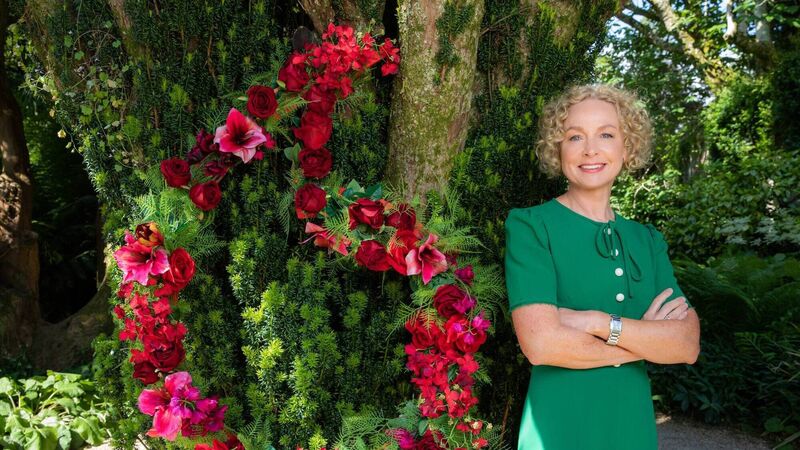
Anne O'Leary, CEO of Vodafone Ireland Pic:Naoise Culhane
DELOITTE LEADERSHIP SERIES: ANNE O’LEARY, CEO, VODAFONE
When it comes to high-profile female business leaders, they don’t come more elevated than Anne O’Leary and Caroline O’Driscoll.
The former has been CEO of Vodafone for eight years, an accomplished business leader who has consistently delivered results over several years, in addition to a skilled communicator who builds relationships at all levels. Caroline is partner at Deloitte Ireland, co-founder of iWish, director of Rethink Ireland, and past chairperson of it@cork.
As Ireland slowly emerges from the pandemic, these two principals in their respective fields look to the lessons of the past 18 months and the challenges of the business landscape in a changing world. In response to Caroline’s query of how Covid-19 affected Vodafone’s operations, Anne painted a picture of a country grappling with an event of unforeseen magnitude.
“When Leo Varadkar made that famous speech in March 2020 preparing us for COVID-19 restrictions, Vodafone along with numerous other companies quickly transitioned to remote working almost overnight — right from the very start the health and safety of our people was paramount. Right away we noticed changes in communications traffic patterns, with fixed and mobile traffic up over 50% almost immediately,” said Anne O’Leary.
“Keeping Ireland connected has long been Vodafone’s guiding ethos, and connectivity became as important as water and electricity for government, hospitals, emergency services, businesses, consumers and individuals. Never before has connectivity, security and reliability been so important.
“It was a very challenging time, but I think that everybody at Vodafone was motivated by our company purpose, which is to connect for a better future but also driven by the need to step up and not let our customers and the most vulnerable in society down.”
Caroline underlined that Deloitte moved 3000 people from offices to home working in the space of 24 hours because the technology was there to do it — an achievement that 20 years ago would have been impossible. “It was about being flexible and having empathy for the very different circumstances people were contending with,” Anne recalled.
“Whether that was looking after kids at home, caring for elderly parents or coping with COVID itself. We spent a lot of time looking after our people — from understanding their needs through regular check-ins and surveys, being flexible with the support they needed and knowing that one policy would not work for everybody.
“In addition, we have provided appropriate training and support with a particular focus on the impact on mental health. It was about listening to the feedback from our people and reacting to their needs. Given that we were not physically together, it was about being aware of new ways of communicating and learning from it.”
The increasing prevalence of mental health issues were underlined in the Deloitte Global survey, showing 41% of millennials and 46% of Gen Z’s suffering from stress that has spilled over into their work.
The pandemic really has been a ‘whole of life’ experience, Caroline noted, affecting so many areas that it was impossible to compartmentalise.
Anne emphasised the role that leaders played: “People management proved to be hugely important. We brought together our own people managers weekly at the start of the pandemic and now monthly, to empower them to lead with purpose and empathy and to create psychological safety so our leaders could share their concerns and look for advice. Crucially, our people managers stood up when it was vitally important.”
As restrictions continue to loosen, tomorrow’s office will be very different from that which existed prior to March 2020, Caroline suggested: “A business like Deloitte went fully remote and offsite with everyone on a level playing field through Zoom or Teams.” But what will the future work model look like for these businesses?
Anne shared that Vodafone are moving to a 60:40 Hybrid model, where 60% of employees' time will be spent remotely, and 40% of the time in the office.
“We have what we call a ‘Future Ready Vodafone’ strategy, much of which has come from what we learned through the pandemic. Being present in the office five days a week is really a thing of the past, especially when it comes at the expense of quality of life.
“Our regular business survey showed us that our people want to be in the office 2/3 days a week — and the role of the manager will be to create the reasons to be together physically in the office, aligned to our three principles of connection, collaboration and innovation.” Deloitte have a similar system entitled ‘Meeting for Moments that Matter’.
Anne also shared that the learning curve dictated by forced isolation was a challenge — all the way to the boardroom: “I am an extrovert who has always gotten my energy from people, whether in the office or at external events, so being confined to my attic office wasn’t the best for me, and I learned I really did not like it five days a week.”
However, being productive during COVID achieved unexpected ambitions: “We delivered more fixed broadband connectivity than ever before and when our retail shops closed, we achieved more in the way of digital transformation than we normally would in five years.”
She added that “even in the darkest days Vodafone had an important role to play in keeping Ireland connected, and we can be very proud of what we delivered, in very difficult circumstances.”
Noting how Deloitte observed the movement of its own people from the cities to the country, Caroline wonders how popular this shift to rural home working will be as we move forward into 2022.
“Places like the Ludgate Hub in Skibbereen were thriving - a huge success that brought jobs in the form of direct and indirect employment from cafes to community services, all thriving in a rejuvenated locality,” she said.
Hubs like the Ludgate right across the country with secure and reliable connectivity to anywhere in the world will be centres of commercial and social activity into the future, she predicts, providing a focus of innovation and creativity for those local communities, creating jobs and opportunities that never existed before.
“Certainly we will see increased numbers of people spending more extended periods in rural Ireland, with many moving there permanently.” Career opportunities through STEM and self-belief As a co-founder of I Wish, established out of concern for the startling lack of young women pursuing careers in STEM, Caroline dedicates much of her working life to giving a platform to female role models.
“The annual conferences are about female role models telling their STEM story and giving girls access to role models to aspire to,” said Caroline.
With women making up less than 25pc of the STEM workforce in Ireland, the aim of I Wish is to “empower girls with the confidence to know that there are no limits.” Anne agrees we need more women in leadership positions, quoting ‘you can’t be what you can’t see’.
“Young girls need to know the opportunities available to them in STEM along with the wide range of careers. Young girls must feel supported to believe these careers are achievable.” As she looks back on her career, Anne points to the best advice she received: “It was to believe in myself, to take risks, to put my hand up and push myself forward and to not be afraid to take on new opportunities.”
She also grasped the importance and power of networking: “I have always placed an emphasis on getting out and networking throughout my career. I strongly believe that meeting new people is so important, people with different opinions and people who may be facing the same challenges as you. These connections may be able to help you or connect you to the right people who can help your business. They might even be able to help you find a new career.”
To the generation of tomorrow, she says: “Be bold, take risks, speak up, be confident. Support each other.”