Nurturing tiny toad a good start to #LoveNature all year round
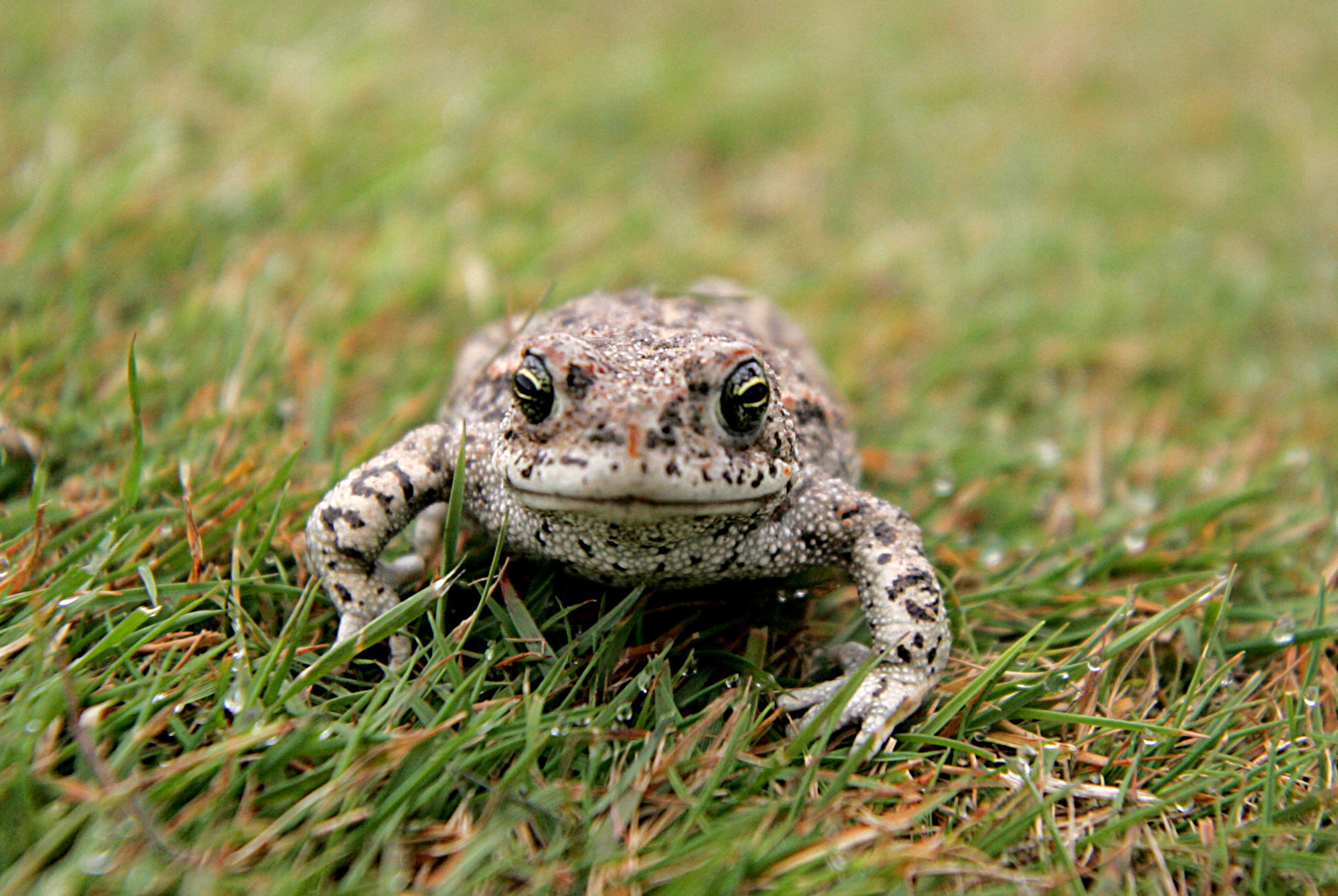
Endangered natterjack toads have reason to be cheerful as efforts to revive their fortunes include a breeding programme in Fota Wildlife Park. Photo:Valerie O'Sullivan
If you go down to the woods today, keep an eye out for endangered creatures like the tiny Natterjack toad and the Lapwing, both of whom are among native species targeted for conservation projects.
Malcolm Noonan, Minister of State for Heritage & Electoral Reform, is urging people all over Ireland to #LoveNature, in-person and online, not just during National Biodiversity Week, but throughout the year.
The recent Biodiversity Week has given everyone in Ireland the chance to explore the rich variety of natural life in Ireland, interact with experts and find out more about the natural world around them.

Encouraging everyone to get outdoors and enjoy nature, Minister Noonan said: “This National Biodiversity Week, let’s all take some time to get away from screens and go outside – look up at the sky and notice the birds, look down at the soil and notice the insects, look around at the sheer variety of life and take a moment to really appreciate how amazing it all is.
“You don’t need to know the names of the different species or anything about their lives to know that nature is wonderful. It’s about noticing it, being inspired by it, cherishing it, and valuing it for its own sake.
"And that’s something everyone can do, no matter who they are, where they live, or what they’re interested in. Nature is our heritage — it’s for all of us. So take whatever opportunity you can to get out there and enjoy it.”

As Covid restrictions ease, his Department will hope people will use the #LoveNature hashtag, and check in on it to see the biodiversity and conservation work of the National Parks & Wildlife Service and its partners. This article features some of their current projects, many more will appear online and in the Irish Examiner over the coming weeks.
Did you know that the Lapwing is Ireland’s national bird?
Sadly, numbers of ground-nesting wading birds are rapidly declining as breeding species in Ireland. It is estimated there are only between 500-600 breeding pairs left — a decline of 56% in the last number of years. The Lapwing is on the Red List of Birds of Conservation Concern in Ireland.

The National Parks & Wildlife Service is trying to conserve Lapwing and other water birds at Cooldross Lagoon and Saltmeadow, Kilcoole, Co Wicklow. This year, the results are very positive.
Habitat management measures carried out by the NPWS on site have resulted in a dramatic jump in Lapwing breeding numbers from 4 nests in 2020 to 19 nests, so far, this year 2021.
Beneficial management for breeding Lapwing at the site includes: the addition of a predator exclusion fence along the perimeter of the land, the creation of wader scrapes for chick feeding, targeted grazing to create a short grass sward to nest in and feed (cattle are taken out whilst chicks are about) and water management to maintain shallow pools for feeding. The site is also managed for other breeding waders, wintering wildfowl and waders, and passing migrants.
Monitoring and ringing of breeding lapwing is also an important facet of management. This involves monitoring breeding outcomes and productivity, ringing, and collection of biometric data.
This year will see the start of a colour-ringing project that will hopefully generate data on fledgling survival rates, dispersal, and natal site fidelity.
Lapwing, like many ground-nesting waders in Ireland, has dramatically declined due to factors including habitat loss and fragmentation. Predation, in particular, is a big driver of decline.
The provision of a predator exclusion fence along with other management measures seems to have positively affected breeding success and outcomes for the Lapwing at Cooldross as evidenced by a large increase in numbers.
Whilst it is still very early in the nesting year there are, at the moment, approximately 30 chicks feeding in the shallow pools, scrapes, and short grass at Cooldross and there are a large number of nests that have yet to hatch.
So, all going well, there should be close to 50 fledglings produced this year — up from 10 fledglings last year. Other wader species nesting includes oystercatcher and ringed plover — both showing an increase in numbers this year also.
It is hoped the endangered Redshank and rare Little Terns will breed at the site and a Little Tern project, involving a specially constructed experimental beach at Cooldross, is bearing dividends. All in all, a successful intervention by the NPWS.
A new captive breeding program for natterjack toads has recently started in Fota Wildlife Park, Cork.

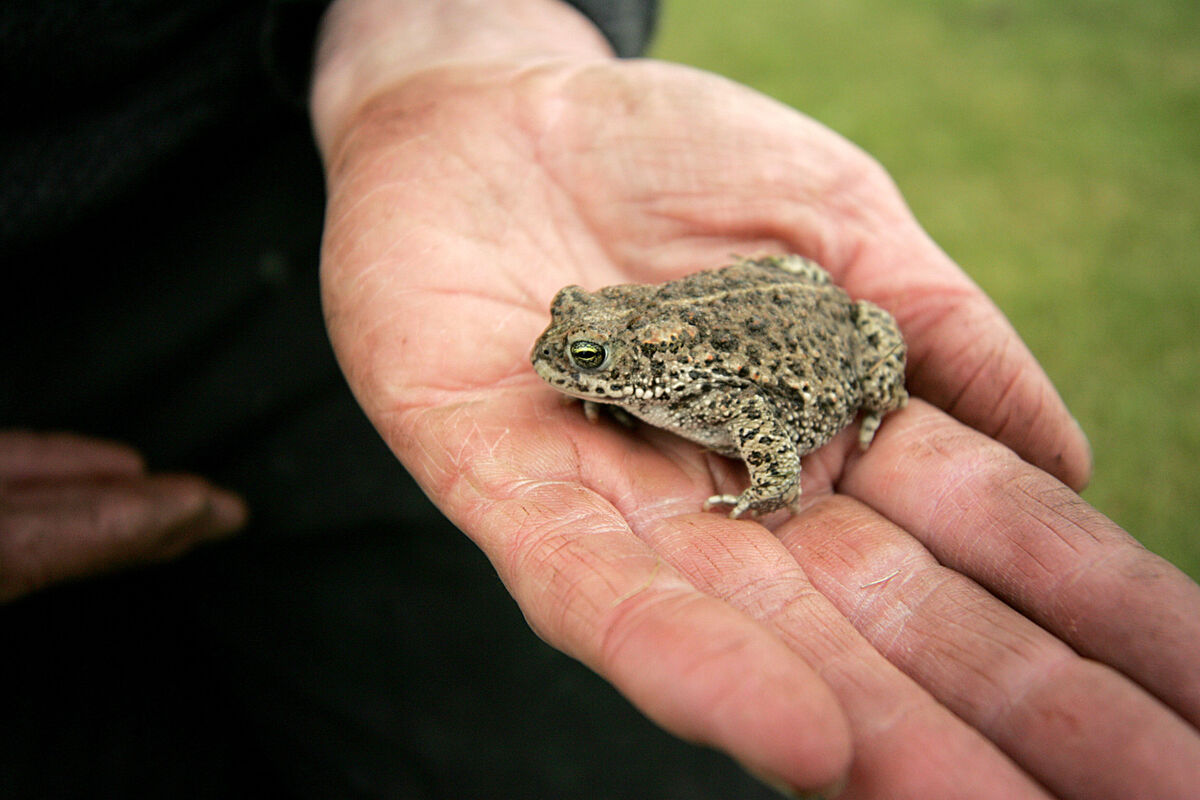
National Parks and Wildlife staff selected male natterjack toads from breeding sites in Castlegregory to take part in the new programme. Three males were brought to Fota to join six female toads already in captivity there.
The males underwent a brief quarantine period, to ensure they were in good health before joining the females in a specially designed breeding enclosure.
Natterjack toads have been confirmed as Endangered in the latest Red Data list due to declines in range and population in recent decades. All toadlets produced from the new breeding program will be released into the wild at selected sites to help supplement the native population.
The captive breeding project will build on the success of the captive rearing efforts already underway in both Fota and the Dingle Aquarium.
Under that initiative, NPWS collects toad spawn and tadpoles from desiccating ponds in the wild, transport them to Fota and Dingle Aquarium where they are reared over the summer months. The resulting toadlets are then returned to the species’ native range in Kerry.
Large amounts of tadpoles are typically lost in the wild due to pond desiccation and predation and this rearing program provides an important recruitment boost to the wild population.
The main threats to Natterjacks in Ireland are loss of aquatic and terrestrial habitats through wetland drainage and agricultural intensification, but also deterioration of habitat quality (e.g. reed encroachment of ponds; under grazing of terrestrial habitats around ponds leading to rank vegetation and poor foraging conditions).
Welcoming the male toads to Fota, Sean McKeown, director of Fota Wildlife Park, said: “We’re delighted to be working with the NPWS on the recovery program for the Natterjack toad. We are getting amazing results from our rearing program and will hopefully see the same from our breeding program too.
"It’s great for Fota Wildlife Park to be working with conservation projects in Ireland when we are normally involved in projects in far-flung such as Vietnam and Madagascar. People need to understand the importance of conserving our native species and that many of our mammals, birds and amphibians also are facing threats to their survival in the wild."
Dr Ferdia Marnell, an amphibian specialist in NPWS, comments: “The natterjack toad is struggling in the wild and we need to explore the potential for captive breeding to supplement the wild population. We’re delighted that Fota has the expertise and the facilities to undertake this project with us."
All going well, the first captive-bred Irish toadlets should be ready for release at the end of the summer.
Over the past year, since the Covid-19 pandemic began, families, groups, and bubbles of friends across the country have been re-discovering nature, and over the summer, the Department of Housing, Local Government and Heritage and Leave No Trace will both be running outdoor awareness campaigns.
Each will give practical advice on visiting woodlands, coasts, peatlands, nature reserves, national parks, and waterways in the hope we can all be more responsible in our interactions with nature.

Acknowledging the connection many people forged with nature during the pandemic, Minister Noonan said: “The past year has shown us just how important it is to connect with the natural world and what that can do for us in terms of solace, a sense of peace and wonder, as well as our physical health.
"Now that public health restrictions allow us to travel beyond our counties, we can experience the ecosystems we haven’t for a while – out to the coast, or inland to a raised bog or woodland, or up into the mountains. Wherever you go, the diversity and variety of life are all around you. But we have to be conscious of the need to protect our precious habitats and the flora and fauna within them.”