Gas-powered trucks are part of our greener future
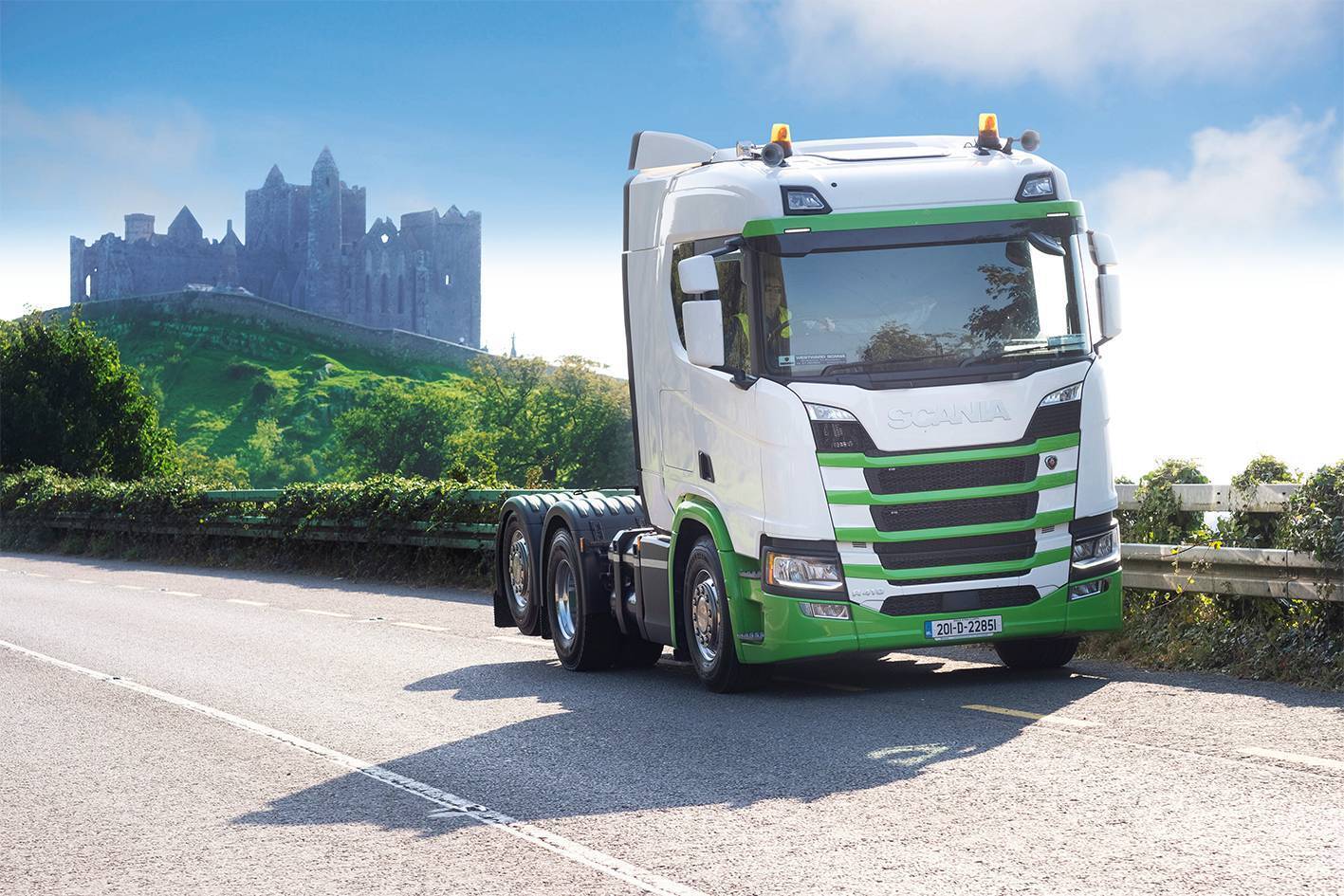
A gas-powered truck parked near the CNG refuelling station at Circle K in Cashel. Gas is a cleaner, affordable and proven alternative to diesel in transport.
Winner of both the Green Large Organisation and Sustainable Energy Achievement awards at the Green Awards 2020, Gas Networks Ireland was named as a finalist to defend both titles in 2021, as well as competing for two new accolades as the Green Energy Provider and the Green Public Sector Organisation of the Year.
Last year we sat down with Gas Networks Ireland’s newly appointed Sustainability Manager, Anne Moore, to learn more about the strategic and coordinated action the national gas network operator was taking on climate issues. One year on and many accolades later, we caught up with Anne to discuss the immediate action the semi-state utility is taking to remain a national leader in sustainability today, and the important role the gas network will continue to play in a cleaner energy future.

Absolutely, sustainability is a high strategic focus for Gas Networks Ireland and is driven by our role in delivering an affordable and clean energy future for the people of Ireland, through the decarbonisation of the gas network and the reduction of emissions across all sectors of the Irish economy. We are committed to running our business in a responsible and sustainable manner and have a dedicated Sustainability Team helping to embed this culture and way of thinking in every area of our business. We also are very focused on improving our sustainability reporting. Our 2020 Sustainability Report is aligned to the Global Reporting Initiative for Sustainability Reporting and will be published in the coming weeks.
In the last year, we have made great progress on our sustainability journey and achieved a best in class B- rating when we publicly disclosed our carbon footprint as part of the Carbon Disclosure Program (CDP). But sustainability is about more than just the environment, there are also social and economic pillars to our strategy, and the work we are doing there, particularly from a corporate social responsibility perspective, is also being recognised with awards like the CCA Global Award for Outstanding Community Support during the Covid-19 pandemic. It’s a holistic approach we are taking to help build a more sustainable Ireland.
With 40% less carbon than coal and 22% less carbon than oil natural gas have been helping Ireland reduce its carbon footprint since it was discovered off the coast of Ireland in the 1970s. However, while natural gas is the cleanest conventional fuel, Ireland must transition to more sustainable alternatives, including renewable gases such as biomethane and ultimately hydrogen, to meet its climate action targets.
Today, over 706,000 Irish homes and businesses, depending on the gas network to provide affordable and reliable energy to meet their heating, cooking, transport, and power needs. What many people don’t realise is that the whole country relies on the flexibility and responsiveness of the gas network to generate more than 50% of Ireland’s electricity demand on average and more than 85% at peak times. The gas network is vital to ensuring a secure energy supply for Ireland.
Gas Networks Ireland’s vision is to replace natural gas with renewable gases, such as biomethane and hydrogen, and in doing so substantially reduce Ireland’s carbon emissions without any significant cost to the taxpayer or disruption to energy supply. This is a cost-effective optimum use of an existing €2.7bn, 14,617km state-owned asset.
You mentioned that the gas network generates more electricity than all other sources combined.
As well as providing 40% of our heating and 30% of primary energy demand, Ireland’s gas network is the backbone of our electricity system, meeting between 25% and 85% of our electricity demand.
Renewable electricity sources dropped as low as 1% at times, meaning essential services and health facilities relied on the security of gas-generated electricity.
The more Ireland electrifies, the more critical reliable gas-powered electricity becomes to Ireland’s energy security, given the intermittent, weather-dependent nature of renewable electricity sources such as wind and solar. When the wind doesn’t blow and the sun doesn’t shine, it’s gas that will continue to keep the lights on and our devices powered, making it the ideal partner for renewable electricity sources, particularly as the volume of renewable gases on the network increases.
The gas network will also be critical for reducing emissions in key areas of the economy that are traditionally difficult to decarbonise and for which electrification is not a viable option, including heavy commercial transport and high-heat industries, such as cement, pharmaceutical, and food manufacturing, for which gas is the optimal solution.
Firstly, there’s a carbon-neutral renewable gas, known as biomethane, which is made from farm and food waste through a process known as anaerobic digestion, which the EU Green Deal has identified as a vital tool in decarbonising European agriculture.
In 2019, Ireland began its journey to a net-zero carbon gas network, with the introduction of domestically produced renewable gas onto the national network in Cush, Co Kildare. Renewable gas is largely identical to natural gas, meaning that it can seamlessly replace gas on the network today and is fully compatible with existing appliances, technology, and vehicles.
Leading companies in Ireland are now pioneering projects to push forward with the development of sustainable circular economies by purchasing renewable gas made from their own waste to power their operations.
As well as helping ensure the security of supply, establishing a renewable gas industry in Ireland will deliver jobs and income in local communities. Gas Networks Ireland was granted planning permission for a second renewable gas injection point near Mitchelstown in Co. Cork. The new facility will receive renewable gas from local producers and has the potential to heat up to 64,000 homes, while also supporting the decarbonisation of local agriculture.
Secondly, there’s hydrogen, which is a carbon-free renewable gas that can be produced from renewable electricity and stored indefinitely, making it an attractive option to decarbonise energy systems and a strong example of how greater cohesion between our gas and electricity systems can drive a cleaner energy future for Ireland.
Ireland’s gas network is one of the safest and most modern ‘hydrogen-ready’ gas networks in Europe. Blends of up to 20% hydrogen could be transported on the existing gas network and used in existing appliances, technology, and vehicles, with minimal disruption and upfront cost to customers.
Pure 100% hydrogen can be transported with some modifications.
Our role is to ensure that the existing gas network is capable of safely transporting and storing hydrogen. In order to do this, we are currently constructing a Hydrogen Innovation Centre in West Dublin which will allow pipelines, meters and appliances to be tested for use with a variety of gases and hydrogen blends so the gas network can continue to play its role in helping Ireland meet its climate change targets.
The journey to cleaner heavy goods vehicles (HGV) and buses is challenging as the sector is responsible for a disproportionate amount of transport emissions, accounting for just 4% of vehicles on Irish roads but 30% of transport emissions.
Studies show that switching from diesel to compressed natural gas (CNG) in transport can reduce well-to-wheel carbon dioxide (CO 2 ) emissions by up to 23% compared to diesel (CENEX, 2019) and nitrous oxide (NOx) by up to 50% (UK Department of Transport, 2018). It also emits virtually no particulate matter (PM) and low levels of nitrogen oxides (NOx) which is important for air quality and can save fleet operators up to 35%.
A proven, affordable and reliable alternative to diesel, which is publicly available in Ireland and throughout the UK and EU, CNG vehicle numbers grew 50% in Ireland in 2020 as the number in Europe exceeded two million and the number worldwide passed 28 million. As the volume of renewable gas on the network gradually increases, those refueling from the network increasingly reduce their carbon footprint with changing a thing.
Gas Networks Ireland is developing a CNG refueling network in partnership with Ireland’s forecourt operators and hauliers and helping make the transition to gas-powered vehicles more affordable for fleet operators through our CNG Vehicle Grant Scheme, which provides grants of up to €5,000 per vehicle, to a maximum of €60,000 per business. With more stations opening later this year and an increased emphasis on businesses to decarbonise their supply chains, now is a great time for fleet operators to make the sustainable switch.
At Gas Networks Ireland, we are committed to responsible and sustainable business practices. Our sustainability strategy has three key pillars – Environment, Social and Economic; and is aligned to the United Nations’ Sustainable Development Goals.
We were thrilled to have won the CCA award for our community support. Despite the global pandemic, we exceeded our social responsibility goals throughout 2020. It was great to be recognised for the passion our staff has displayed throughout these challenging times.
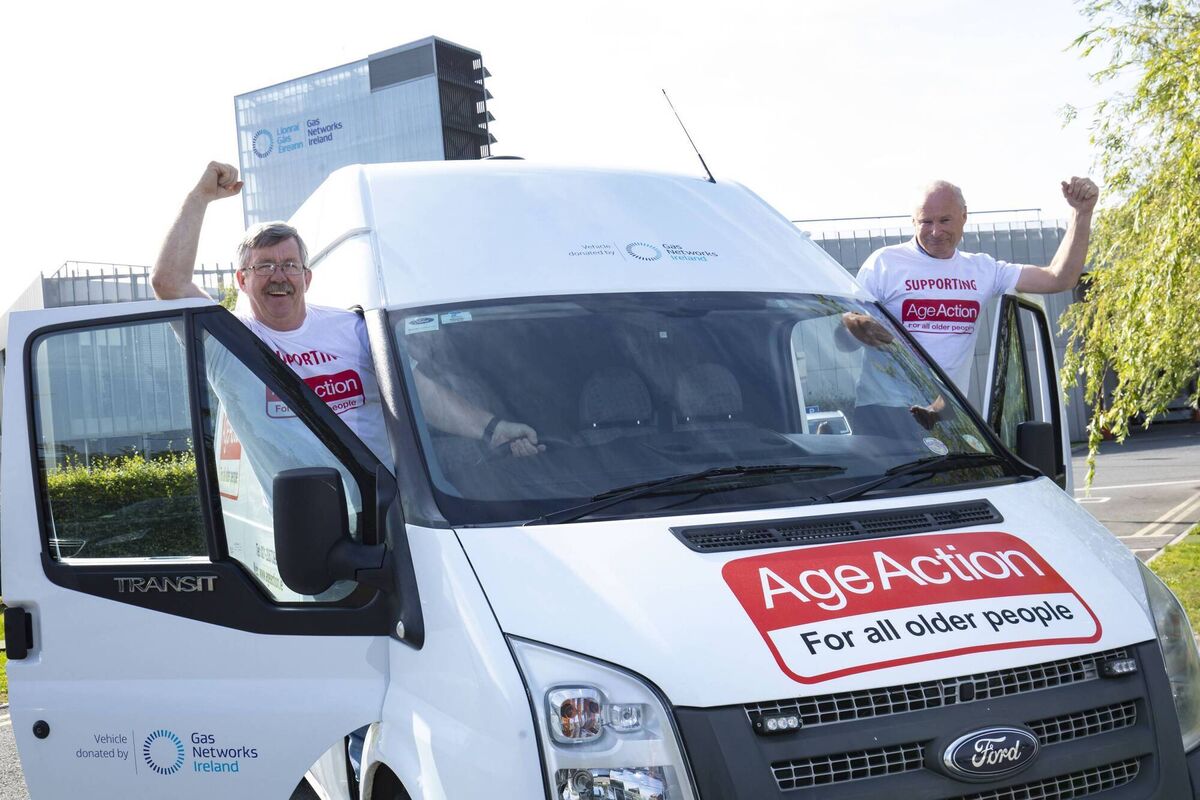
One in six of our employees volunteered last year, despite the challenges of social distancing, with many staff participating in an online tech-tutoring program for older people in partnership with Age Action, teaching simple technology skills such as making video calls to family members, a hugely important part of staying connected with one another throughout the pandemic.