Innovative family businesses reboot the Irish economy
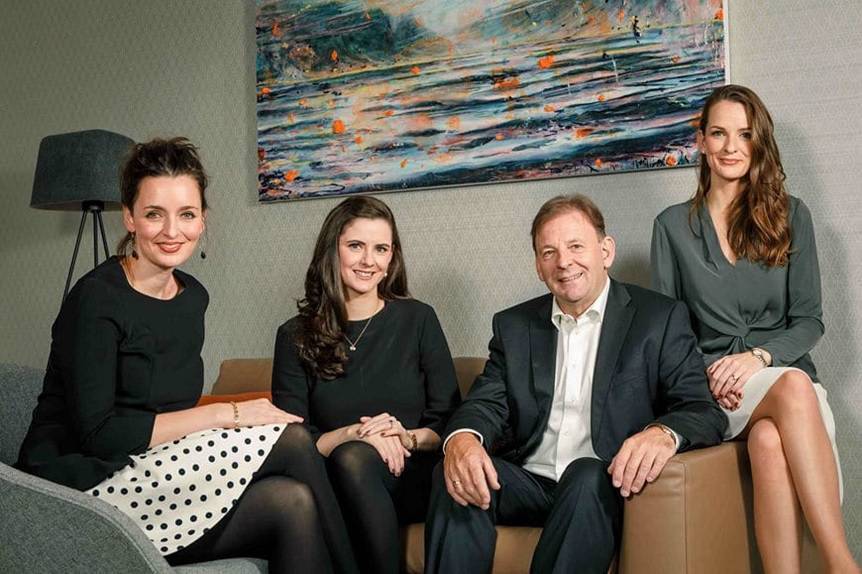
Glandore founder Michael Kelly with his daughters Fiona, Clare and Rebecca, who have joined the business in recent years and who are now directors.
Family businesses employ more than 700,000 people in Ireland, generating up to 50% of the country’s wealth. Approximately three-quarters of all Irish-owned enterprises are family businesses — a sector which has proven very resilient in its response to challenges such as the pandemic and Brexit.
Small business owners were quick to engage with national supports helping them navigate these challenges, in addition to prioritising questions around succession planning.
Family-business owners have been quick to seek out qualified and experienced advice. Here are leading business people with advice very relevant to the current business environment.

When Michael Kelly looks to the most satisfying achievements of his professional life, steering Glandore, his family business, through the challenging waters of recent years ranks very high on the list.
Founded in 2001, Glandore is very much a family firm, with Michael as managing director and his three daughters — Fiona, Clare and Rebecca — deeply invested in the business which provides private office and hot-desk space to a large client base in Dublin, Belfast and Cork. Glandore also owns Suesey Street restaurant and private reception and dining facility, Fitzwilliam Hall, in Dublin.
“It wasn’t planned that all of my three daughters would work in the business, a process that began when my oldest daughter joined me in 2005 when we opened Fitzwilliam Hall. When we first saw the building in 2003, we knew right away it was something that we should buy. It was the point where Glandore really took off as we moved it from a building with 4,500 sq ft to one of 30,000 sq ft.”
Very much ahead of the curve in creating the shared workplace concept, Glandore had only one international competitor in that space at the time. “We felt that we could do a better job and went for it,” he recalled of the then-fledgling enterprise that transformed from an entity with just one employee to over 80 today.
“I remember the day we officially opened Fitzwilliam Hall, in which Tom Kitt deputised for Bertie Ahern, we had our first five members in attendance — and I’m very happy to say that four of that five are still with us today, all these years later.”
Deciding that serviced offices need not be just a stop-gap, as the concept was generally viewed at the time — Glandore saw it as a long-term solution.
“We decided right from the start that if you were offering a pleasant, good quality space with first-class services, there would be no reason why people would not stay with you - and happily, that how it has worked out,” he adds.
“It is a real joy to have all of us working together in the business, and getting to spend time with each other more than a typical family would,” Michael explains of the fertile family dynamic that has made Glandore a success down the years.
“We genuinely enjoy each other’s company and laugh a lot, which makes work all the more enjoyable.”
Maintaining the same business and operational philosophy right from the start has created an enterprise where both clients/members and staff have stayed loyal to Glandore as it grows and transforms.
“It is not just the family, we have great longevity with our senior managers and staff as well. They are all part of a team who have bought into our ethos.”
In terms of inspirational business figures, Michael lists the late Fergal Quinn and his famous book as top of his list. “His great book, Crowning The Customer, was an inspiration to me, and I insist now that all of our staff read it. Fergal believed in giving superior service, and looking to improve it all the time.”
Michael also lists Isadore Sharp, creator of The Four Seasons hotel chain as another influence.
“They are two of my idols in terms of their dedication to providing the customer with the best possible service at all times — such as we do at Glandore.”
One of the key advantages of family businesses is that the family can take the long-term view, and can make decisions very quickly. We have a meeting of our senior managers once a month, and problems are dealt with there and then — not pushed on to a sub-committee as would be the case in larger companies.”
The question of succession can be a challenge for family businesses, Michael adds, a process that can be difficult.
“In our case here at Glandore, all of my daughters wanted to come into the business — there was never any influencing on my part. We run the business as partners — and while I may be the senior partner, I am still just a partner — not a dictator,” he laughs. “Listening is very important because I certainly don’t have all the answers. It is a business that we run together, each of us with the best interests of Glandore at heart.”
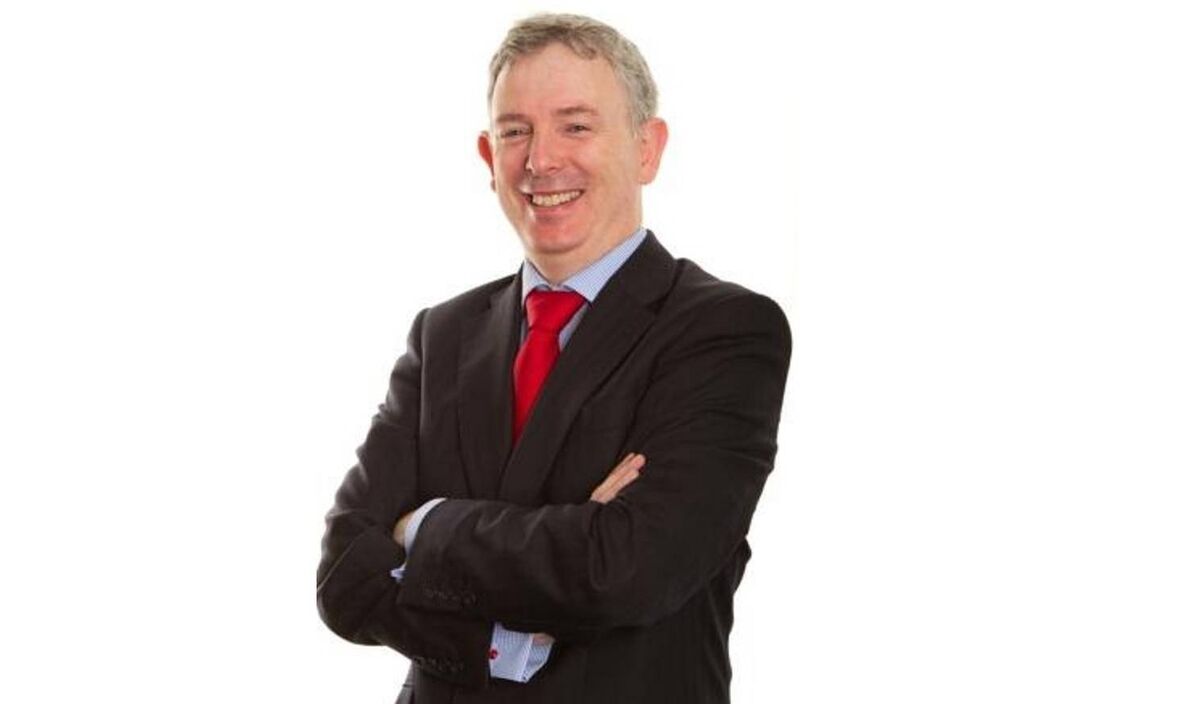
A family business can generally be defined as a concern that the founder has created and built up over many years - but the failure rate of these businesses is significant when it gets to the third generation.
“When it comes to third generation, only 5% of them continue to survive - so the process of transferring along is a very serious one,” explains Aidan McLoughlin, Group Managing Director, Independent Trustee Company.
“A fair amount of effort has been put in over the years by the Government in trying to ensure that transfer occurs as smoothly as possible. The vast bulk of businesses in Ireland are family-owned, and are not alone important to the families and the communities in which they operate, but also to the State.”
Independent Trustee Company specialises in the provision of retirement and investment structures and related advisory services. Established in 1993, the business addressed a gap in the market for individualised pensions. Aidan went on to set up other related companies, namely Independent Trustee and ITC Consulting, which together comprise the ITC Group.
“One of the ways these companies remain successful is by keeping the money within the business to ensure it survives,” he says.
“The net effects of that and one of the things that tends to get neglected is personal pension funding for the principal. And when it comes to passing on the business to the next generation, that is often one of the fundamental that has to be addressed.
“Serious consideration needs to be given to ensure that they have financial independence through their pension scheme, independent from the business.”
He adds that the State has ensured that pensions are ring-fenced from the business, so that any possible subsequent failure of that business will not come back to bite them.
“Pensions can also help financial planning via certain tax reliefs available, but what happens on the balance sheet can dilute those tax breaks. Moving them into a pension fund not only allows the owner a secure retirement, but also ensures that the transfer is more tax-efficient.”
A graduate of UCD, Aidan qualified as a solicitor and a tax consultant in 1987. He is a Fellow of the Institute of Taxation in Ireland and a member of the Law Society of Ireland, the Society for Trust and Estate Practitioners, the Association of Pension Lawyers of Ireland and is a Fellow of the Irish Institute of Pensions Management.
“The fact is that businesses do fail, and that can happen in the first, second or third generation. Failure can occur for a variety of reasons, and it is not necessarily down to the skillset of any following generation. In many cases, it can be down to diversifying away from what the business was good at in the first place.”
In terms of how pension funds can impact on national economies, Aidan cites the Australian model: “The Australian economy has enjoyed 25 years of growth, helped in no small way by 80% of that money being invested back into their economy. In an Irish context, a significant amount of pension funds are invested outside of Ireland, in shares of companies across the EU, the UK and the US.
“These funds are not being invested into Irish enterprises, roads, hospitals or social housing. With all of the consultations that have taken place, where the money goes is not focused on. Allowing pension fund trustees to invest 10% locally, in effect ‘wearing the green jersey’, would release up to €15 billion into the Irish economy. The opportunities are there, but are not being recognised.”

Entrepreneurship and innovation are synonymous in business, and you rarely have one without the other, according to James McMahon of Grant Thornton.
“In Ireland, the entrepreneurial spirit and innovation go hand in hand in helping businesses find an advantage over their competitors,” he explains.
James leads Grant Thornton’s Innovation Tax team providing advice to a wide range of clients from SME’s to large multinationals. His experience includes a broad range of sectors including financial services, manufacturing, food & beverages and technology.
“In addition, Irish businesses are incredibly quick to respond to change and quick to listen and take note of observations from suppliers and customers.
“Because they are smaller than the larger corporations, there is less red tape internally and thus they can get new products and services out to the market without any of the bureaucracy that exists in bigger companies,” he says. “Smaller businesses are close to their customers can respond more readily to changing market conditions.”
The combination of that responsiveness to change allied to the agile nature of indigenous Irish business very much lends itself to innovation.
“Irish indigenous businesses, when they do focus on innovation, invest seriously in R&D,” James notes. “Innovation should be risky, but not too risky, and that kind of realism encourages the kind of innovation that develops new products and services that customers want.
“Smaller companies don’t have huge amounts of money to invest in R&D, but when they do it is done for a particular reason. Bigger companies and organisations have large R&D budgets and can do more ‘blue sky’ type of research, whereas smaller enterprises with less resources have to be meticulous as to how this kind of money is spent. Small companies take risks, but are conscious of limiting the amount of those risks.”
The government recently introduced a 30% tax credit for SMEs, in effect assisting indigenous Irish businesses who undertake R&D and innovation.
“However, while such a credit is geared to assisting small business and signals the Government’s intention to support the sector, unfortunately the legislation has not yet been signed off which means companies cannot avail of the 30% as it currently stands.
“Certainly when Covid happened in 2020 various obstacles were put in place, but this 30% credit is important to support innovation for indigenous businesses and needs to be put in place as soon as possible.”
Succession planning is another area of concern for family businesses, James points out, an area that is quite cumbersome from a tax perspective.
“We are finding more often recently that family businesses are being sold as opposed to being passed onto the next generation. There is significant venture capital money going around, which is good news to a certain degree.
“The concern would be that there are many Irish businesses now switching hands, which would traditionally have switched on a lineal generational path through second, third and fourth generation.
“While many businesses are now being bought earlier by foreign multinationals and realising their value, it would be great if there were other incentives for family businesses to remain within the family.”
When withdrawing funds from a family business, money is taxed through income tax, USC and PRSI which can lead to a tax rate in excess of 50%, whereas selling the business will incur considerably less tax at CGT rates of 10% and 33%.
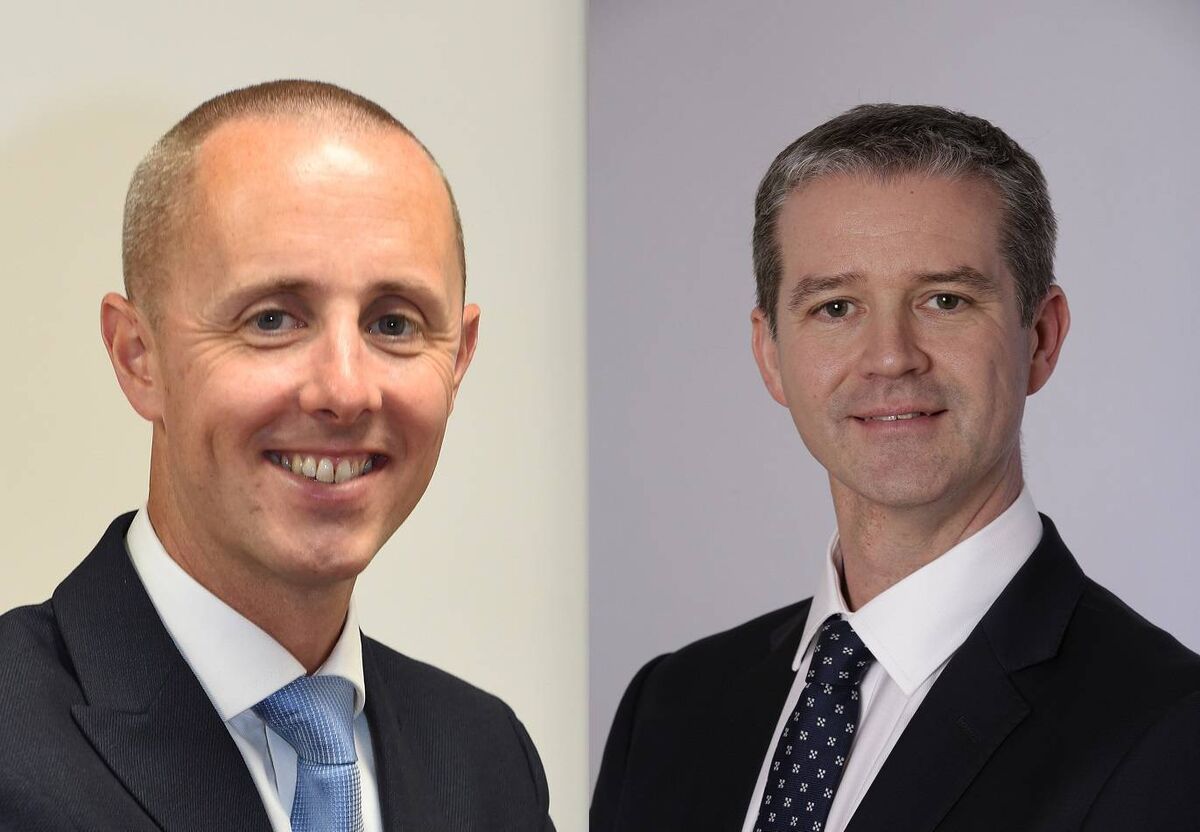
Proper succession planning is always a key challenge in every family business, and one that Invesco Senior Financial Planning Consultant, Éamon Dwyer has assisted clients with throughout his career.
“Coming from a family business myself, I saw first-hand the importance of this aspect of planning. Experience has demonstrated time and again that when it comes to the succession process, passing a business from parent to child, the parent might not be in a financial position to complete the process, particularly if it cuts off an income stream in retirement.”
Invesco celebrates 30 years in business this year. Central to its longevity and success has been its ability and experience in guiding family businesses and SMEs over those three decades through succession, the transition and exit process. Éamon is a Certified Financial Planner and joined Invesco in 2019 following Invesco’s acquisition of City Life, which itself was a 2nd generation family business.
“One of the great tools when planning for succession is the pension fund, a facility which, if appropriately managed, can assist a smooth transition as the principal moves into a financially secure retirement.”
The pension fund is a vital tool, particularly for small and medium-sized family businesses, greatly assisting in the successful transfer of an enterprise from one generation to another.
It can truly make the first generation business owner financially independent of the business which he or she founded from scratch.
“There is a final point on this, which in effect resembles a well-planned circle of life. When mum or dad retires the pension rules in Ireland allow for the remaining pot of money in the pension fund to be divided amongst other children, who are perhaps not in the business, when that owner eventually passes away.
“This way of passing assets to the next generation is important to consider when deciding on succession in family business. It can facilitate transferring the business to just the one key child, rather than handing it to a collection of family members who might not be interested or capable.”
However, it is an unfortunate commercial reality that the current owner of a family business — the company’s most important asset — is often the most forgotten about in this financial planning process.
“Owners are so anxious to grow the business, devoting time to nurturing customers, safeguarding employees and maintaining the facilities, they often forget about the key to the whole operation — themselves,” explains Miceál Gunning, Invesco Wealth Management Director.
“We always try to highlight to owners various ‘what if?’ scenarios, and these are best discussed at least 10-15 years before a founder director is considering handing over the reins. Issues such as — considering what might happen in the event of serious illness or incapacity, or indeed should the owner unexpectedly die. Is there someone in the family capable of then stepping up, should a critical health event happen when the next generation are too young, and what effect would this have on the business? These are basic financial protection issues that owners will often not think about, be they sole traders, partnerships or limited companies.”
Miceál joined Invesco in 2000 having previously held positions with Ulster Bank and Bank of Ireland. A Certified Financial Planner, he leads the Invesco Financial Planning Team, specialising in providing holistic and goal-based financial planning to business owners, company executives and families.
“Another area of importance is making sure that Wills are up to date, and that a necessary Power of Attorney is in place, a document which outlines the owner’s wishes on the continued running of the business in the event of incapacity or inability to do so themselves.
“We see time and again situations where owners take the view ‘that won’t happen to me’ — but unfortunately it does.” CSO statistics underline the reality that, in a three-person business, there is a 50% chance that one will suffer a serious illness between the ages of 45 and 65, and a 30% chance that one of them will die.
“Our advice is of course to focus on the positive, but to also keep an eye on the rearview mirror by taking care of basic housekeeping issues. Make sure those key-person insurances are properly in place for the owner and the key management team in the business. Without the appropriate business protection in place, the best laid financial plans can come unstuck.”