Why farmers love beekeepers: Bees give Irish crops €53m lift
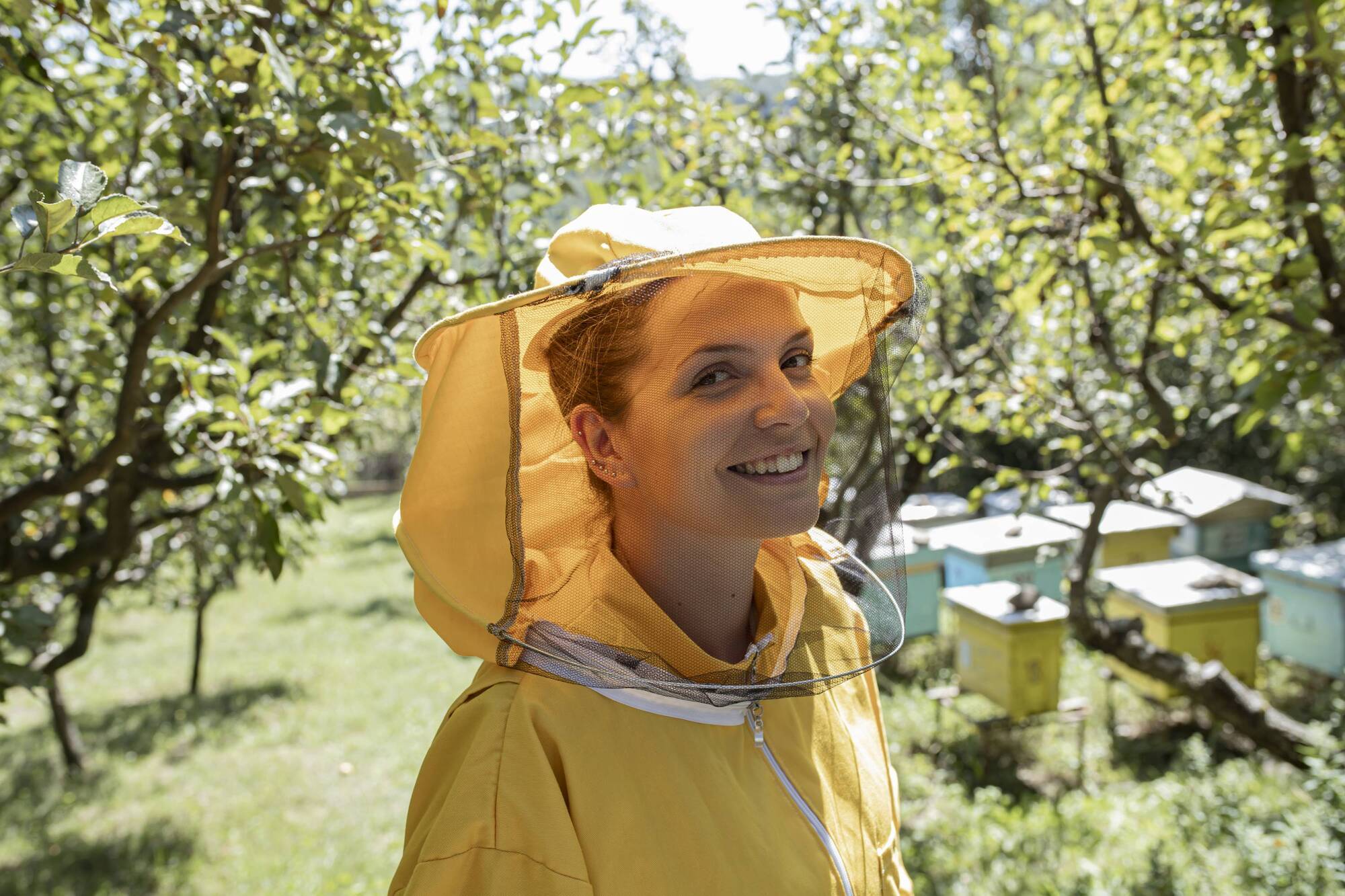
Irish farmers are seeing the benefits of supporting the EU's pollinator plan, protecting honey-producing bees and promoting biodiversity on the farm. Picture: iStock
Biodiversity in a European and National context is declining. It underpins every facet of our lives, and it’s been proven that exposure to nature has a positive effect on people’s mental health and sense of wellbeing.
Biodiversity provides vital ecosystem services, free of cost, to one of our most important economic sectors, agriculture, with the value of nutrient cycling by soil organisms alone estimated to be worth €1 billion a year. Also, the direct annual value of insects via pollination of human food crops has been estimated as at least €53 million in Ireland, while the indirect value provided through pollination of forage crops such as clover and the maintenance of a functioning ecosystem, is likely substantially higher.

DAFM provides support for wider biodiversity and the environment through a wide range of policies, controls, and funding streams including research and agri-environmental schemes. The current Green Low Carbon Agri-environmental Scheme (GLAS) which commenced in 2015 had approximately 50,000 farmers until the end of 2020 has been extended for a further year and currently has over 48,000 participants a wide range of biodiversity measures that can be applied to help protect our wildlife and habitats.
In addition, DAFM have worked to support positive measures being taken to adapt to the biodiversity challenges of our climate include locally-led schemes and innovative pilot projects looking at how we can blend biodiversity-awareness and into our economic sectors; including agriculture.
There are 23 projects underway at the moment, as part of European Innovation Partnerships (EIPs), many of which are steering efforts with a focus aimed at improving our biodiversity and climate conditions. One of these pioneering projects is the Protecting Farmland Pollinators EIP, which initiated the All-Ireland Pollinator Plan.

Pollinators play a critically important role to agriculture and to our agricultural landscape and DAFM has taken a proactive approach to its involvement in the protection of our pollinators. In recent years the rise in public awareness of our pollinators is a welcome development, with much credit going to the All-Ireland-Pollinator-Plan.
As part of the EIP funding stream under the Rural Development Programme, DAFM awarded €1,194,697 to the Protecting Farmland Pollinators EIP. This project began in 2019 and is led by the National Biodiversity Data Centre.
The project aims to develop a flexible mechanism that encourages all farmers to make their whole-farm more pollinator-friendly in a way that is measurable and will not impact productivity. Many other EIP projects support wider biodiversity on farmland habitats and will have benefits for our vulnerable habitats and species including pollinators.
DAFM are members of the pollinator plan steering committee and work together with the National Biodiversity Data Centre and other agencies and researchers by supporting the development and implementation of the actions of the All-Ireland Pollinator Plan. Following the success of the inaugural All-Ireland Pollinator Plan 2015-2020, the second plan for 2021 – 2025 was launched in March this year.
DAFM provide funding of €15,000 annually to the all-Ireland pollinator plan. This funding has allowed for the publication of the very successful series of public guidelines on pollinator actions, available on the AIPP website, including the ‘Farmland: actions to help pollinators on which DAFM worked closely with the National Biodiversity Data Centre. The suite of guidelines developed by the project provides guidance on how evidence-based actions for homes, communities, on our farms, in our businesses, sports clubs, transport corridors, to make our landscape pollinator-friendly. In an effort to bolster the work of the AIPP, DAFM has committed to funding a full-time Farmland Pollinator Project Officer to help deliver the actions under Objective 1 of the second plan, to make farmland more pollinator-friendly.

Agriculture has a central role to play in making real changes for biodiversity and our environment but can also be a threat to many of our habitats and species. However, this negative narrative can further alienate farmers, making them feel apart from it rather than part of it.
Although there are huge challenges in a national and European context, there isn’t as much ink or credit given to those that are doing a positive job in farming for nature, about the positive stories, farming with our hearts while being in tune with our environment.
Outcomes from such initiatives as the Farming for Nature Programme, existing agri-environment schemes such as GLAS and flagship schemes in the Burren, Freshwater pearl Mussel and Hen Harrier areas as well as the All-Ireland Pollinator Plan can contribute to improving our environment by utilising simple, yet impactful measures on the farm.
Such measures can include adopting diverse hedgerows, wildflower margins with diverse species- mixes can see an increase in our dwindling pollinator populations. This requires active engagement with farmers in improving biodiversity-friendly practices, every small step will go a very long way.
The All-Ireland Pollinator Plan aims to give much-needed assistance in this area for our pollinators, including native species of bees and other pollinators of conservation importance.
The strengths and learnings of programmes and projects such as the EIPs, Locally Led schemes, the All Ireland Pollinator Plan and Farming for Nature put Ireland in a very positive position moving into the next CAP post-2020 period. Working together on these innovative projects gives DAFM the opportunity to work with leading experts and scientists. The most effective measures and actions for pollinators, wider biodiversity and the environment will be integrated into the new agri- environmental schemes to ensure improvement is made in protecting nature at a farm and landscape scale.
Ireland’s managed bee population plays an important role in pollination. There are over 4,400 beekeepers managing over 27,000 bee colonies in Ireland. DAFM supports Irish beekeeping through a number of initiatives including the National Apiculture Programme, provision of a free disease diagnostic service for Irish beekeepers, providing aid to support the activities of national beekeeping organisations and provision of grant aid for capital investments by individual beekeepers in specialised beekeeping related equipment and structures.