Era of change for occupational pensions schemes
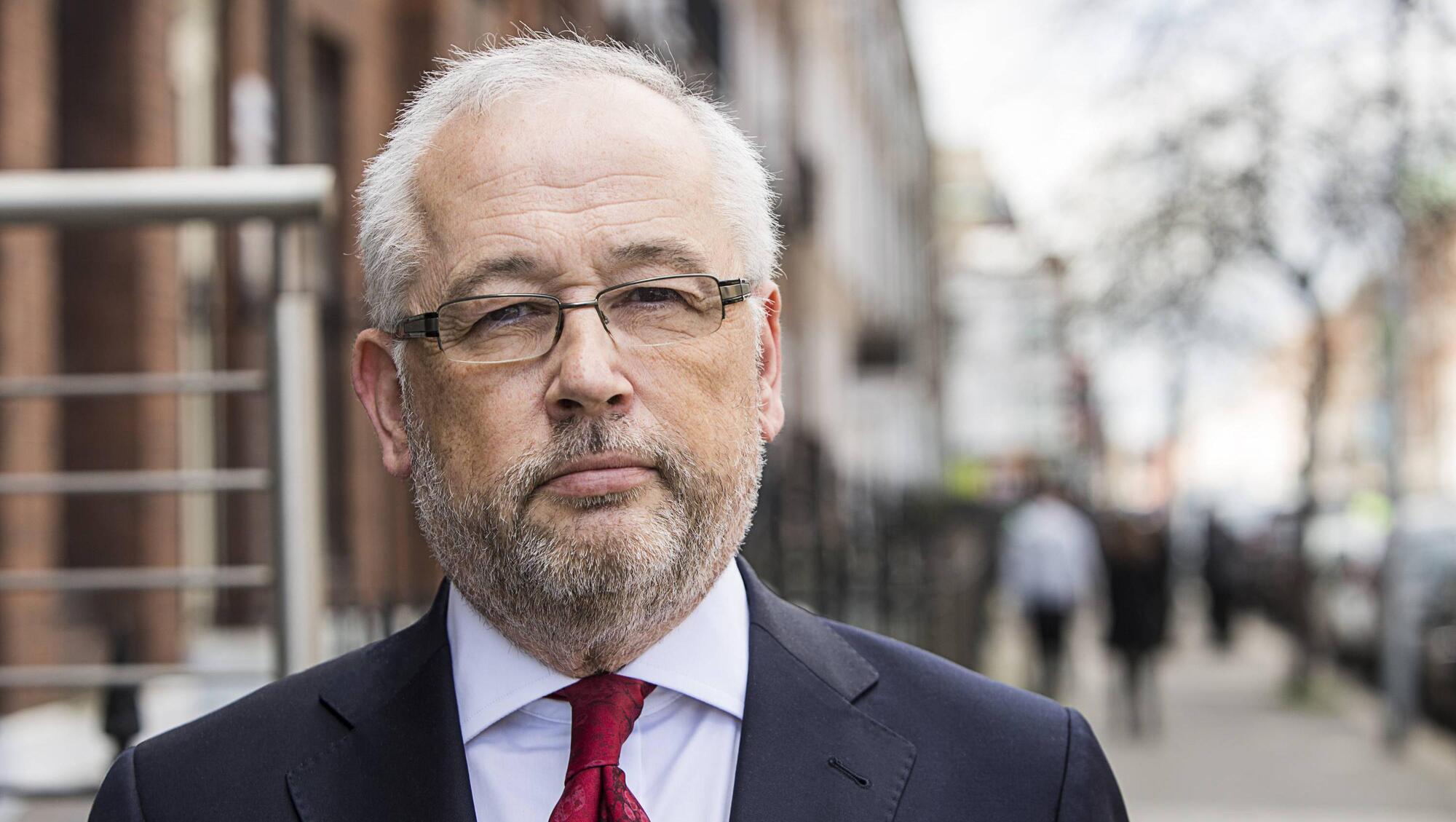
Ireland's Pensions Regulator, Brendan Kennedy.
The Pensions Regulator, Brendan Kennedy, in a recent statement published on its website to accompany Authority’s Annual Report set out its views on the transposition of the IORP II Directive and how pension scheme supervision is changing.
The IORP II Directive sets common standards ensuring the soundness of occupational pensions and better protects pension scheme members and beneficiaries. The Directive provides for EU wide pension scheme standards including an effective system of governance, covering areas such as;
fit and proper standards for trustees;
the appointment of Key Function Holders (KFHs) for risk management, actuarial and internal audit;
written policies on risk management, internal audit, and, where relevant, actuarial and outsourced activities, and standards relating to internal controls, administrative and accounting procedures, contingency plans and remuneration communications with, and information to be provided to active members prospective members, deferred members, those nearing retirement and pensioners.
The Directive also covers the general principles of prudential supervision with an emphasis on a forward-looking and risk-based approach, with greater interventionist powers available to the Authority.
It is important to recognise the significance of this event: Irish occupational pensions are about to undergo the most significant changes in at least a generation.
The purpose of these changes is to improve outcomes for members of Irish pension schemes.
At present, there are well-run pension schemes, which achieve good member outcomes, and which will have little difficulty in adapting to the new obligations.
However, there are too many schemes that are not run to the standard that members are entitled to expect. It should not be a matter of luck for a member how well run their scheme is.
Furthermore, given the significant value of pensions savings that can be built up by retirement age, there is no justification for the standard of care for pensions savings being any less than it would be for any other type of savings.

The most significant changes that will result from the IORP II implementation will be:
- Trustees will be obliged to demonstrate their focus on members’ interests. This means that they must satisfy themselves and the Authority that they have the expertise, commitment, professional support and structured approach needed to fulfil their responsibilities to their members. Perhaps more importantly, they must demonstrate that they are actively managing their scheme and anticipating issues that might affect their members. Any trustees whose sole or primary focus is on compliance will not be doing enough.
- The new regime will specify the obligations of trustees in detail. Although in the best schemes, these obligations are already being met, for many schemes, this is not so and much change will be needed.
- Realistically, this will not be practical for small schemes – they will have difficulty in finding trustees with the required qualifications and expertise, and the burden and cost of compliance will be too high. However, the Authority believes that all scheme members are entitled to the same level of protection, whether in large or small schemes.
- The number of small schemes in Ireland is very untypical by international standards and is a historical issue resulting from the fact that there were no barriers or costs to setting up a pension scheme.
- This has resulted in a lack of awareness of how significant a responsibility the role of trustee is and of how much work is required to discharge that responsibility to a proper standard.
- The Authority’s view is that large schemes are better placed to protect the interests of pension savers. For defined contribution pensions, multi-employer occupational schemes (master trusts) and PRSAs are practical alternatives which provide the possibility of efficiencies of scale and allow the Authority to supervise more efficiently and safeguard the interests of pension savers.
- # IORP II and the related reforms will present a significant challenge for many defined benefit schemes. As well as the additional governance obligations that will apply to all schemes, defined benefit trustees will be obliged to prepare and examine a much wider range of financial and actuarial data, and to demonstrate that they understand and are managing their scheme so that members have a reasonable chance of receiving the benefits set out in the scheme rules.
- A defined benefit scheme is a very complex entity and it is often not recognised how challenging a task it is to manage it. The trustees’ task is to pay benefits promised to members despite having no certainty about the eventual amounts of those benefits, the length of time that they will be paid for, the investment returns that will be earned in the meantime and the extent of the support from the sponsoring employer. At present, schemes are obliged to comply with the funding standard rules, but these rules do not sufficiently reflect the uncertainty and complexity of these schemes, and there is no requirement for trustees to demonstrate that they have considered and assessed the full range of relevant issues. The new obligations that will result from IORP II will go a long way to ensuring that members are more likely to receive their benefits and that unachievable promises are identified in good time.
- The Authority will be adopting a policy of forward-looking risk-based supervision with the objective where possible of prevention of threats to the interests of pension scheme members. As a result, the Authority’s oversight will be much more interventionist.
The Authority recognises that trustees and their advisers will need to understand their new obligations and the expectations of the Authority in considerable detail. Communication will be an important part of the Authority’s work in the coming years, especially in the immediate aftermath of the IORP II transposition.
There can be no doubt that significant change is coming to Irish pensions, and the nature and direction of that change is clear. The Authority is well advanced in preparing for these changes.