Investors keep a keen eye on Cork city property loan opportunity hosted by Property Bridges
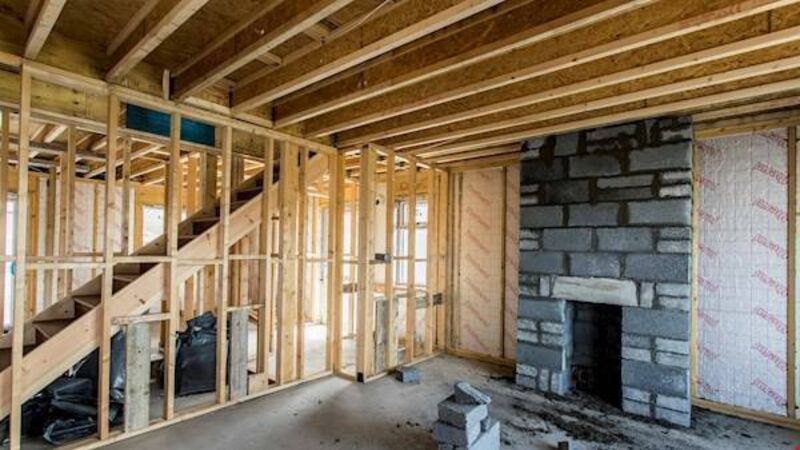
Online financing platform Property Bridges is delivering attractive returns to property investors within 12 months. This photo was taken in early 2020 inside one of the company's upcoming developments; investments typically deliver an 8% return to investors.
Investors will be keen to have a slice of the €400,000 Property Bridges peer-to-peer 12-month property bridging loan to a developer who is converting a dilapidated commercial property in Shandon Street, Cork, into four modern apartments.
The Shandon Street developer will be using well-known contractor DNCF Building & Civil Solutions, Charleville, Co Cork, who expects to complete the refurbishment works within six months. For investors, this leaves a six-month cushion for an early return on their investment.
“If the loan is paid back early, that's well and good,” said David Jelly, founder and CEO of Property Bridges, which is also currently raising funds for a similar mid-scale building project in Ballincollig, with a series of others on the horizon in Cork city centre, as well as in the suburbs and satellite towns.
“All the work is internal with the Shandon Street project, so weather is not an issue. That said, delays are common with all construction projects, so we have learned to put in a good buffer time.
“At Property Bridges, we manage the finance side. We monitor the progress of the development at regular intervals and if there are delays, we can impose penalties on the borrowers to get the money repaid. We have already had to do that,” David said.
The developer has requested a €400,000 bridging facility for the refurbishment works at Shandon Street. In six months from now, when the work is completed, the apartments will be rented out and the facility will be remortgaged with a mainstream bank.
The Shandon Street project is just the latest in a nationwide series of 12-month bridging loans to developers managed by Property Bridges, an Irish-owned and managed peer-to-peer finance company which has already completed several projects in Ireland since its launch in October 2018, all loans underpinned by extensive due diligence.
Individual and institutional investors alike have been keen to engage with this finance model, which delivered an average 8.3% return to lenders in 2019. The investors get their secured loan plus interest back within 12 months.
The investment model invites entry-level investments from €500. Typically, however, people have been investing in the €10,000 to €40,000 range. For example, those investing €100,000 have tended to spread their money across five or six projects.
The company's first project was The Mews, a net zero carbon (ultra low energy) family house developed by architect Mel Reynolds in Sandycove, Dublin.
That November 2018 fund was followed in December 2018 by a fund for Lyons Group to develop six social houses in Mooncoin, Co Kilkenny.
Those who invested in the first run of projects managed by Property Bridges already have their money back, plus interest. Other projects quickly followed in Waterford, Cavan, Limerick and Monasterboice, Co Louth.
The model is clearly working, both for the developers and the investors. At its launch, the goal for Property Bridges was to to increase the supply of housing by getting people currently sitting on €100bn in minimal-return Irish deposit accounts to invest a slice of that money in peer-to-peer property finance.
However, bigger institutional investors have been quick to buy into the attractive interest rates and rapid returns promised by the Property Bridges model.
In 2019, 80% of the loan funds raised by Property Bridges came from individuals, with the other 20% from institutions. For 2020, that balance is shifting towards 50:50. By 2021, it is likely to shift towards 30:70, with the institutions dominating.
"We believe the presence of institutions gives individual investors confidence that their money is being matched by professional investors," said David Jelly. "It also allows us a company to scale into a broader range of projects.

“A lot of people want to invest in the property market,” added David, who founded Property Bridges following several successful finance roles, notably as an equity trader with Jefferies International in London and as a senior manager with data-driven investment pioneer Eagle Alpha in Dublin.
“To get a foothold, some people invest €350,000 in a buy-to-let property, but that option isn't open to everyone. Those that own property will know all too well that, the property has to be actively managed, with annual accounts and legal fees part of the course.
"That property then has to be managed, and they have to do accounts every year. They may have to deal with bad tenants. If they need to get at their money quickly, they have to sell the property.
“With our finance model, there is none of that hassle. Investors have far quicker access to their money. We provide them with an 8% return. They can diversify their investment across several projects. It really is a no-brainer.”
The appeal of the model was also evident to the company's impressive list of partners, including Lagan Investments, property consultancy firm OCFPM, law firm AMOSS, crowdfunding specialist Mangopay and tech finance specialist Katipult, as well as stakeholders Enterprise Ireland and NDRC.
Meanwhile, Marc Rafferty came to Property Bridges from Linked Finance, itself a very successful company managing a portfolio of over €100m in business loans in Ireland. Marc came as an investor and stayed to work in business development.
David Jelly said: “Marc was our first angel investor, he made an investment in the business when not many others would. He then did some work for us in PR and marketing, which is important in terms of getting the word out there about what we're doing.
“That sense of a safety net is important for investors, who see that they will always have the option of retrieving their investment through the sale of the asset. When I returned to Ireland, it was clear the banks had no appetite for lending to builders and when they did, the funding came with the usual bureaucracy and was incredibly slow.
"There is risk in property development, but our lending managers minimise and manage the risk involved. We believe the risk/return ratio is extremely attractive for investors.
"We're not positioned as a lender of last resort and we're not funders who provide funding where a borrower can't get funding.
"Developers come to us as we provide funding quickly and with a common-sense approach. As with the Shandon Street project, in many cases, a mainstream bank will take us out of a loan by providing refinance when the development work is complete."
The rate of growth at Property Bridges is impressive. The company raised around €4.5m in funds during 2019. It will lend another €4.5m in Q1 of 2020. It expects to raise around €25m in 2020, and around €100m more during 2021.
The company is built for growth. David Jelly's co-directors are James Twomey, heading of lending, and Paul Curran, head of commercial lending.
James Twomey has vast experience acting as lending manager for high net worth clients with Anglo Irish Private Bank. With Anglo Irish Assurance, James managed a portfolio of property funds, worth over €2bn, across over 200 commercial, retail and residential properties in Ireland, the UK, Europe, and the USA.
Paul Curran brought 25 years’ commercial lending experience in Ireland and abroad. He has held senior roles in ICC Bank, ICC International Consulting, Bank of Scotland and Certus. In recent years, he has managed loan portfolios with values of over €1.5bn.
Other key players on the Property Bridges team include: Tom Joyce, lending manager; Zilah Carvalho, Accounts & Operations; and Shane Conroy, designer.


