AMD — loving life in the semiconductor fast lane
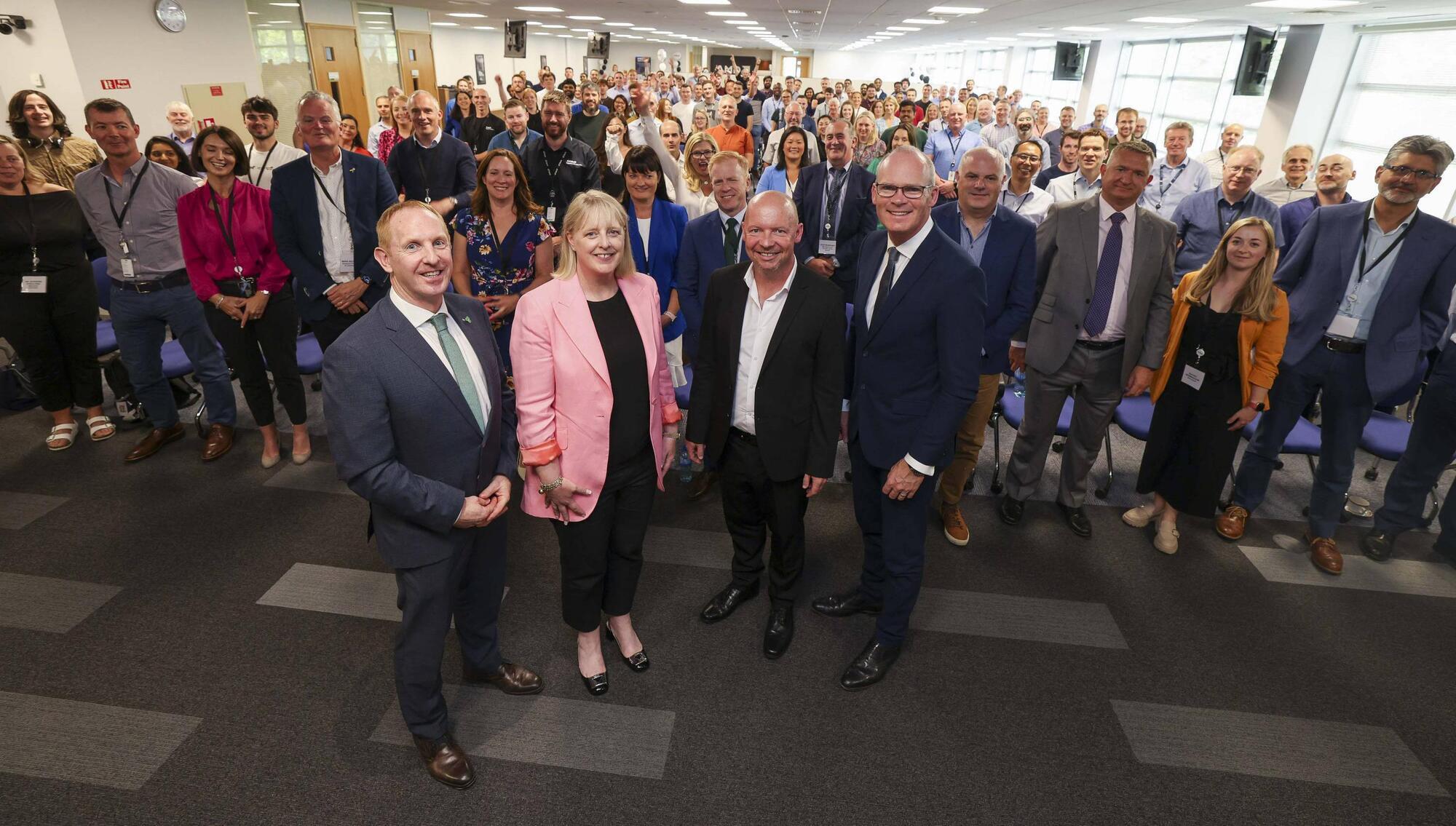
In 2023, announcing US semiconductor firm AMD's plan to invest $135m expanding its Adaptive Computing Research, Development and Engineering Operations in Ireland were: Michael Lohan, CEO, IDA Ireland, Ruth Cotter of AMD, Brendan Farley, MD for EMEA with AMD, then Minister for Enterprise, Trade and Employment, Simon Coveney, with AMD staff. The plan is for AMD to add up to 290 new jobs and fund R&D projects for next-generation AI, Data Centre, Networking and 6G Communications Infrastructure. Photo: Chris Bellew / Fennell
There is an adage, over 100 years old now, which states that, on average, a human being is never more than two metres away from a rat.
Happily, due to improvements in vermin control, sanitation and recent technology advancements, the time has arrived for an update. Here goes; on average, a human being is never more than two metres away from a semiconductor.
Like rats, semiconductors are seldom seen, nor fully understood. Take all their different names for instance. If ever a product could be forgiven an enduring identity crisis, it would be the poor old semiconductor whose many other titles include silicon chip, microchip, IC, integrated circuit, computer chip, microcircuit, device, and on and on it goes. What is beyond doubt is their fundamental importance to life as we now know it.
Designed into everything that needs electricity to function, a couple of trillion of them will be manufactured in 2025 in the most expensive factories (fabs) and controlled by the deepest and most complex supply and demand chain processes ever known.
And like all good stories it begins with an idea, an inspiration for an innovative way to use an electrical circuit. Happily, an increasing amount of these ideas are originating in Ireland and Michaela Blott leads a team of inventive scientists, innovators and dreamers from her base at Advanced Micro Devices (AMD) in South County Dublin.
Blott, a native of Germany, has worked at the ‘pointy end’ of semiconductor design for years, but her face still shines with excitement when she describes the challenge of designing brand new clever stuff for the world’s sixth largest chip company.
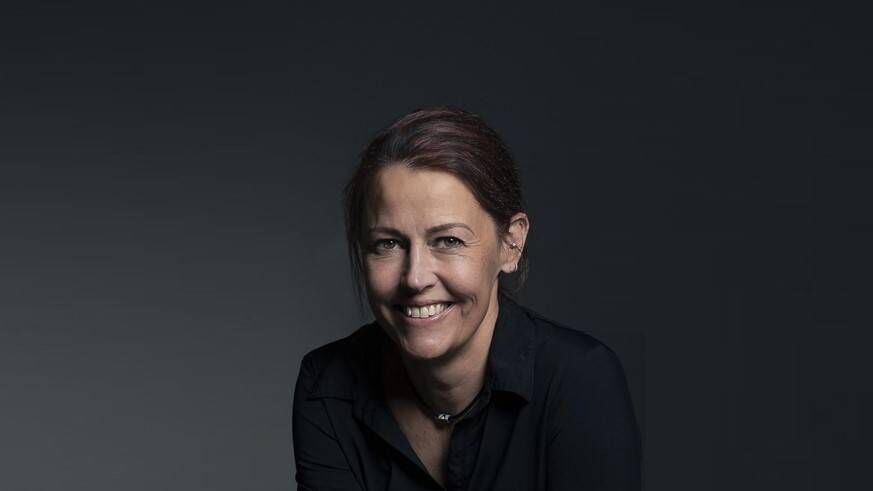
"Computer demand for AI is growing exponentially and is well beyond even what we can achieve leveraging Moore’s Law. And on top of that Moore’s Law is coming to an end. So how can we cram more computing power into our devices? We need to innovate, otherwise we cannot scale. Disruptive innovation from novel compute architectures to algorithmic optimizations need to happen while we’re leveraging every small improvement, we get from pushing technology nodes and packaging technology.”
That law she speaks of was first extrapolated in 1965 by one of Intel’s founders, Gordon E. Moore. Simply put, Moore predicted that the power of a chip would double every two years, and the size and cost would roughly halve. Put even simpler, time has proved him correct. The circuit on the first commercial device marketed by Intel was 10,000 nanometres wide and cost today’s equivalent of $450 each. Today, fab processes can produce three ‘nan’ circuits and sell them for an awful lot less.
Blott came to Ireland a couple of decades ago, initially to work for Xilinx, a Silicon Valley-based chip company and the world leader in programmable logic products. Xilinx was acquired by AMD on St Valentine’s Day in 2022, a love match that has further deepened the challenge for her worldwide-based team, particularly with the explosion in demand for even more intelligent semiconductors to facilitate the computing greed of Artificial Intelligence.
"We are working on the most important technology evolution that is happening, probably in the last 50 years,” Blott continues.
"It’s the most exciting space. We have an amazingly talented team here, diverse and open-minded group. We have some of the best designers from all over the world. We are like the United Nations who have come together to work on AI and other broader technologies. AMD is an exciting community because we have all the different computing fabrics, we have the best processors, and we have the best FPGAs and GPUs. We have the whole portfolio, giving engineers an amazing realm of possibilities they can work with."
She also believes that the full stream ‘quote to cash’ business functions that surround her team in Ireland are critical to the development of the high-level business acumen that can only lead to superior innovation and product alignment to customer needs.
"People on the site have good insights into how a semiconductor company works because we have all this other functional expertise on the site,” she continues. “You can’t be a successful researcher by staying in your cubicle cooking up an idea that has zero relevance. Everything we do needs to have an impact. We get rated on how many of our ideas end up as technology that has an impact. Understanding if an idea is feasible or not is part of the puzzle."
Because semiconductors do their work unseen, buried deep in the dark and mysterious innards of cars, phones, televisions, medical devices and every other creation that requires electricity to function, they are unfamiliar as consumer brands. Nvidia (who!) whose products hit the bullseye first for gaming and now the AI demand, alternate almost daily with Apple for the title of the world’s most valuable corporation and many of the silicon giants such as Intel, Analogue Devices and Qualcomm have joined AMD in their Irish adventure.
"Ireland is doing really well, we have the basics right. It’s these simple things which matter,” says Blott. “English is spoken, and we are well connected for travel. It is so easy for an US executive to jump on a direct flight into Dublin at a low cost which means they are visiting more frequently and because of that they are paying more attention to our work here.
"The connectedness within Europe is also very important because the talent pool that we have in Ireland is simply too small. A lot of our hiring extends beyond Ireland, more than 80% of my team are from different locations but because we are so well connected, I can attract top talent from the best universities across the continent. And hiring from further abroad is completely feasible too, because we have good immigration policies."
Blott also acknowledges the positive impact of IDA funding and support when fighting the fight for internal investment. "IDA funding has definitely made a big difference in expanding the operations and getting investment from AMD HQ. The whole bureaucratic overhead is reasonable. They are doing a great job.”
While she would like to see an update to university curricula to better align with her team’s specific skill needs, her greatest concern is that the absence of a high-performance computing capacity at national level.
"We don’t have sufficient HPC infrastructure, not enough AI clusters here in Ireland. We are amazingly under-resourced. AI and HPC infrastructure are going to be so important. Not specifically for AMD but for the Universities and small businesses that want to adopt AI. Ireland really needs to start investing here."
When she’s not inventing bright, shiny advanced semiconductor functionality, Blott is an enthusiastic scuba diver, which along with her work has taken her to every corner of the globe. How does Ireland rank as a place to live and work in comparison with other alternatives?
"There is a reason I live here you know!” she chuckles. “In Ireland, people have a more relaxed attitude to rules and schedules. People are more important, you always spend two minutes more at the coffee machine, you always have an exchange with people standing in a queue and that has a big positive impact on the work environment. It’s better for teams and closely knit teams will outperform in the long run, even when wasting the extra two minutes holding the door open for a colleague."
And holding the door open to a whole new universe for everybody else.