New Homes: National policy holds key to future developments
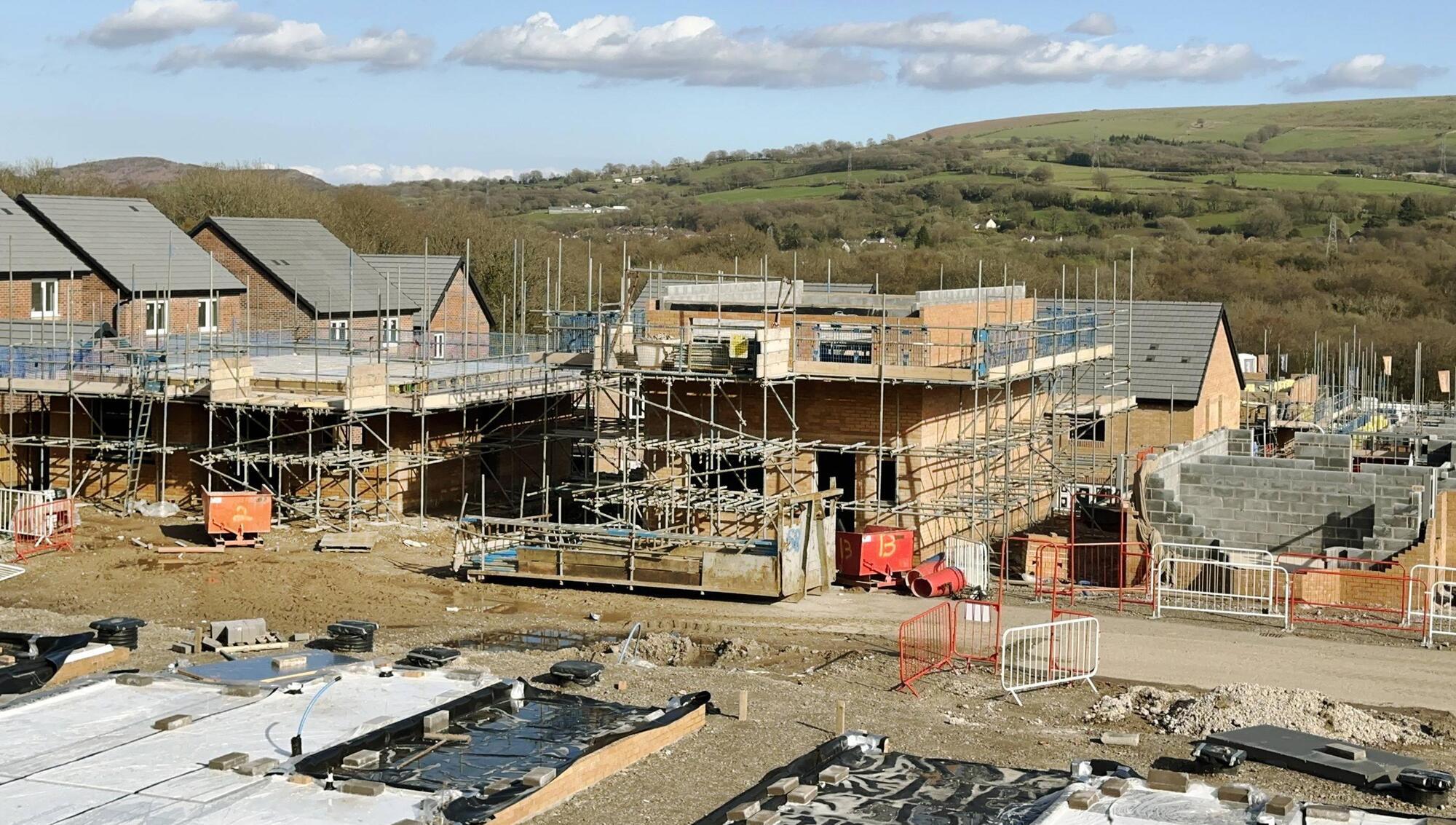
The construction sector depends on initiatives introduced under Housing for All such as Project Tosaigh and Croi Conaithe to make cost rental and apartment delivery viable.
Several policy documents point to continuing progress with new home developments, sure to be a prominent topic in both the Budget and the General Election, writes , Property Editor

It’s a no-brainer — the next General Election, whether it’s this side of Christmas, post-Budget or after it, will be fought out on the housing front, plain and simple.
Yes, the perennials like health will be important, and immigration will be huge for several reasons, not least because of its impact on the housing market, but Numero Uno? Yup, got it in one.
It’s not just all going to be fought on numbers and on promises, but it’s going to be along very defined and outlined ideological lines, skewed on the one side towards home ownership and on the other side on affordable housing across a wider tenure, public and private, rental and home ownership.
Sinn Féin has laid down quite the gauntlet with its 100-page A Home of Your Own policy document, outlining its aims to provide 300,000 new homes over a five-year term from 2025 and broadline aligning with the Housing Commission’s own numbers on need over the coming five to ten years: notably too, the Housing Commission’s report back in May rounded up the current deficit in stock to as much as 250,000 units.
We’ve a long way to go so, and a lot to build, what with trying to close a deficit gap, meet current home-grown demand and then cope with the demographic shift with a rising population which may reach 7 million by 2050, as well as changes in household formation: smaller families mean more homes.
Last year, we built 33,000 units, this year the forecast is put at coming close to 40,000 (there’s always a surge in completions late in the year) and the take is we need to get to 50,000 units per annum for a bit of breathing space, and perhaps 60,000 homes a year to start eating into the deficit.
It’s a huge ask, but it was done before as output back almost 20 years ago when the economy and construction sector running on the equivalent of crack cocaine, borrowed money and imported labour saw over 90,000 houses delivered. Just not all in the right places, and it was all at daft price levels too.
Since ‘the crash,’ the subsequent dip and then slow recovery has as widely reported seen prices come back to boom time levels in lots of cases, plus 10% in some but not all , and today average starter homes are coming in at averages of €350,000: in many cases, that’s for a two-bed, not even the once-standard three- bed semi-d.
Against that backdrop, prices are continuing to rise at up to double digit rates for 2024, and that’s despite the rise in interest rates since the war in Ukraine kicked off two years ago, with a knock-on impact on the cost of living too.
Back in the mid-2000s, three quarters of all homes built were for the private/buyer market – it was a one-way street, effectively, since the Government and local authorities had all but abandoned State provision of housing over the previous decade or two, so you either bought aided and abetted by all-too-willing lenders, or you rented, with HAP payments increasingly coming to shore up the rental sector after bedsits were removed as viable options.
Today, just about one third of new homes output is finding its way to the private buyers’ market, say 10,000 or 11,000 units openly up for sale.
That sort of proportion is likely to be ‘the new norm’ in the coming years with, for example, Sinn Féin saying 115,000 of the 300,000 homes they aim to deliver will be for the private buyers market, with a further 60,000 units over the five-year span for the private rental market, with direct labour proposed for home delivery in the public sector.
The party’s plan is costed at €39 billion, three times this month’s €13bn Apple windfall sum.
Clearly, the capital cost of such output no matter who’s in Government is going to be huge, raising the question of who funds what, and how, and what role if any will be assigned to international investment funds who’ve been driving (many would say fuelling) the PRS build to rent sector.
Critically, for intending buyers, continuing supports such as Help to Buy and the First Homes schemes (see further comment and detail in these pages) are vital now and into the foreseeable future on the individual front, even if seen as something of a vicious circle in terms of macro inflationary impact as money is pumped into the sector and costs remain stubbornly high.
The construction sector currently depends on such supports to shore up demand and close the gap between the high cost of delivery and affordability/lending ratios, and it also depends on other initiatives introduced under Housing for All such as Project Tosaigh and Croi Conaithe to make cost rental and apartment delivery viable.
With an eye to the private market, the Coalition has pinned its colours to continuing such supports under its Housing for All umbrella and into the General election: Sinn Fein has pledged to remove such supports in a stepped down fashion, rather than precipitously.
There’s clearly going to be a lot more discussion, and micro-analysis, claim and counter claim in the run up to electing a new government.
Then, once the dust settles, the realpolitik will begin and take shape, as our very own, home grown housing crisis rumbles on to meet the next global crisis … in whatever shape or form that comes.