Legacy of 125 years of proud service to people of County Cork
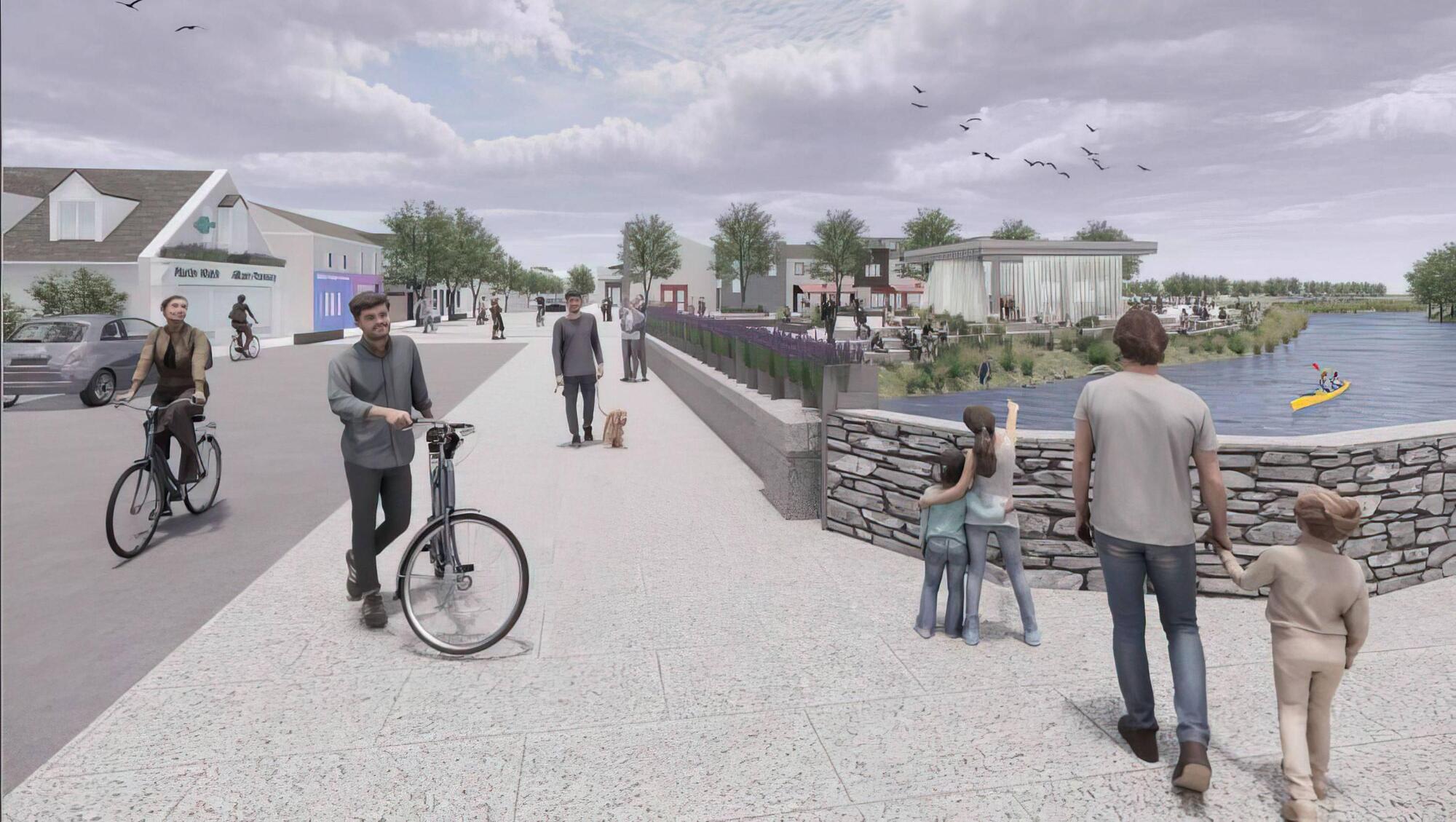
Planning for the future of Co Cork: Drawings of proposals for the new town square in Carrigaline. A selection of drawings and other details about the proposed plans can be viewed on the Cork County Council website as part ofthe public consultation process.
Juggling current requirements, planning for the future and grasping opportunities when they arise are key components of a successful local authority and the chief executive of Cork County Council is determined she and her staff are going to use all of these to ensure the region builds on its competitive advantage.
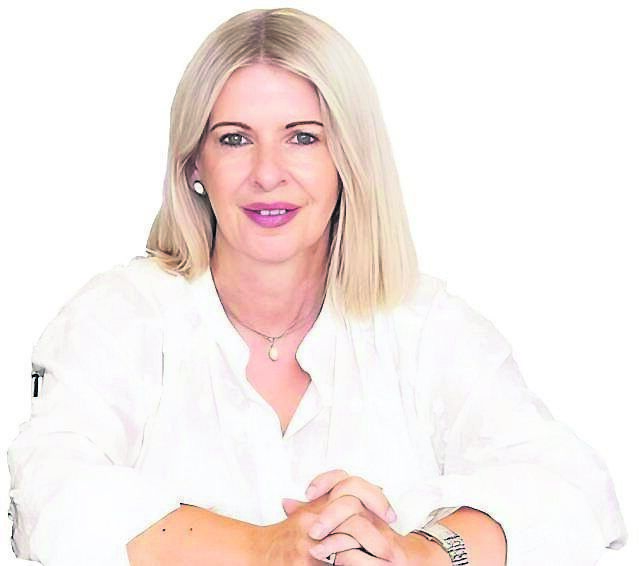
Valerie O’Sullivan only took over the top job last October, but has already stamped her mark on it and ensuring a bright future for the county is one of her primary aims.
Futureproofing is key, she says, and the challenge is to demonstrate that Cork must attract national focus and investment to reach its potential, and in turn deliver for Ireland Inc.
“For example, it’s time for large-scale infrastructure investment to follow policy that identifies Cork as the primary counterbalance to Dublin for the country’s future. Funding must follow policy, unapologetically, for the national good, and part of our job in Cork is to work with Government, the City, stakeholders, citizens, industry, and every government department to make this happen. Everyone will benefit. We have all the conditions here, the relationships, the reputation and the natural resources, mixed with a can-do attitude and a collaborative approach to working with other agencies, to bring this about together,” Ms O’Sullivan said.
The government has previously signalled on several occasions the ‘counterbalance policy’, but to date hasn’t provided all the infrastructure investment needed in the Cork region to achieve this.
There’s the need to ensure that population growth is matched with an adequate supply of housing, along with proper investment in public realm, amenities and infrastructure services, creating the conditions to ensure Cork reaches its potential.
“Housing supply is crucial so that new citizens and a larger population have places to live. We are ahead of target already only two years into our County Development Plan, and so we have a challenge to ensure a strong pipeline (of supply). Local government can’t do this alone. We rely on other agencies to align with us toward common goals, like ensuring land is ready for development,” Ms O’Sullivan said.
The council is one of the best-performing local authorities in the country when it comes to supplying new homes.
The council’s averaged more than 400 new Social Housing units per annum since 2016 and it ratcheting it up. This year it’s expected to provide well in excess of 500 units (and up to 200 more in cooperation with voluntary housing bodies).
The County Development Plan (2022–28) envisages that between the local authority, private developers and voluntary bodies a total of 22,611 new homes will be built in that period to provide for an ever-increasing population in the region.
You can’t just slap up housing without providing a quality of life to go with it.
Ms O’Sullivan said the ‘Citizens and Place’ ethos adopted by the council, includes improving the presentation of the county’s towns and villages.
"It’s putting people at the heart of everything we do because we are public servants, We need to see how we are doing in terms of service delivery through the lens of the customer and continue to provide excellent services locally, but also ensure continued investment in the physical environment.
"Image is important, if not everything. Integration of new communities has been a very positive thing in Cork, not least because of the strength of local community structures and continuous engagement. We need to ensure that the success of this so far continues,” she said.
New people will need jobs and the council also plays a role in major providing them.
“Our role in the economic development of the county is key, as is the importance of the City doing well at the same time. We want to position Cork as the locus of Ireland’s next industrial revolution, which is within touching distance when one considers that Cork Harbour can be a first or early mover in the off-shore renewable energy space, with all the onshore spin-off that will bring to Cork.
"We have to continue to focus on looking after the range of companies, multinationals and indigenous, which are already here and are staying because of what Cork has to offer. We need to make sure they remain, and expand, in Cork,” Ms O’Sullivan said.
“We do this by being available to them, listening to their needs and requirements and help them overcome barriers to growth and performance in our region. We are solutions-focused.”
Ms O’Sullivan says Cork Harbour has huge potential for housing and jobs growth, particularly from the development of off-shore renewable energy, the circular economy opportunities and biomanufacturing prospects.
She points out the council has identified a site in Aghada for a ‘Green Energy Park’ to provide for this rapidly emerging industry.
“We will work with our partners in the Department of Transport, Uisce Éireann, and many other agencies to articulate that vision and get it ready for development — funding and focus is required to take full advantage of the opportunities to come. It’s all about concentrating resources in the right places. My ambition is to secure a ‘whole of government’ approach to this,” Ms O’Sullivan said.
She said places and communities in the Cork Harbour area can benefit from more such industries into the future and have the capacity to take it on board.
Ms O’Sullivan was formerly in charge of the council’s Southern Division — the area with the highest population of the county’s three divisions, which covers all of the harbour area — and few have similar expert knowledge about its capabilities.
The population of the Southern Division is 240,000 and it hosts 77,000 jobs. The harbour section of that is 72,000 and just over 30,000 respectively.
By comparison, Waterford City and suburbs has a population of 53,500 and 24,000 jobs. Galway City and suburbs, 80,000 and 44,000; jobs while Limerick City and suburbs are 94,000 and 44,500 respectively.
“South Cork (and the harbour area in particular) has the obvious capability and capacity out of all the other regions to benefit from off-shore renewables. The green energy campus can be the catalyst for huge economic gain into the future from such an industry,” she said.
Few places, if any, in the world can boast a harbour region that is home to major industry, immense beauty, desirable places to live, work, recreate and attract visitors because if its natural beauty, and accommodate all of this harmoniously side by side — but Cork Harbour can and that is very significant for Ireland.
Industrial development is key to keeping Cork futureproofed, but it’s not a standalone element.
“We need sustainability across everything we do, in the knowledge that both investors and tourists now look at how climate-friendly a region is before they make a deci-sion to come here,” Ms O’Sullivan said.
“Lots of things are happening at council level to influence this and also in our own programmes, including ensuring that our main growth trajectories are located along new and existing public transport corridors, especially in the east of the county.”
Ms O’Sullivan reiterated that the long overdue upgrade of the N25 (Cork-Youghal road) is key to achieving future growth and facilitating the development of Cork Docklands, the relocation of the Port of Cork, and indeed pursuing Cork’s potential for more green industry and jobs.
“It’s time for Cork to build out the next Ringaskiddy (industrial hub). It will be in the east, it may be in clusters, but the road upgrade is crucial,” she said.
Forward thinking is a key factor, she says. “Horizon scanning”, as she terms it is an integral part of the job she and her senior management do.
“We have a constant eye to the future, as we do on service delivery, so we do the work and make the decisions now that will pay off for the county across the large number of services and opportunities we have. We need to anticipate barriers to progress and tackle them. We may have to make hard decisions now that will pay dividends, negotiate for funding, attracting investment and residents. This is our bread and butter at senior levels in Cork County Council,” Ms O’Sullivan said.
She’s keen to point out the council can’t adopt ‘short-termism’.
“We have to leave the county in the best place possible when we are gone so that Cork can contribute at its full potential level to Ireland Inc. In this context the council must get government departments to recognise just because the name ‘county’ is over the door, it does not mean we are a rural authority with rural-level needs.
"We are, but we are urban as well. We are both. This can be a challenge when funding streams are announced and allocated. It's my job to work with funders to make the factual case for some of the country’s largest towns, which happen to be in County Cork. We have towns here that will have a population of 20,000 people. What are they if not urban centres?” the chief executive added.