Currabinny Cooks: Keeping it simple with delightful duck
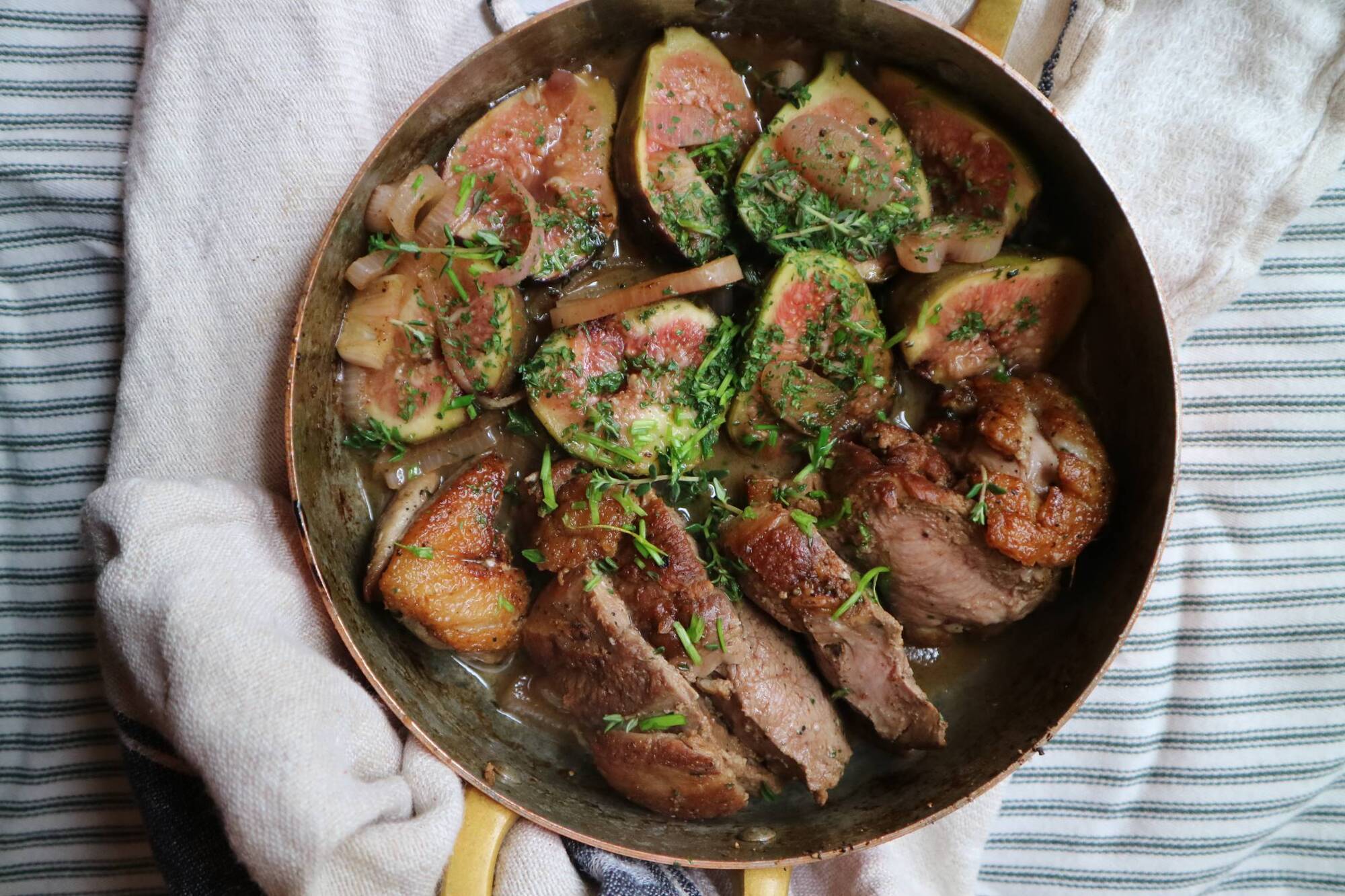
Duck breasts with figs

Shimmering green-blue heads, white collars, grey back, the females are brown but share the blue diamond flash under each wing. It is easy to forget or to not notice just how beautiful these birds are. I guess we are so used to them, they are commonplace, therefore they are overlooked. If you actually stop to notice them properly someday when you are walking by a pond or canal, they are really unmatched in their exotic brilliance.
Recent demand in eating duck has had a hugely negative impact on the quality of life of these birds. Most never get to see a lake or pond in their short lives. The intensive production, just like with chicken also has repercussions on the quality of the meat.
It is therefore important to recognise that any animal product should be as ethically produced as possible with the animal's welfare in mind. This might mean spending more on a piece of meat. We have to start thinking about meat less as an everyday, cheap form of protein, ubiquitous and factory assembled. If you do choose to eat meat as part of your diet, maybe think of it as a luxury. Spend more on the quality of the meat and on sourcing organic and ethically produced products.
In many ways, we have lost the fight when it comes to chicken, pork and beef, but it is sad to see the increased interest in eating duck have such a negative impact. We are very lucky in Ireland to have a huge abundance of quality organic producers of meat and this includes duck.
Skeaghanore farm, near Roaring Water Bay in West Cork, Regan Organic Farm in Wexford, Silverhill in Monaghan and Comeragh mountain farm in Waterford are all Irish producers of high-quality pasture reared duck.
The following recipes show just how easy it is to make a delicious meal with duck, requiring very few other ingredients. It is best to keep things simple with such rich and delicious meat.
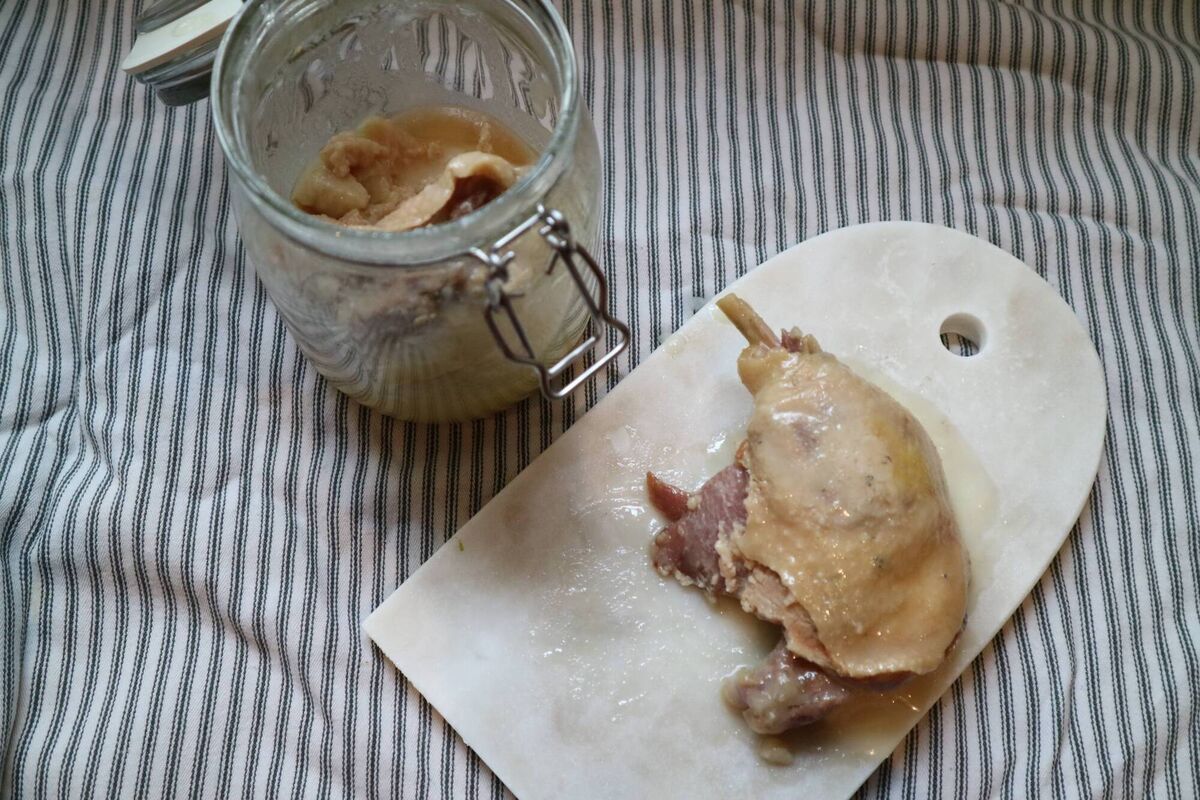
Confit Duck is surprisingly easy to make. Before we started making it, it always seemed like something laborious, time-consuming, fiddly, involving some sort of alchemy or grand process. It is, in reality, none of these things, other than the fact that you leave the duck thighs marinade in the seasoning overnight. Making a confit is actually an incredibly simple idea. All you are doing is sealing something in its own fat. There is no waste here and when you do finally dig the confit legs out of the fat, you have something incredibly special and delicious.
- 6 duck thighs
- 2 tbsp of sea salt
- 2 tbsp cracked black pepper
- 2 tbsp of dried herbs de Provence
- 500g duck fat
Cover the duck thighs with the sea salt, pepper, herbes de Provence and then cover. Place in the fridge for 24 hours. The next day, rinse the duck legs and then wipe them dry with some kitchen towel.
In a large saucepan or casserole, heat the duck fat until translucent. Add the duck legs and cook over a gentle heat for two hours.
Remove the duck legs to sterilised jars or containers and pour the duck fat over, sealing them in fat. Allow to cool and then transfer to the fridge. The duck legs will keep like this for several months.
Duck and figs are a perfect combination, both being rich and bursting with flavour. Port is a really useful thing to have in the kitchen repertoire. I would urge anyone to invest in a bottle, they are generally inexpensive and go a long way. I use a Sicilian version called Marsala, which is less expensive than Portuguese port and perfect for cooking with a medium-rich body. Make sure you get a dry version rather than a sweet dessert marsala.
Serves 2 as a light lunch
- 1 shallot, peeled and thinly sliced
- Small handful of flat-leaf parsley, finely chopped
- 6 figs, cut in half
- 1 duck breast
- 150ml of port
- 50g butter
- Sea salt & black pepper
Cut the skin and fat on the duck breast into a criss-cross and season all over well with sea salt and freshly cracked black pepper.
Cook the duck breasts skin side in a frying pan over a medium-high heat for around 7 minutes. You shouldn’t need to put any oil in the pan. After 7 minutes, drain off most of the fat and flip the breast over and cook on the other side for just 2 minutes before removing to a plate.
Add the shallot to the pan, cooking it until softened. Deglaze the pan with the port and then add the figs. Cook for 5 minutes and then add the butter and some salt and pepper.
Add the duck breast back to the pan, either sliced thickly or in one piece.
Garnish with the parsley and serve.
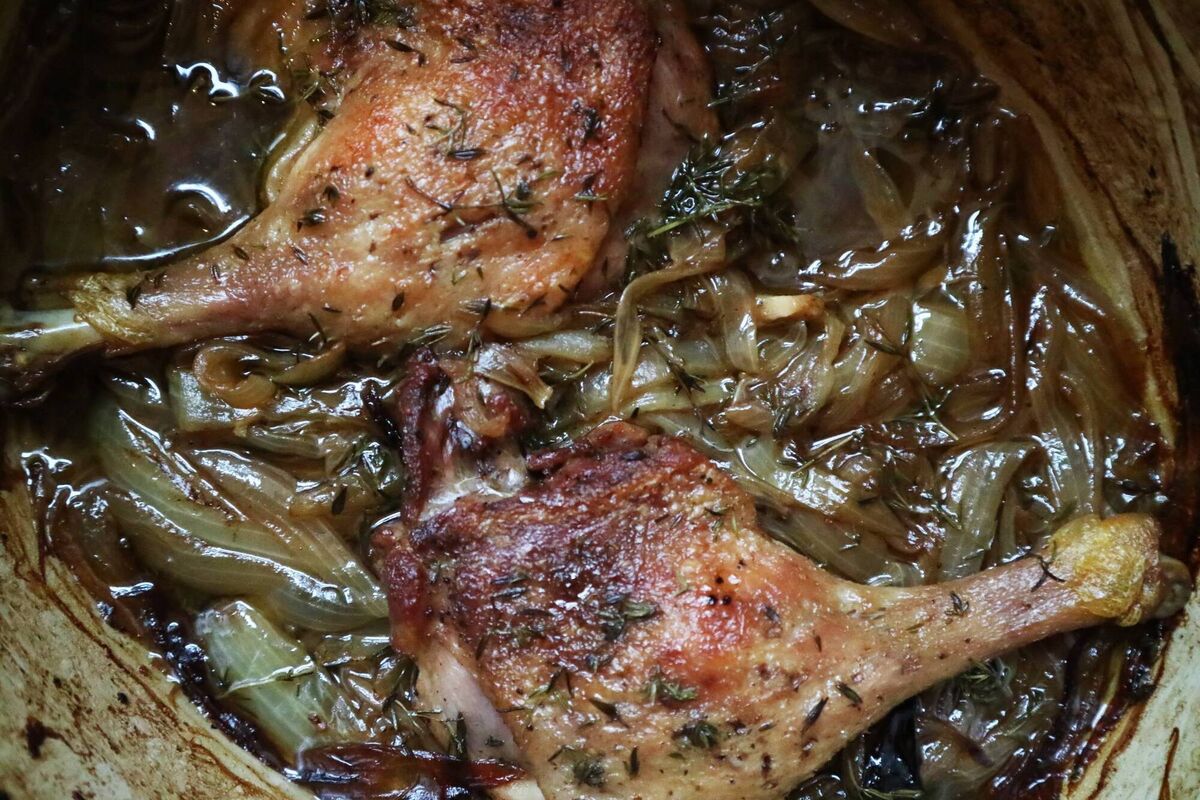
We both learned to make this classic one-pot duck dish when we were studying in Ballymaloe. One of us even made it for our final exams so it definitely has a special place in our hearts. There isn’t a huge amount of ingredients here, this dish is a testament to the less is more philosophy of cooking. The three flavours of duck, onion and thyme balance perfectly here. The onions will be just about holding together and the duck should be falling off the bone. A perfect dish for a cold night.
Serves 2.
- 2 Duck legs
- 600g onions
- Sea salt and black pepper
- One tbsp thyme leaves
Preheat the oven to 250C.
Score the duck legs with a sharp knife and season liberally all over with sea salt and freshly cracked black pepper.
Place a casserole on a medium-high heat and drop a tiny amount of oil in the pan. Add the duck legs, skin side down and brown well on both sides. A considerable amount of fat will render off, it may be best to pour some of it off. When the duck legs are well browned all over, remove from the pan and set aside.
Cut the onions into small wedges and add to the pan along with a little seasoning. Cook the onions in the fat until golden and soft, and then add back the duck legs on top of the onions. Sprinkle over the thyme leaves and a good crack of black pepper, place the lid on and put in the oven for an hour.
Check every now and then, the onions should be very soft and caramelised.
Serve.