Architect John Morehead's €1.25m Blackrock Marina home is a Nordic beauty
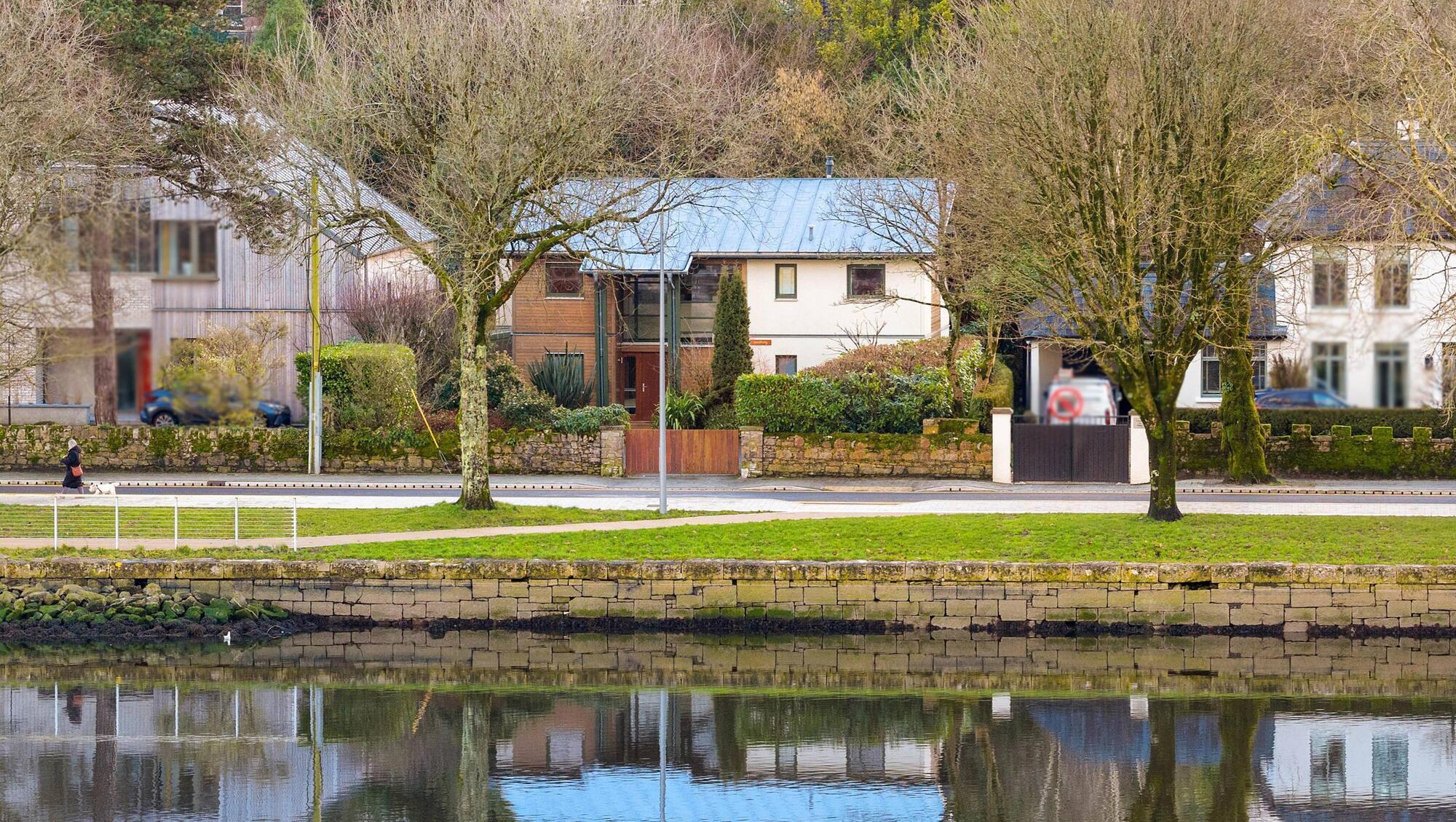
Svendborg, the Marina, Cork city. Pictures: Jim Rocks/MediaPro
|
Blackrock, Cork city |
|
|---|---|
|
€1.25m |
|
|
Size |
164 sq m (1,765 sq ft) |
|
Bedrooms |
3 |
|
Bathrooms |
2 |
|
BER |
B1 |

Now that the city has reshaped how it interacts with its waterway — at least on the south docks, where the reimagined Marina Park forms a lush corridor between the urban core and downriver communities — few places feel better positioned than the Marina itself.

Those closest to this enriched public space are the residents along the Marina Promenade. Already blessed with engrossing riverside views across a tree-lined avenue, they now enjoy ringside seats to what is fast becoming a dynamic destination in its own right. While some might tut-tut at the growing footfall, the inclusive and vibrant nature of the transformation surely warrants celebration.

For house hunters embracing the change — and with more than €1m to spend — the chance to settle on the ‘prom’ is very real. Those with an eye for incisive architectural design will find added appeal in Svendborg, a new-to-market home that could be described as a “quiet beauty” beside its show-stopping neighbour, Leeward.

Homes along this leafy row pack considerable architectural punch.
The Edwardian pairing of Arigideen and Kilmona are attributed in Buildings of Ireland to architect George Coppinger Ashlin — famed for Cobh’s St Colman’s Cathedral — although architect Samuel Francis Hynes is also credited, having reportedly designed Arigideen as his private home. Both were highly respected architects.

Two doors down from Svendborg, Mallow-born architect Walter James ‘Jim’ Buchan designed the Arts and Crafts-style Carriglee in the 1920s. Architect John Morehead of Wain Morehead Architects — designer of both Svendborg and Leeward — considers the Buchan home “one of the most important” Arts and Crafts houses in the city.
Closest to the city end of the Marina stands Northcliffe, believed to be the oldest surviving house in the row, possibly dating to the early 1800s. It once formed part of a four-acre estate owned by Joseph Nagle of Mallow, a benefactor related to Nano Nagle of the Presentation Sisters.

A contemporary new-build sits in its side garden, designed by Coughlan deKeyser Architects for the downsizing owners of Northcliffe, who moved there in 2015.
Each of these bespoke homes occupies what was once slob land — marshy riverside flats between the original riverbank and the Navigation Wall, built in the mid-18th century to improve access to the city centre. Over time, the land was reclaimed and stabilised, forming a linear towpath — the forerunner of today’s promenade.
As the ground solidified, more houses followed, gradually shaping the Marina into one of Cork City’s most attractive residential avenues.

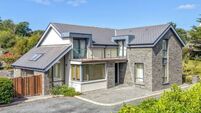
Today, 13 properties occupy this prime Blackrock riverside stretch, four of them built in the 21st century, including Svendborg and Leeward. Both share a Wain Morehead architectural lineage and were deeply personal projects for John Morehead. He designed Svendborg in the noughties as a downsizer for his parents and, more recently, Leeward Mark 2 — a replacement for the original family home where he grew up. Both are passive homes, combining contemporary design with sustainable building practice.
He and his two brothers relished life on the Marina. “We knew all the ships coming in, we knew the banana boats, we knew all of their flags.” He recalls endless fun in the large, south-facing rear garden — big enough to divide when his parents decided to downsize after 40 years. They turned to their son for inspiration.
“They told me what they wanted, which was a house to see them out. They wanted a ground floor bedroom and they wanted to be able to watch the activity on the water, which they could never do from our old house,” John says.
He delivered the brief with flair, creating a sublime home that feels almost Scandinavian in spirit yet sits comfortably on the Marina. His parents named it Svendborg, after the Danish town where they honeymooned.

Planning permission was granted in 2003 on a 0.2-acre site carved from the original Leeward garden. Builders removed the high front wall but retained the original low wall. Extensive excavation followed to install a raft foundation on the reclaimed land.

An Austrian firm handled off-site fabrication. Timber-frame wall panels arrived with windows pre-installed. Crews lifted the walls into place piece by piece, followed by a roof already clad in membrane and zinc. Doors, floors, and ironmongery arrived in shipping crates. Although construction took just over nine months, final fit-out extended the timeline. The house was completed in 2007, around the time John’s father received a terminal diagnosis.
The wheelchair-accessible ground floor later proved invaluable when his mother’s mobility declined.

The ground-floor bedroom — complete with dressing area and French doors to a private deck — is both practical and serene. The beautifully landscaped garden includes intricate detailing by Richard Sullivan of Samara Landscapes.


A narrow walkway through the escarpment — once part of the original riverbank — allows, as John notes, for “interesting and infinite planting along the boundaries,” with no walls required.

Tall trees above the escarpment posed a design challenge: how to draw sunlight deep into the house. John responded with south-facing clerestory windows above the gallery landing, capturing light and reflecting it through the home. A lofty apex window in the open-plan living and dining area further enhances brightness.


While the front façade faces north, stacked horizontal glazing floods the staircase and gallery — a favourite perch for soaking up river views once hidden at Leeward.

Sitting on the landing feels like standing on a ship’s bridge, with curved railings and walls reinforcing the nautical theme. Below, the working river unfolds: towering cranes shift containers between ship and shore.


“The front of Svendborg works with the views and the back works with the sun,” he says.
A raised deck walkway leads to the entrance beneath a striking canopy of timber and render. Thanks to excellent ventilation, the timber shows no signs of weathering two decades on.

Airflow lies at the heart of Wain Morehead’s passive design ethos, aiming for minimal uncontrolled leakage and tightly managed ventilation. Despite predating modern BER standards, Svendborg excelled in energy efficiency. It featured in the 2006 RIAI Architectural Awards exhibition and was a finalist in the SEI Excellence in Energy Management Awards. First-year running costs totalled just €300.
The boiler sits in a compact utility behind the kitchen, accessed via a sliding pocket door. The House of Coolmore kitchen has aged gracefully.


A lower ceiling defines the kitchen zone, while the adjoining dining and living area rises into a dramatic vault, creating space for the gallery above. Full-height glazing connects the dining area to the garden, with sliding doors opening onto timber decking by Decks by Design.


The 164sq m home also includes a ground-floor study/home office, wheelchair-accessible bathroom, and under-stairs storage. Upstairs, two vaulted double bedrooms flank the gallery, alongside another bathroom and under-eaves storage.

Homes on the Marina rarely reach the market. Recent sales include Arigideen (€935,000 in 2014), Kilmona (€980,000 in 2015), Northcliffe (€1.25m), and the original Leeward (€881,000 in 2018), later replaced by today’s striking Leeward.
Svendborg now comes to market through Dennis Guerin and Chloe Reidy of Frank V Murphy. Mr Guerin expects interest from Blackrock homeowners planning for retirement.

Its Marina address, proximity to Blackrock village, 0.2-acre site, landscaped gardens, and tranquil character all point to strong demand — likely above the €1.25m guide.
: Less is so much more at Svendborg. Downsizers will circle, but architectural pedigree and Blackrock location will command a premium.