Ask an expert: Why has my home's BER dropped?

Lots of homeowners have had their BER (Building Energy Rating) change over time, even when they haven’t modified the house.
Hi Jerry,
This is a really important question, and you’re not alone in raising it. Lots of homeowners have had their BER (Building Energy Rating) change over time, even when they haven’t modified the house. An A2 rating downgraded is hard. Let’s go through some of the reasons.
I want to clarify a few things about BERs. Sustainable Energy Agency Ireland (SEAI) tell us that a BER is an asset rating and an estimate of your building’s energy efficiency, rather than a measurement of how much energy you actually use.
The assessor uses a standard methodology, called DEAP, (dwelling energy assessment procedure), which makes a number of fixed assumptions (about occupancy, heating schedule, lighting, climate, etc.). That means BER is more about the theoretical energy use of your home than your real-world behaviour.
An assessor may use DEAP’s default values, but they may also adjust them. That is, when an assessor carries out a BER evaluation, they have access to all the documentation for the components that make up the building — such as type of insulation, confirmation that standard details in insulation were achieved, heating system certificates, etc — they may adjust the default values. But with older building stock, they may not have access to this data and are bound to use the default values. And DEAP default values are deliberately conservative.
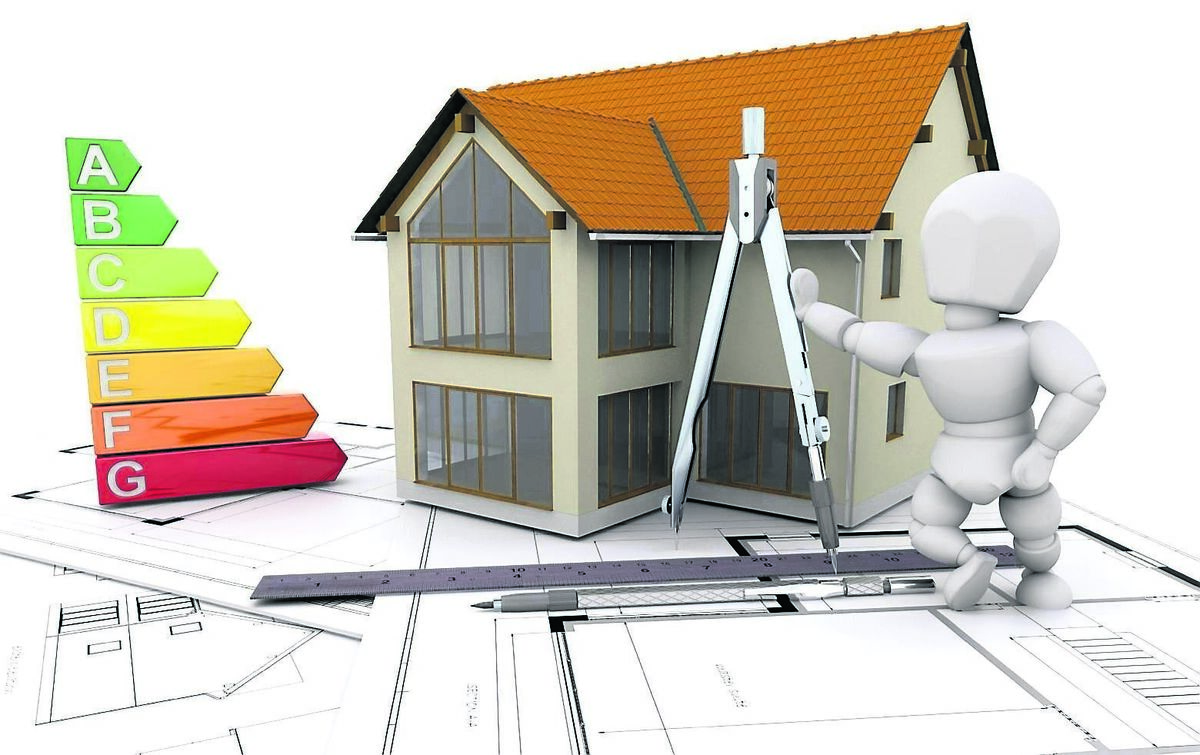
If, during your new-build assessment, the BER assessor doesn’t accept the documentation for certain upgrades, or wasn’t shown the right paperwork, they might use defaults that penalise the energy performance, pushing you from A2 to B1.
This is a surprisingly common issue, because the assessor will, as a signatory of an assessment, take on the liability of your BER, so, as a professional, they must protect their position and will not just take things at face value.
For a new house, you may have to go beyond detailed invoices to providing product data sheets on materials used in the building and to providing certificates and photographs from the builder to show that the ACDs (acceptable construction details, or a suite of technical construction detailing on insulation junctions for different building typologies) were installed correctly. This book of evidence will allow the assessor to use actual values, instead of defaults. As you might imagine, your builder has a significant role to play here.
Lighting is heavily weighted in terms of the part it plays in the BER calculation. Assessors note how many fixed (i.e. non-portable) light fittings you have and what kind of bulbs they are. If, for example, you switched to LED lightbulbs since your first BER, but the assessor either didn’t note it or didn’t accept the evidence, the lighting load could get overestimated, and this may negatively impact your rating.
Also, if there have been updates in DEAP assumptions (or even small data-entry differences), the calculated energy loss could shift.
Sometimes, the rules of the game change. There are ongoing updates to Irish and EU energy-efficiency laws, and it’s been reported that some changes to BER criteria could lead to score shifts. For instance, different default assumptions, or new interpretations of insulation or systems, might make a previously assessed A2 home fall to B1, even without physical change.
There are also concerns about consistency in BER assessments. Some studies suggest data corruption or inconsistent measurements can creep in. Also, the quality assurance in the BER system has evolved. Continual professional development is required of all assessors.
This means there’s more onus on assessors to keep up to date, and potentially more variation in how they apply DEAP rules or interpret documentation. As with everything, the students will outclass the teacher, so you will have BER assessors who know more than the system and will apply their knowledge, potentially impacting a BER result.
Regarding your question of whether the system is working properly, one would have to say there are challenges. Some of these are inconsistent assessments, due to variations in how assessors collect and interpret data, and how rigorously they apply documentation versus default values. There are documentation hurdles where the homeowners don’t have certificates, invoices, or spec sheets. There has been a shift away from exam-based assessor accreditation, so oversight depends more on continuous training. Also, DEAP is a calculation tool, not a real-time meter. It can’t perfectly replicate how people actually live in their homes.
But the good news is that it is far from broken. The BER is still a useful comparative asset rating. SEAI’s methodology is transparent, and assessors are required to follow it. There are ways to challenge or improve it, especially if you have good documentation. The BER Advisory Report (which comes with your BER certificate) gives suggestions for energy upgrades. SEAI provides a support channel to query BER assessments directly.
Professional member bodies, like my own, are providing feedback to the SEAI and making recommendations on how to help improve the system.
In short, Jerry, yes, it’s definitely possible for your BER to drop from A2 to B1, even if nothing physically changed. That said, the problems aren’t insurmountable. If you gather as much accurate documentation as possible and work constructively with your assessor (or the SEAI), there’s a good chance you can challenge or correct parts of your BER.
And by doing so, you are not only helping yourself, but you are also highlighting where the system might be improved for others.
So, finally, for you and any other readers in a similar situation, I would just stress the importance of retaining and filing all documentation relating to your home’s energy usage and any changes you make to the property. I hope you find this advice useful and that you reach a satisfactory outcome on this issue.
Brigid Browne is a chartered building surveyor and chair of the Southern Region of the Society of Chartered Surveyors Ireland. She is the owner/ managing director of Cashel-based Fortress Planning which offers a range of services including assigned certifier, design certifier, building surveyor, and conservation consultancy to clients all over the country — www.fortressplanning.ie
If you have a property related query or issue you would like to raise with Brigid, please email
irishexaminerpropertyqueries@scsi.ie

CONNECT WITH US TODAY



Be the first to know the latest news and updates