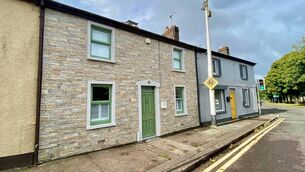
First time buyers will love this renovated €295k dinky townhouse
|
Crosses Green, Cork city |
|
|---|---|
|
€295,000 |
|
|
Size |
55 sq m (592 sq ft) |
|
Bedrooms |
3 |
|
Bathrooms |
2 |
|
BER |
C3 |
Urban regeneration is transforming parts of Cork city, and areas that benefit are seeing property values rise.
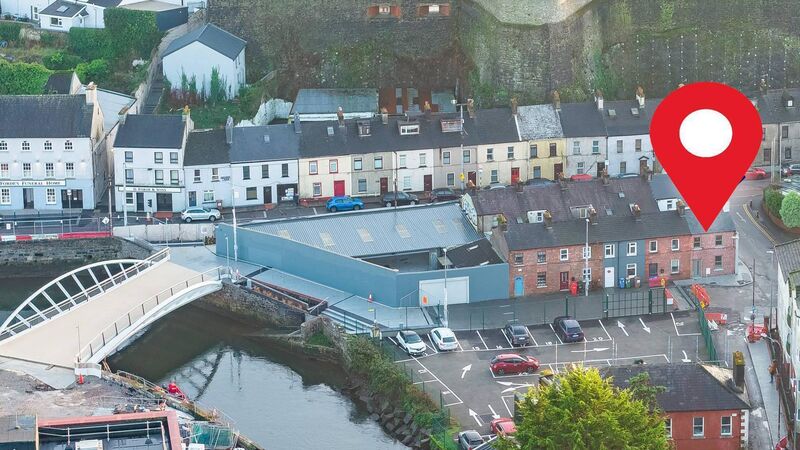
One such spot is the French’s Quay/Crosses Green/Proby’s Quay area, which has benefited greatly from its proximity to the redevelopment of the former Beamish & Crawford site by builders BAM on South Main Street.
Since then, Cork City Council has spent circa €10m on public realm improvements in the surrounding neighbourhood.
Another €7m funded a revamp of Bishop Lucey Park, while €8.5m went into installing two bridges linking the former brewery site to the opposite quays.
They will, in time, help funnel crowds out of the Events Centre — still a pipe dream a decade after construction began. In the meantime, students are already using a handy shortcut from the city centre to UCC.


The spate of infrastructural improvements in this historic part of the city, close to St Fin Barre’s Cathedral and beneath the ramparts of Elizabeth Fort, worked well for the builder who bought No 6 St Dominick’s Terrace at Crosses Green last June.
The house he restored now fronts a neatly paved walkway leading to one of the new pedestrian bridges — due to open once the council completes a riverside walkway.
The property sits in the city centre and within easy walking distance of UCC. An investor would be hard pushed to ignore its convenience, not to mention how occupier-ready it is.
It bears little resemblance to the rotting, damp house it was when purchased.


The roof came off, the back wall came down, the kitchen came out and more than 20 tonnes of rubble were removed.
Layer upon layer of plasterboard was stripped from the walls. Floors were dug up. A radon barrier and thick insulation went in before new concrete floors were poured.
Removing the back wall allowed him to raise the ceiling height, adding volume to the open-plan living, dining and kitchen space downstairs.
He added light by installing a 1sqm skylight over the U-shaped kitchen, which he built.


He also managed to squeeze in a small utility and downstairs loo, and while outdoor space is tight, there is just enough room to the rear for bin storage.
No 6 St Dominick’s Terrace shows how a tired, pokey townhouse can become a bijou city pad.
It helped that the builder loves renovating and could call on mates in the trades as needed. The entire project took about four months.
“Once I get my teeth into something, I enjoy it. I love working on my own, with the radio on,” the builder says.
While he gutted the property, he held on to some of the nicer features uncovered during renovations of the compact, end-of-terrace house.


Those two bricks proved enough to allow him to build a new arch using a timber template. He rebuilt it with bricks recycled from the demolished back wall. It now stands as a striking feature and a nod to the early 20th-century heritage of the redbrick homes on St Dominick’s Terrace.
The redbrick at No 6 was repointed after a power wash blew out the mortar.

“Someone had painted red over the redbrick — you could literally see the line of red paint between my house and the neighbour’s, so I tried power washing it, but ended up repointing,” the builder says.
The week spent cleaning up the façade paid off. The house now looks as fresh-faced as the day it was built. The builder paid over the odds for green sliding sash windows with a matching front door. A new Brazilian natural slate roof finishes the look, while newly laid paving outside the house sets it off nicely.
Seán McCarthy and Angela Jordan of ERA Downey McCarthy are selling the three-bed, 55 sq m property and say the builder did a “super job”, achieving a C2 energy rating for a house built in 1908.

If the Events Centre ever goes ahead, rental potential could soar. A superb starter home, but investors are likely to circle.