Home hunting in 2026? This is what you need to know...

New homes market and what purchasers need to know and do
Home hunting in 2026? This is what you need to know...

THE use of Government aided first time buyer schemes remain a vital part of purchaser’s funding - it is the exception when a purchaser is not availing of one or the other, or both in their new home purchase!

New home seller Suzanne Tyrrell of Cohalan Downing Associates gives buyer advice

These supports have clearly strengthened demand for new homes by bridging deposit and mortgage gaps for many buyers. They are only relevant to homes priced below the scheme price ceilings; Help to Buy (€500,000 or less) and the First Home Scheme (i.e. €450,000 in Cork County Council and €475,000 in Cork City Council jurisdictions, other counties also vary). However, their net effectiveness at improving affordability is limited so long as supply remains constrained.

Delivery costs, planning hold-ups and a slow development pipeline mean grants often simply allow buyers to compete for the same small pool of homes, which can feed price pressure rather than reduce it. Without a sustained increase in completions the schemes act more as demand support than a structural fix to affordability problems. Where the price exceeds these thresholds there is a tangible depletion in interest as affordability is pressured.

There are many cases where new homes are priced in excess of purchasing support price caps. For example; more expensive locations, a large house design, luxury finishes or simply the last phase of the development and the developer is making the most of the demand for the near completed development. New homes priced over €500,000 may appeal to a smaller pool of buyers, but these buyers know what they’re looking for and for those with a bigger budget, the Cork new homes market is offering plenty of opportunities.

For the most part purchasers are organised to purchase a new home ie; have their Mortgage Approval in Principle, have the funds in place to pay booking deposit, have retained a solicitor and know what they want from a home. However, we are seeing that some perceive a new home purchase to be a time where they can secure a new home by placing a reservation, eventually pay the booking deposit and then finalise their mortgage approval. Just because the house is under construction does not allow the time to begin to get prepared! A contract of sale will need to be issued soon after the sale is agreed. Funding new housing developments often brings with it strict timelines placed on developers, and purchasers will need to have signed contracts within a certain timeframe. That time pressure will be ultimately passed onto the purchasers!

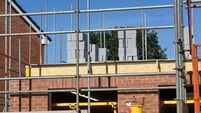
Purchasers need to understand that preparation is key in the provision of new homes as the modes of building are speeding up significantly. For example, the construction of timber frame homes can be completed in six months. The following list sets out (in general) the various stages involved when purchasing a new home;

Stages of a New Home Sale:

Step 1 – Reserve your preferred house type and number.

Step 2 – You’ll be required to pay a booking deposit to the selling agent, usually by electronic bank transfer. This is accepted “Subject to Contract” therefore refundable up until the time you sign a contract. A receipt will be sent to you once the deposit funds have cleared to the nominated account.

From this outset the selling agent will also require AML docs from you (proof of Id and address), Proof of funds (Mortgage Approval in Principal letter, for example), Details of your solicitor, Help to Buy and/or First Home Scheme application numbers if applicable.

Step 3 - Advise your Solicitor to expect contracts of sale in due course. The Sales Agent will also write to your solicitor with details of the sale in the form of a “sales advice note”.

Step 4 - Advance your mortgage application to loan offer, with your Solicitor’s/Brokers assistance.

Step 5 - Contracts of Sale are sent to your solicitor from the Developer’s Solicitor thus the conveyancing process commences. Your solicitor will usually meet with you to review same and raise any pre-contract queries with the vendors solicitor. In the meantime, your mortgage will be progressing.

Step 6 - Contracts should be signed within 21/28 days. Once your solicitor is satisfied all pre-contract queries have been answered, you will sign contracts and pay the contract deposit (normally to the sum of 10% of the purchase price, less the amount of your booking deposit). The remaining balance will be paid on the close of sale. If you are availing of the HTB Grant, this is processed at this stage and the funds are sent to the developer.

Throughout the contract stage the selling agent will be in contact with you to enquire as to progress and encourage the 21 day signing and answer any queries you may have. It is advisable you keep abreast with your solicitor from the outset also.

Step 7 – If options on finishes are available, during the contract stage there will be an opportunity to discuss these various options, for example:

• Choice of Kitchen unit Door, Worktop, Handle • Or you may have the option to take the PC Sum allowance. In this instance the allowance amount will be deducted from the price of the house and your chosen kitchen supplier can fit the kitchen after the sale closes.

No personal choices or upgrades will be signed off/ordered until contracts are signed.

It has become more common for Developers to offer little choice, and perhaps no interior changes. What could be perceived as ‘easy to do as the house is under construction’ can in fact complicate the build process and thus delay the handover. Do enquire from the outset as to the options if any available to you.

Step 8 - You will be kept informed of construction progress and updates as received from the Developers. A completion date is always a pertinent question of new home buyers. The developers and their contractors are at the peril of numerous external factors in the build of your property – from weather to ESB connections – and there are many that can be out of their control. From the outset you may be informed of an approximate completion date. Do bear in mind this date is heavily subject to change and can only be relied on up in the final run up to the close of sale, once the house is snagged.

Step 9 - On completion of construction, you will be invited to provide a snag list. A snag list is prepared by your appointed engineer. Which in turn is made available to the Developers. Once the snagging is completed to the satisfaction of the Developer and your Engineer, the sale can progress further to close ie Payment of final monies and final legal paperwork completed. This can take in the region of 4 to 6 weeks.

A common frustration among buyers is the interpretation of the ‘builder’s finish.’ As house prices rise the extent of interior finishes are still largely left to the purchasers i.e. flooring, tiling etc. Many are then disappointed that they cannot install flooring, tiling, light fittings, and other finishes until after the sale closes. While buyers see their requests as reasonable, developers won’t take responsibility for any non-standard additions that could be damaged or removed before completion, creating a frequent point of tension but one that the purchasers will have to learn to get over as it can be too contentious.

Step 10 - On closing of contracts, the final monies are drawn down and sent to the developer’s solicitor. Closing documents are completed by the solicitors and once the developer’s solicitor confirms all is in order, the keys of your New Home are handed over to you. Depending on the Developers preference often this is done on site, by a team member of the Developers.

Types of New Homes Buyers – outside of first time buyers, new homes appeal to a wide myriad of buyer type however the constraints of the market with funding can be challenging. Those trading up or trading down, are often subject to sale but the sale of new homes happens so fast some Developers opt not to accept a purchase subject to a house sale, as they too are under timing constraints. Bridging finance remains a replica of times gone by, and therefore the pressure of running a sale and a purchase in tandem can be too much for some, even with the best agent at your side. On the occasion where the purchaser is ‘ready to go’ the benefits of that new home are endless – high level interior finishes, energy efficient living, quality exterior landscaping as is normally the case.

Appropriate homes for those trading down are in short supply and we often encourage our clients to consider the models adopted in the UK and Europe for active elderly housing where in effect a lifetime tenancy is purchased and other facilities and aids are available to that person if they need it throughout their residency.

Its encouraging to see trading down buyers as their move frees up the family homes that are so greatly in demand.

General New Home Market Analysis:

There is particular pressure in segments such as 3 or 4 bed semis, in desirable commuter towns around Cork city. Many are willing to pay a premium for a more popular location with the services available to them. However, affordability is being squeezed with the price of new homes continuing to sit at the upper range.

We are seeing a conflicting trend in purchasers’ attitude to location versus value for money. More flexible working environments allow purchasers opt for larger homes out of town as they are spending more time in it! Thus these ‘commuter’ towns with larger homes on offer are appealing versus those seeking the premium address and are willing to compromise on the size of the property in order to be in the location they desire.

New homes are commanding a premium over second hand/older properties. Due to their condition/spec and the scarcity of well-located, modern builds. People understand an A-Rated home is a long-term investment that’s sometimes unviable to retrofit in a second-hand property.

There are more commencements and more completions than before in many parts of Cork. For example, in the second quarter of 2025, there were 843 new housing completions across Cork City and County. However, the increase in supply is not uniform. Some areas (especially more rural or peripheral zones) continue to lag badly behind projected demand. There are towns where the number of homes being delivered is only a fraction of what local demand suggests should be happening. Planning delays, infrastructure (roads, water, electricity), land availability, and rising input / material / labour costs are pushing up the cost of building. These increase the hurdle for both developers and buyers and has been the same story for some time now. Its well-known there are not enough new homes being built; however I would argue there is probably as much as the constraints on the process allow! Furthermore, the availability of houses in the locations people most desire are becoming out of reach. Increased demand and low supply has an effect on the values of course, but so too the lack of suitable development land, and the cost of acquiring same. In the end it’s passed on to the buyer.

What’s the future:

Expect further increase in commencements and completions over the next year, particularly in Cork County and suburban areas. However, given all the constraints, the supply gap will persist.

Given escalating costs and constrained supply, new-home prices will remain strong, but perhaps less increases than in the past 18 months, as some buyer resistance emerges (especially if interest rates move unfavourably).

To state the obvious, as part of planning and policy, more emphasis needs to be on bringing forward sites that are serviceable (utilities, road access, etc.) and thus in established locations with buyer demand.

Mixed-use or amenity rich developments will be preferred. Buyers increasingly value not just the house but its surroundings (access, schools, green space).

Schemes like Help to Buy, First Home, or other support for first-time buyers will continue to play a big role in shaping demand for new builds. Planning reform and infrastructure investment will be critical in enabling more supply.

The implementation of the Croi Conaithe Scheme is seeing a change in Corks skyline with several Apartment blocks being built. The Scheme is a fund to support the building of apartments for sale to owner-occupiers by bridging the viability gap between the cost of building apartments and the market sale price.

We anticipate there will be more Government backed housing schemes like the Local Authority Affordable Purchase Scheme (LAAPS) and the First Home Scheme. These are helping moderate-income individuals (often first-time buyers) buy new homes below market value by reducing the price and giving the local authority/state an equity stake. Cost Rental offers long-term, below-market-rate rentals, all aiming to bridge the gap between incomes and high property prices.

Suzanne Tyrrell is Residential Director with Cohalan Downing Associates, Cork

x

More in this section

Revoiced

Newsletter

Sign up to the best reads of the week from irishexaminer.com selected just for you.

Cookie Policy Privacy Policy Brand Safety FAQ Help Contact Us Terms and Conditions

© Examiner Echo Group Limited