New TV show to help on the journey to deep retrofit nation's older homes
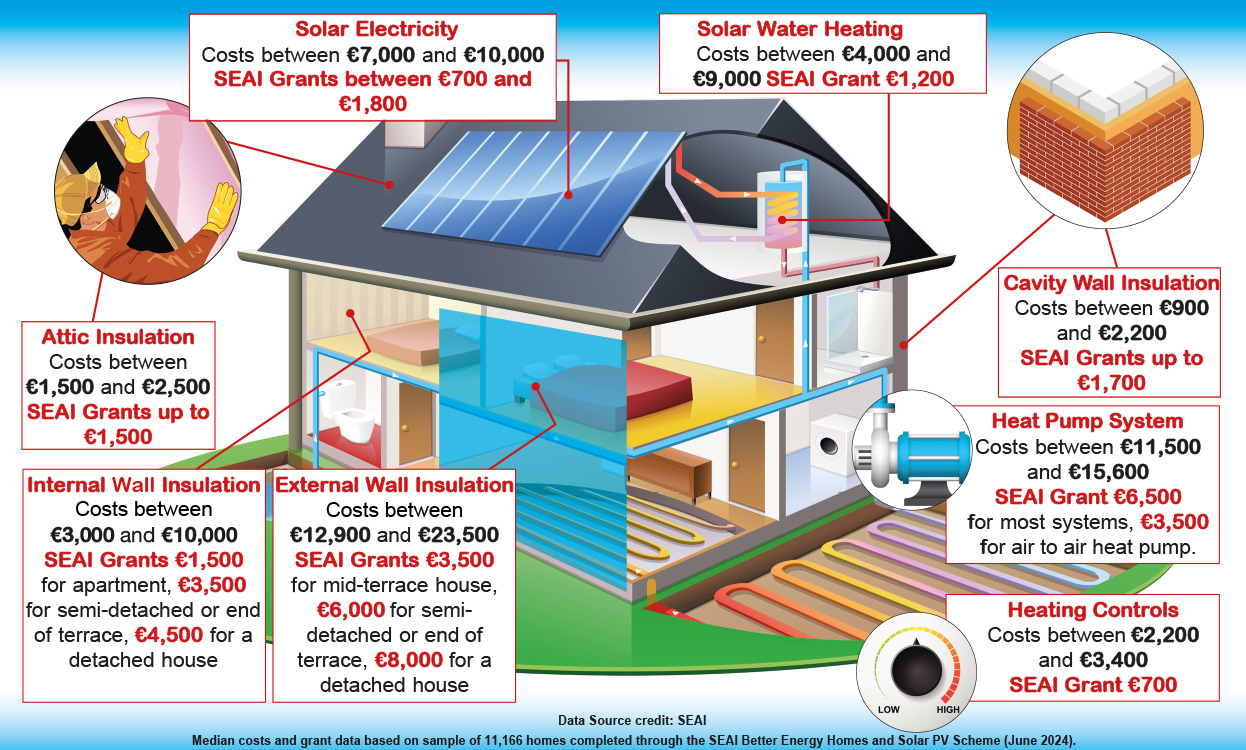
Engineer, columnist, and TV host Kieran McCarthy talks to Kya de Longchamps about his highly anticipated upcoming show on RTÉ, uncovering the mysteries of deep energy renovation
New TV show to help on the journey to deep retrofit nation's older homes

Warm reception: new TV show aims to assist home owners navigate retrofit upgrades for future comfort. SEAI grants correct of of January 2025

RTÉ viewers will be highly familiar with the sparkling double-act of Maggie Molloy and Kieran McCarthy through six energising seasons of the hit property show Cheap Irish Homes (AV3 Media/RTÉ1).

Wrestling on wellies, and creaking back warped front doors around Ireland, co-hosts Kieran and Maggie, guided us around dozens of traditional charmers, elevating their potential as affordable, forever homes.

Outlining the structural strengths and budget-ingesting challenges that fell under his experienced eye, Kieran’s relaxed, insightful responses to the needs of the building as an engineer and project manager of 30 years standing, provided some of the most informative and unexpected moments of the series.

And here is your host.....

Balancing his day-job (director of design with KMC Homes), and eagerly read columns for the Irish Examiner, Kieran is now set to host a completely new TV series in the autumn of 2025.

This unique project will feature renovations of cheap Irish homes.

“Someone buys a once-loved house that is in clear need of work, but how do you go about it? That’s the show we want to deliver. Given escalating environmental concerns, our obligations in terms of emissions and our rapidly rising energy bills, we felt that the focus should be on the deep retrofitting of older homes in Ireland.”

Crucially, it includes actionable information for viewers at home, setting out on their own deep retrofit journey.”

“The national retrofit scheme has given us the opportunity to lighten the carbon burden of our housing stock, one home at a time,” Kieran explains. “We can’t keep burning fossil fuels, particularly in old houses which may or may not have any level of insulation. I think most people accept that this has to change. Outside of the fact that it is expensive, we are in the throes of moving beyond this legacy fuel reliance. I now see retirees retrofitting their homes, so I feel this ship has really left the harbour.
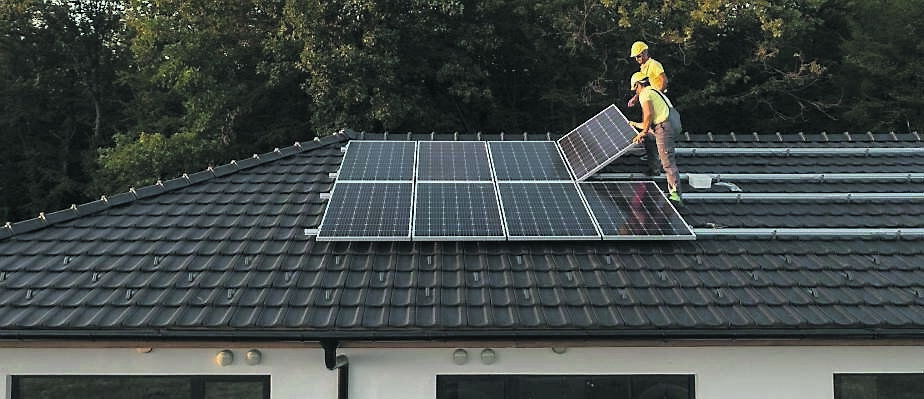
“My own father has installed a multitude of solar panels on his south-facing roof at home. In a new home, there’s no choice, you just have to opt for a renewable energy source to comply with building regulations and draw down your mortgage.”

Kieran is out in the trenches, working closely with professionals, trades and with clients who are often navigating decisions and processes they are completely unfamiliar with.
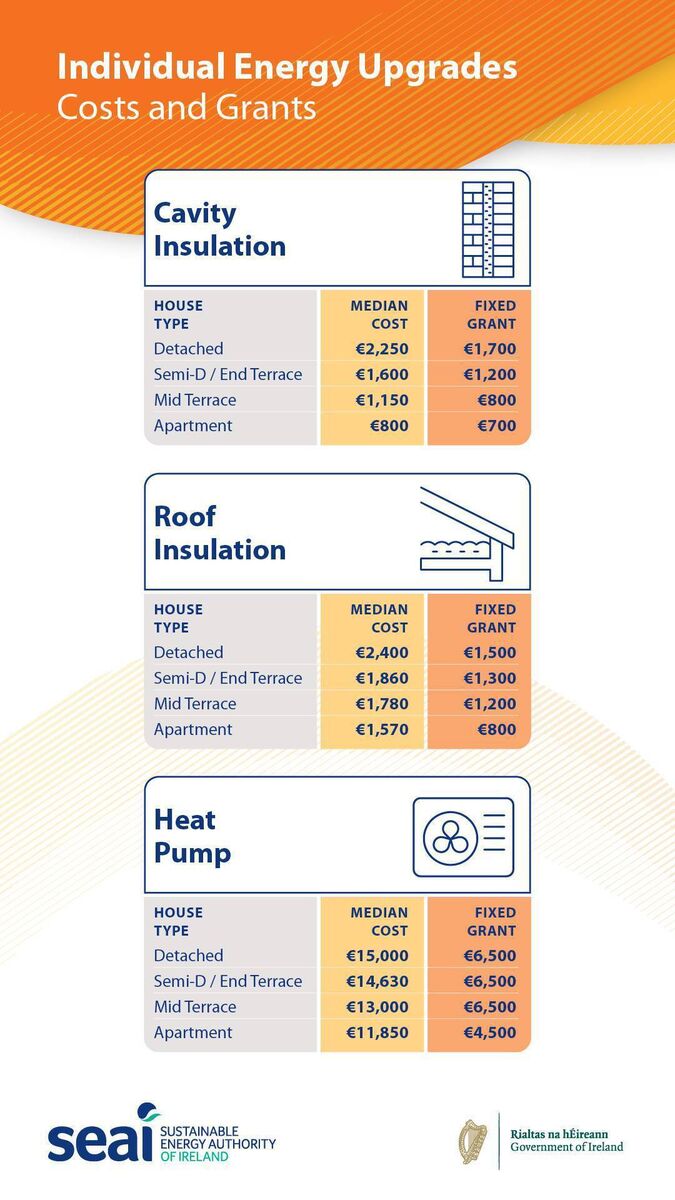
Current SEAI grant figures January 2025

Q: Does he see a shift in what is considered home improvement since the whole notion of energy retrofit arrived with the SEAI grant options?

“Absolutely” he replies, “The renovation market started with adding an extra room, then the advent of the open-plan living space, now it’s all that but with the addition of a deep retrofit too. Gone are the days when the old oil burner will do when you are spending all the money on the extension and renovation. Now outside of the insulation, you are probably opting for an air-to-water heat pump, airtightness measures and some form of mechanical ventilation.”

Q: So, we have lived in a house for years, or have recently bought a pricey older bungalow for example. Where do we even discover its energy credentials, and where does Kieran advise us to proceed?

“The first thing you need to do is get a BER assessor to carry out an assessment of your house in its current state. This is a painless process and very user-friendly. They will call to your home, measure and check all your existing insulation layers, heating system, windows and so on, and will provide you with an initial BER (Building Energy Rating). This is your current state. To avail of the SEAI Deep Retrofit Grant you are going to need to achieve a B2 or higher. The BER assessor can advise on how you can achieve this (an advisory report is provided with every BER report). Then it’s a one-stop-shop company who will quote for the work and assist you in applying for the SEAI Grant. Once approved, the one-stop-shop can carry out all the works for you.”

Q: What grant aided improvements does Kieran consider as most impactful in terms of sensory comfort, utility savings, and a valuable up-tick to a BER? Could one or two of these be worthwhile in isolation in a property at say a D or C BER rating?

“There is no doubt that a deep retrofit will make a huge difference to the quality of your living environment at home but equally it is a big investment and, even though there are generous grants available, not everyone has the budget for works at this scale. There are single measure grants available from SEAI,” Kieran continues, “so it is well worth looking into some of these works. External insulation is a great way to dramatically improve the U-value of the external walls of your home and fitting your attic with 300-400mm of quilt insulation will keep your heat in in winter and heat out in summer. If you are fortunate enough to have a cavity between your inner and outer block-work leaves, you can pump the cavities of your external walls. This is an even more cost effective option but not every house will be suitable for this application.”
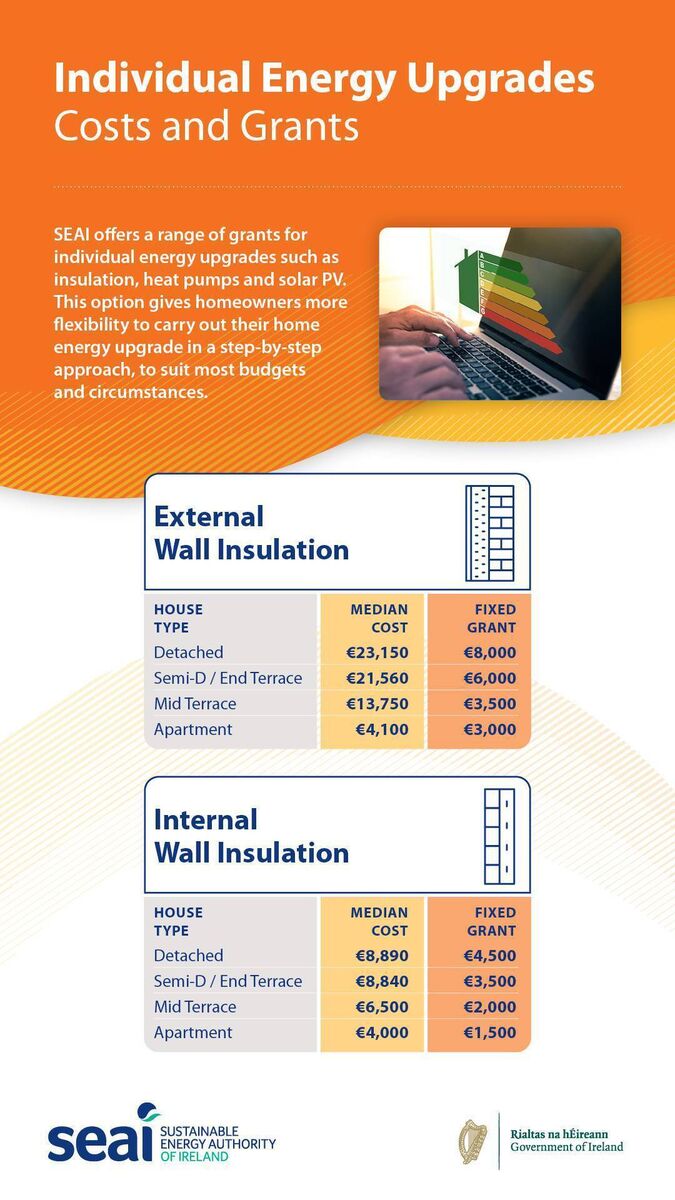
SEAI grant figures relevant January 2025

Q: We hear a lot about the importance of “fabric-first” from engineers and architects. What does that mean when improving or extending our homes with energy efficiency and sustainability in-mind.

Kieran continues: “The fabric is the external of your home, anything that interfaces with the environment outside. It’s your ground floor, your external walls, your roof and your windows. Fabric first means to design an efficient external
envelope using insulation, to separate the inside of the house for the extremes of temperature externally, and to apply airtightness measures (tapes and membranes) to guard against heat loss thorough draughts, particularly around windows, doors, pipe-works and cracks in masonry and building junctions.”

Q: Is the airtightness created during a deep renovation something to be concerned about? Will this impact the quality of the air we breathe?

“Airtightness always comes hand in hand with some form of mechanical ventilation,” says Kieran. “So there is minimal warm air leakage in winter through draughts and the like, but you keep a level of fresh air moving in the building using a mechanical ventilation system. This also eradicates condensation.”


Q; Deep energy retrofit often runs in parallel with a fuller whole house renovation and/or extension. Grants are useful, but how do we budget precisely for those dreaded additional builders’ costs? What about a quantity surveyor (QS)?

“Yes”, Kieran responds, “a QS will be very useful when assessing building costs but first you will need an engineer and an BER assessor to work up drawings and specs for your works.

“This gives the QS enough
detail to draw up a cost plan
estimate. This can then be used as a template for your contractor to price. As you proceed with the project, there will be unknowns and unexpected calls on your budget so you will need to have a contingency fund in place. Again, you QS can advise on what would be appropriate here.”

Q: So, what about rolling up our own sleeves, and getting stuck in? Should someone try some DIY when doing insulation improvements during a serious energy retrofit or could amateur “sweat-equity” interfere with the potential certification.

Q: Should we forget the SEAI register to save money?

“Most of the works that are grant approved require you to be SEAI registered” Kieran explains.

“The upside is that this ensures that these works are done properly, the downside clearly is that you cannot realistically carry out these works yourself.

“I have seen people carry out the demolition and strip out of their homes themselves which saves a lot of money and in some cases may not need too much expertise.

“Obviously the more challenging projects will need experienced operatives to assist. Don’t forget that when all the deep retrofit works are complete, there will be loads of painting to complete, and messes to sweep up every evening!”

SEAI grants correct of of January 2025

SHOW ME THE MONEY!

Facts and figures compiled by Kya de Longchamps

Available SEAI grant aid for Individual and One-Stop-Shop (OSS) energy improvements 2025. Check T&Cs for each grant type when applying and never start work before grant approval (Letter of Offer). Grant amount are scaled by build types.

• Heat Pumps (HP): Air to water €4,500 – €6000 depending on build type. Air to air €3,500. VAT now reduced to 9% for supply and installation.

• Heating Controls: €700 – unless included on new heat pump.

• Solar Hot Water (solar-thermal panels on your roof): €1,200.

• Attic Insulation (to the floor of loft): €800 – €1500.

• Cavity Wall Insulation (suited to double leaf block): €700 – €1,700.

• Internal Insulation (suited to block, stone and timber-frame): €1,500 – €4,500.

• External Insulation (the wrap suited to block build): €3,000 – €8,000.

• Solar PV: €700 per kWp of panel on the roof, up to 2kWp. €200 for every additional kWp up to 4kWp. Grant capped at €1800 if applied for after 31st December 2024. Zero VAT on solar panels.

• BER award: €50, Technical Assessment (for HP) €200.

If you go with the deeper dive of a once off event in the One-Stop-Shop scheme, includes no capital costs for the grant aid up-front, and the expectation of grant aid supporting around 50% of your total spend:

• Central Heating for any HP: €1,000 – €2,000.

• One-Stop-Shop Heat pump Bonus: €2,000.

• Rafter Insulation: €1,500 – €3,000.

• Windows: €1,500 – €4,000.

• External Doors: €800 for each of 2.

• Floor Insulation: €3,500.

• Mechanical Ventilation: €1,500.

• Air Tightness: €1,000.

• Home Energy Assessment: €350.

• Project Management: €800 - €2000.

New pilot grant for qualifying traditional homes (OSS), requiring specialist materials and conservation specialists, see seai.ie for more.

More in this section

Revoiced

Newsletter

Had a busy week? Sign up for some of the best reads from the week gone by. Selected just for you.

Cookie Policy Privacy Policy Brand Safety FAQ Help Contact Us Terms and Conditions

© Examiner Echo Group Limited