Bed heads: choosing a mattress for comfortable winter hibernation

The circadian rhythm is the healthy, natural clock buried in the mind that keeps us healthy.
When you’re sharing rollicking centimetres from head-to-toe, and side-to-side, the territory of a bed becomes a high stakes matter. Combine those dimensions with the dynamic sleeping habits of adults — the star-fish, the sprawler, the crawler, the spooner, the thrasher and the edge clinger — there’s a lot to bed down here.
I have a 6’5 partner and a super-king bed. Ex-army, he sleeps with a balled pillow on the seam of the bed, with one foot on the floor. I can’t find him with a fully extended leg unless I buttock-hop to the centre. As with anyone stabling a Super-King, I’ve learned to ferret at the very bottom of sheet shelving in-store too, and have accepted I will be largely disappointed.
Apart from the sleeping area, the depth of the mattress, off-standard (double pocket springs extending to 35cm), can be a challenge for a fitted bottom sheet. Fibres strained by a few trips through the dryer, it’s a struggle to ping them over the corners. Quick hack: buy two deep covers and put one on the base, pocket-up, to cover the bottom portion, then apply your standard fitted sheet.
When choosing a bed size, aim to leave at least 75cm around the bed in clearance. 90cm is preferable at the foot end if you want to park an ottoman or bench, have wardrobes on that wall, or have luxuriant bedding swelling off the bed end. In length, strive for 10cm more than the tallest person. Widthwise, keep those bedside tables in mind when placing on the wall — about 60cm to play with each side and 150cm of headroom at the head end (attic conversions can be bruising):
Note: European doubles such as Ikea examples (bargain bed offers abound) come in at 90cm x 200cm — useful for a taller youngster.
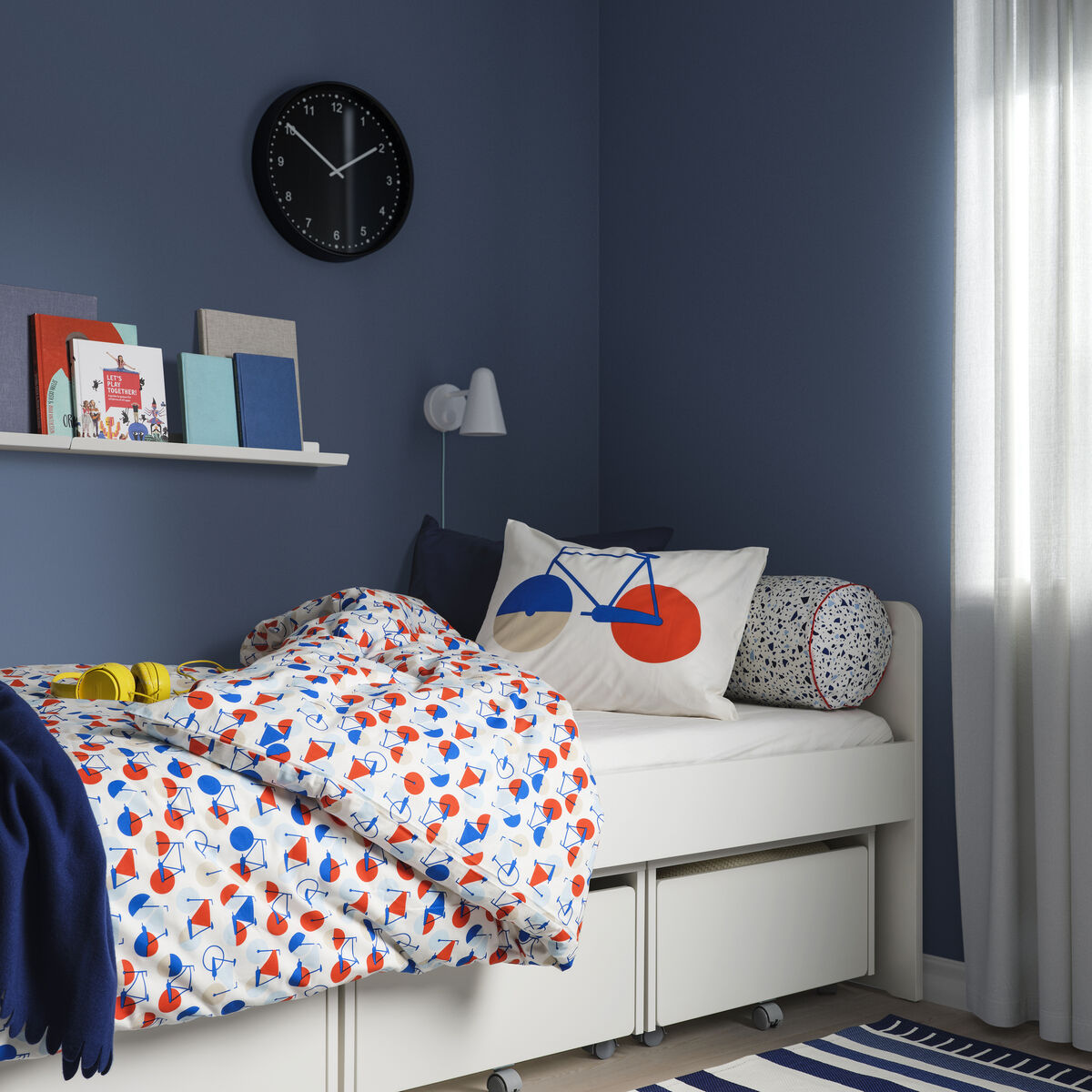
Small singles are just 75cm x 190cm (avoid – losing 15cm, it takes away rolling area). Match any bedframe precisely
The Queen: Infinitely useful for smaller guest rooms and growing young adults and singles who like a bit of roam. Smaller beds with two regular sleepers? High seismic disturbance when a bedfellow moves around
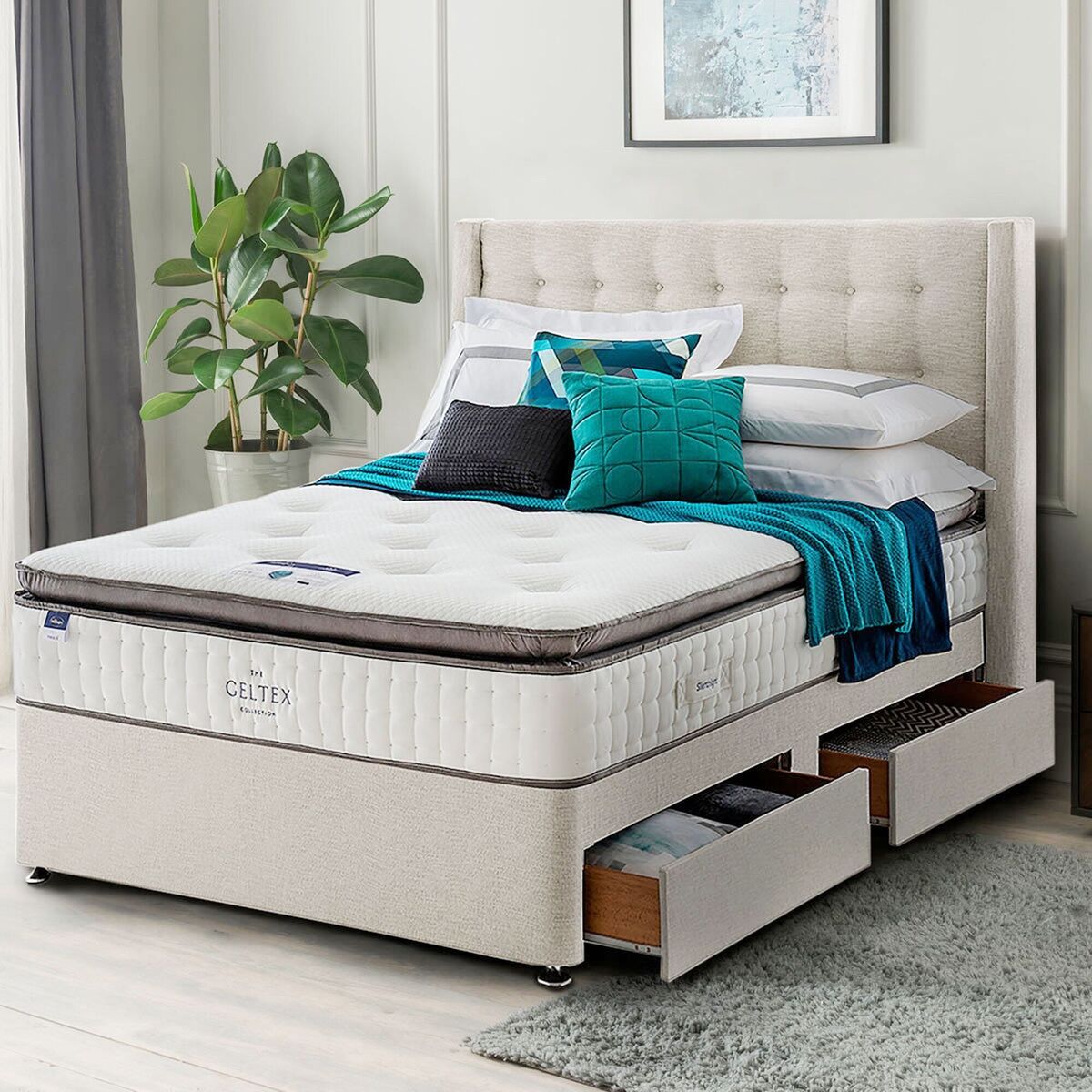
Double: 135cm by 190cm (4ft 6in by 6ft 3in). A squeak of 67.5cm each for two adults — get into the showroom bed together. A European double is 140cm X 200cm — watch those imported, longer, rolled up bargains don’t catch you out here for frame sizings
King: 150cm x 200cm (5ft 2in x 6ft 6in). Note the jump in length. With smaller rooms, ensure 60cm deep wardrobes at the foot slide rather than swing open. A European King will give you 10cm more width at 160cm. Keep in mind any bed frame will push your bed further down the room a few centimetres
Super King: 200cm by 200cm (6ft by 6ft 6in). Only use in a suitably wide room, and factor in the intrusion of bedside tables to avoid nosing the wall. There are some 215cm long SKs and rare Emperor mattresses of 210cm by 210cm for spoiled giants.
The circadian rhythm is the healthy, natural clock buried in the mind that keeps us healthy. Just a few nights riding the wrong cot can radically impair judgement and the inability to sleep through the night simply makes most of us utterly miserable. Restorative, chocolate-dark REM sleep hours are vital.
So, you’re in the showroom (and you really should be if you don’t do a free trial) — how do we know the bed will work for us? First, clear the air regarding memory foam – this is a Marmite division in taste and comfort even with a ‘cooling’ top layer. Some sleepers feel swallowed and over-heated by even the most progressive, heat-reactive foam bed. Still, top suppliers including Emma, have introduced hybrids with springs and dynamic-pressure-relief that just might change your mind. They come with a valuable 200 night sleep trial to allow you to fully adjust to change. From €455 - €791 (€100 more for a head-board with double bed frame from €419.40 on offer), emma-sleep.ie
There are a dizzying array of mattress support hybrids, toppers and ticking - (soft, medium, firm and orthopaedic — generally harder). The efficacy of table tough, orthopaedic beds (a nebulous trade description) has been largely debunked. Don’t go straight to ultra-firm for that ropey back. Expect combinations layered in latex, bamboo, cashmere, wool, animal hair, silk, memory and other synthetic foams. Replacing the platform or bed-frame comes down to condition. After 8-15 years of use, it’s likely the frame is ready for at least a structural refresh. Deals with mattresses and divans bought together tend to be very reasonable, offering new linen storage potential in drawers and voids.
A very typical mid-range bed comprises of a sophisticated sandwich of cooling gel-infused foam, memory foam and a level of denser core support. However traditional spring beds are holding their own and can be married to the comfort of foam, cellular gel and pillow tops for five-star hotel scale excellence. Budget pocket sprung beds, medium-firm, with two-drawer divan bases with deep, tufted, damask tops start at just €522 online, bedworld.ie. Swoon to the King Koil Hotel and popular Celebration range at Caseys.
Expect to pay in the area of €1,500 for Kaytex technology marrying dense quality foam with an overlay of 7.5cm memory foam in a double. Thermopure 25, €1,499, Harvey Norman (sans divan). The addition of a top cooling layer of cellular gel is well worth it if the menopause is drenching your nights in hot misery. Look for products like 4cm Geltex used with Silentnight Premium mattresses, an elastic, air-permeable fresh friend under the sheets married to Miracoil springs and a hand-tufted topper. From a very reasonable €649 in a double, dfs.ie.
Get to know your materials. Tencel is a cooling, antibacterial finishing top cover, used in quality beds that will allow air to flow and cut down on bacterial buildup. This kind of detail adds to the overall well-being surrounding the use of your mattress over several years. The very, very best? The land yachts of British crafted Savoir Beds, with higher springs, hand-stitched edges, hand teased loose-curl Argentinian horsetail hair and cashmere, couture fabrics and beech frames as standard. Taking 120 hours per build, they lounge in the five-figure area darling plus the import fees and taxes coming from London (as if we cared!)
Open spring mattresses (romantically shrouded as "bonnell") and forgetful and memory single layer foam like the Ikea Morgedol (€250 for a double) are the cheapest mattresses on the market. Reach for better layered foam engineering, and/or pocketed springs that are secured for spine supportive independent movement. The very cheapest of beds will require turning over once a month, not simply rotating. Check the specs.
Latex (processed Hevea milk) is often presumed to be all synthetic, but natural latex has fine environmental credentials. Regulating body temperature winter and summer, it’s a great choice if you’re shy of memory foam and issues around petro-chemical off-gassing. Natural latex can be blended with lambswool and other organics like bamboo for allergy sufferers into a dreamy crib.
To avoid fossil-fuel inclusive foams, glues and fire retardants, check out the Natural Sleep Company and Una (una-ogran.com) for doubles from €695. GOLS (Global Organic Latex Standard) certified natural latex foam is the gold standard. Some latex including IKEA latex uses 85% natural and 15% synthetic latex together with polyurethane foam in their hybrid mattresses. Hyllestad from €329 for a standard double, ikea.com/ie


CONNECT WITH US TODAY



Be the first to know the latest news and updates