Children today appreciate wildlife more than previous generations
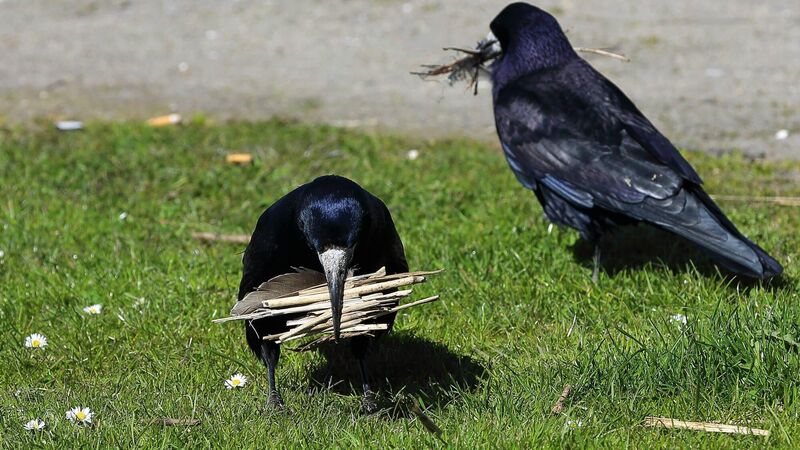
Nesting colonies of rooks are to be seen beside almost every farmhouse that has a few tall trees above the yards.
Rooks' nests in the crowns of tall, leafless trees are a common sight almost everywhere in Ireland now.
Last week, driving into Clonakilty from the Bandon side, I reckoned there were 150 nests on the roadside trees between Clonakilty Community Hospital and the town. Many had one of their builders standing sentry, the sun catching their feathers and making them look attractive birds, quite a change from their ragged winter selves.
A visitor would be impressed indeed. This town, they’d think, must be a wildlife haven.
In fact, nesting colonies of rooks are to be seen beside almost every farmhouse that has a few tall trees above the yards. Rooks, and rookeries, are widespread in Ireland. While other species have all but disappeared, they resiliently hang on.
With their big, white beaks contrasting with the black heads and black eyes, they look tough, like bandits or outlaws.
There is little finesse in the dress of a winter rook. At first light, their black shapes cross the sky, often in their hundreds, as they disperse to forage.
At nightfall, and after it, they return from all points of the compass, breaking the evening silence with their raucous cries.

How do they survive in such large number? What’s the use of them? How come they haven’t been poisoned, purposely or inadvertently? How is it that changes in agricultural practice hasn’t driven them to near extinction, like so many Irish birds?
Being omnivorous is the trick. They’ll eat all but anything, even scavenging on carrion, feeding at waste bin or landfill sites.
In fields, they eat leatherjackets, the larvae of the crane fly, that devastate cereal and other crops by eating the roots. In an otherwise green crop field, the bald patches will be the work of leatherjackets. Rook flocks, flying overhead, see these patches, and descend to scratch up the soil and feast on the pests.
Rooks are birds of habit, staying in the same area, renovating their last years’ nests. Year after year, the new birds are led by the old on proven trajectories, where food can be found. Their average lifespan is six years; one individual lived to be almost 30.
There’s a solitary bird that lives on the bridge opposite Timoleague Abbey, which I’ve seen there for a decade at least. Part of its diet is scraps left on tables outside the filling station, or crumbs from the lunchboxes of children at the national school. The kids, by serendipity or intent, are keeping the old bird alive.
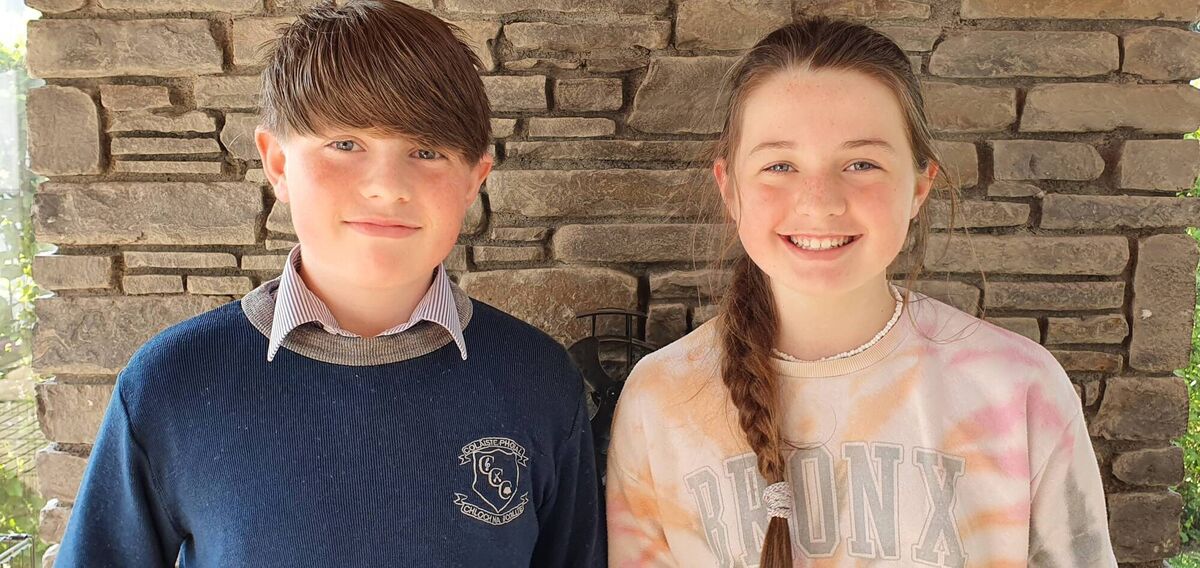
Two young neighbours, Niamh and Sé Gannon, aged 12 and 14, pupils at Barryroe school, kept our freeloading young heron alive by dutiful care through the winter of our absence.

Every day, they walked up the hill to our backyard and took fish from the freezer, thawed overnight, to the pond. Sometimes, Ronnie, as they called it, stayed high above, on the pergola, and cautiously looked down.
Sometimes, if it had another assignment, and hadn’t shown up, they’d drop the fish in the water, safe from thieving grey crows and magpies, which don’t dive.
For months, they performed this self-appointed duty. Children today, I think, appreciate wildlife more than we did, when wild creatures and landscapes were everywhere around us.
They value wildlife. They know it’s rare, and getting rarer. Children such as them are the hope for planet Earth; we adults must ensure that enough of it survives for them to nurture and reinstate it. Given what remains, still unspoiled, of land, air and water, this they can do.
During the months of home-schooling, to have a daily duty to the wild creature was, they told me, not a chore but a diversion. It was a little like an outdoor wildlife class in the middle of an indoor day. It was the real thing, establishing trust between themselves and this hyper-nervous bird.
To allay its natural instincts, they had to learn to approach it “as if walking on eggs”.
As the months went by, they had the rare privilege of watching, close up, its change from winter plumage to the elegance of a glossy topknot on its head and a gossamer, black-spotted veil on its breast while, meantime, every day, further winning its trust.
Just a week before we returned home, suddenly, it went absent from the daily feeding station. Niamh and Sé worried their head off that it come to grief.
However, no, not necessarily, I was able to tell them. After a few months, we may see it again. Right now, it may not be coming because it has a partner to feed it while it has eggs to hatch, and a family to rear. It may have been a s-heron, not simply a heron, all along.
CONNECT WITH US TODAY
Be the first to know the latest news and updates