Maximising space in new-build homes
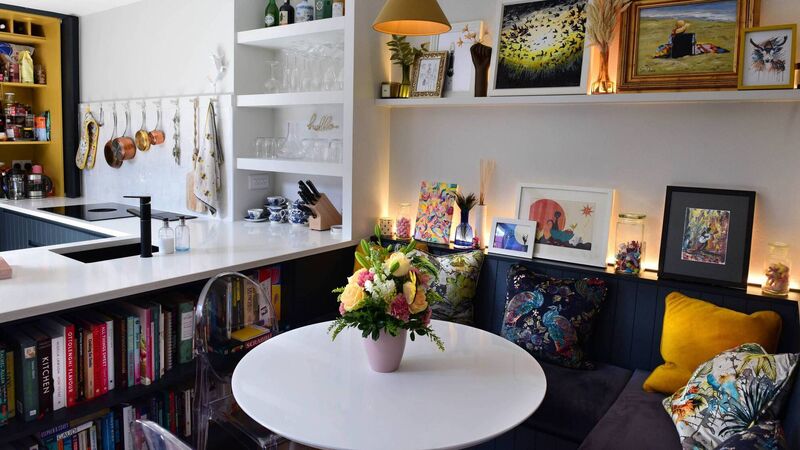
The dining area in Jen Sheahan's Rathmines home, 2021 winner of Home of the Year: Banquette seating and a dining table with a central stem allows you to comfortably fit more people. Picture: Moya Nolan
There's a lot to love about new builds. Everything is clean and fresh, the boiler isn't a liability, and nobody has made questionable tiling choices in the bathroom that you now have to deal with.
The challenge is that square footage remains at a premium, so new builds tend to be compact. Personally, I love compact homes – there’s less cleaning! You just need to be a little more intentional about how you design them.
The key to maximising space is to make sure that space works for you and your lifestyle. Try to get your hands on the plans as early as possible and walk through the layout in your mind. Go through your entire day, from making your morning coffee to sitting down to work to getting the kids to bed. Think about what you need and where to position it. Where can you put sockets so that your appliances don’t clutter your countertop? How many people need to fit around the dining table? Are any radiators getting in the way of your optimal seating locations?
Check the developer's website for floor plans, request the specifications for your house type, and ask directly what options are available for layouts or built-in furniture. Developers vary in how flexible they can be, but you won't know unless you ask.
Hallways are collectors of clutter, and built-in cabinets are one of the best investments you can make. A mix of hanging space and shelving will swallow an enormous amount of daily clutter such as coats, bags, helmets, hats, gloves, sporting equipment, and dog leashes. If space is narrow, you don’t need a full-depth unit; some shallow shelves and a few hooks will go a long way. Always add space for shoe storage underneath, as nothing clutters up a hallway faster than discarded shoes.
Never underestimate under-stairs space, no matter how small. Perhaps the whole space is taken up by a downstairs loo, but if not, it can be used for storage, a home office nook, an enclosed laundry area, or even a dog bed. One of the jobs on my to-do list is to have drawers installed in my stair risers - it’s a brilliant way to add some hidden storage for shoes, bags, and accessories.
Simply scaling furniture down to fit in a smaller space has the counterintuitive effect of visually shrinking the room. Fewer, larger items are better than many small items. Pull everything out a few centimetres from the wall; choose slim profile designs, couches on raised legs, and circular dining tables with central stems to reduce visual clutter and maximise utility.
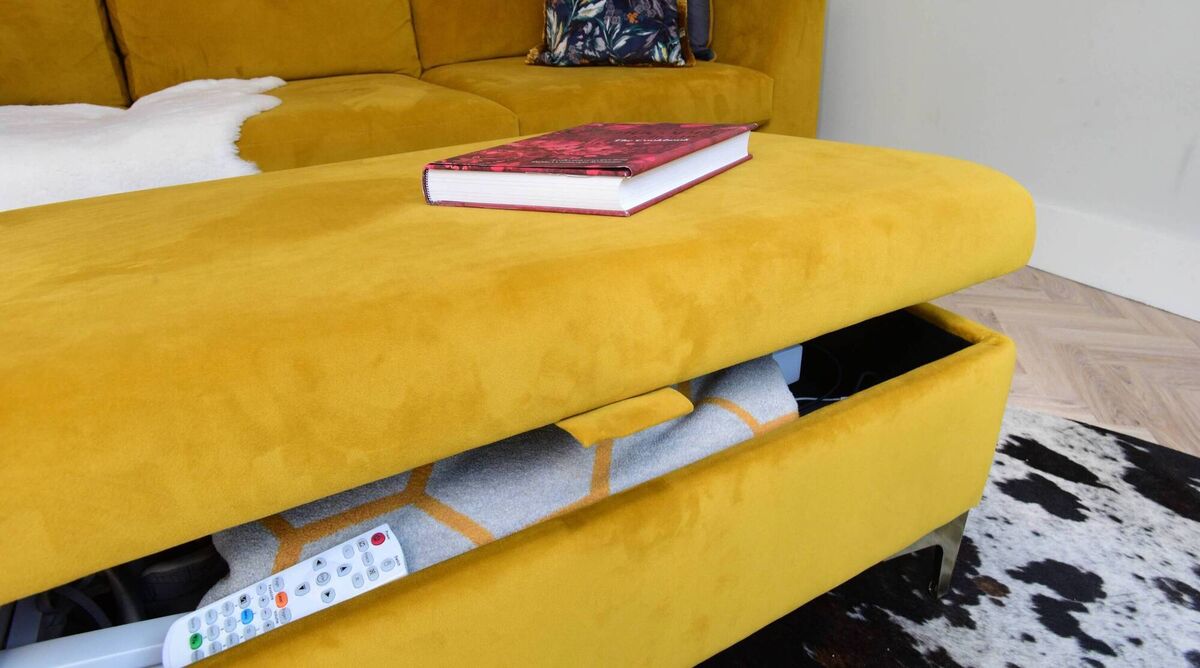
Wherever possible, choose modular furniture and furniture with storage. A couch with a matching storage ottoman gives far more options than an L-shaped couch. Banquette seating in a dining area is fantastic for giving you maximum seating space with added storage underneath.
In bedrooms, choose the largest mattress possible while leaving enough space to move around the bed (minimum 76cm). Go for a storage ottoman base that lifts on hinges, rather than drawers; you wouldn’t believe how much additional storage this will give you. Forget bedside lockers and instead install a shelf on either side of the bed or choose a slim headboard with built-in shelves.
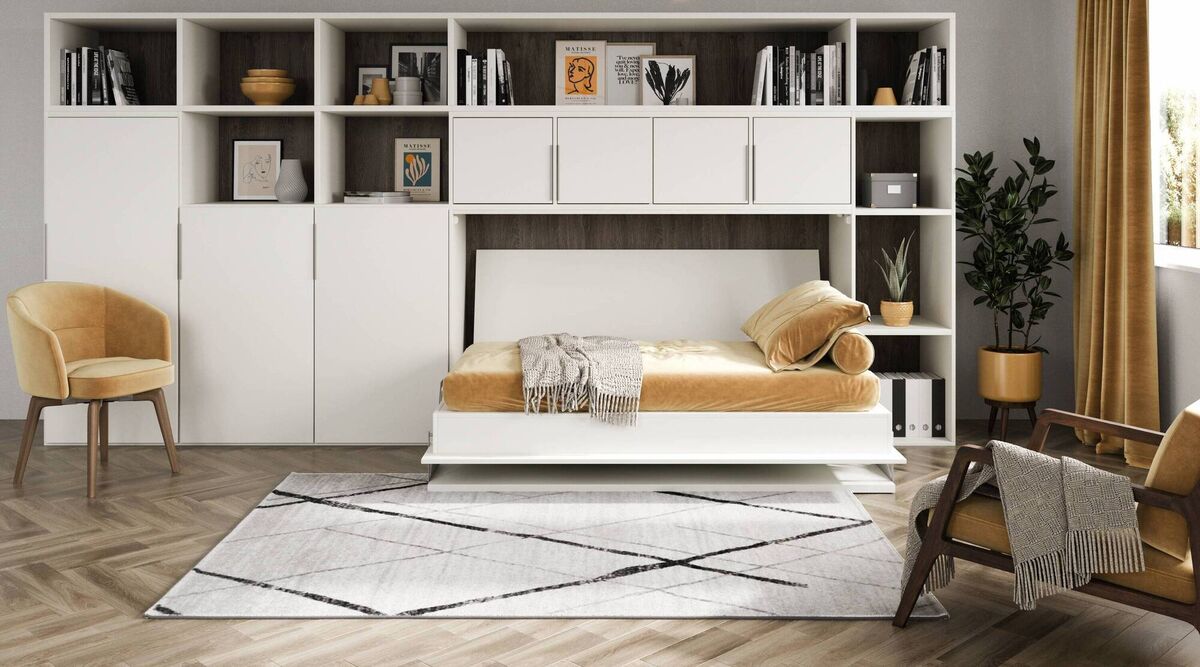
Most of us need dedicated desk space at home. Usually this will be in a spare room, which will likely be re-purposed as a guest room. My favourite option here is to install a wall bed. They are more expensive, but they are a fantastic way to create an easy transition from working area to sleeping space.
These days they come with built-in desks and shelves such that by day they are a useful home office, and when needed they fold down easily into a bed. Hinges on either side of the shelves allow them to swing as they are lowered, keeping everything upright, so you don’t even have to clear things away.
When it comes to installing units – kitchens, shelving, etc – think vertical. Going full height draws the eye upward and makes the most of wall space without eating into your floor area. The hardest working space in my home is a 10cm wide floor-to-ceiling cabinet in my kitchen - brilliant for brushes, brooms, bags, and my dog’s collection of jackets and jumpers.
In open-plan rooms, use rugs, lighting, and furniture arrangement to create zones such as reading corners and dining areas. It gives the space a layered sense of structure. Finally, embrace mirrors. A large mirror – especially opposite a window – bounces light around the room and makes it feel bigger and brighter.
CONNECT WITH US TODAY



Be the first to know the latest news and updates