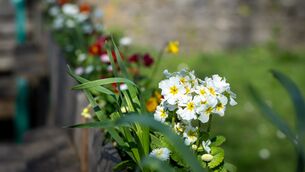
Peter Dowdall: Crocus, narcissus and anemone signal it's spring

Crocus thrive in well-drained soil and full sun, though they will tolerate light shade before trees come fully into leaf. File picture
I love white in the garden. There is something so pure, simple and elegant about it. In March, when the garden is just beginning to move again and the light is strengthening by the day, white feels particularly apt. It catches the low spring sunshine and seems to glow, even on a dull afternoon.
At this time of year, especially, white flowers lift everything around them. If you want to introduce white into your garden from the beginning of the season, then March is the perfect moment.
Crocus Jeanne d’Arc is one of the purest whites you will find in early spring. The petals are crisp and clean, wrapped around a bright orange centre that sharpens the contrast. Planted in drifts through grass, they appear like flowering confetti when the sun hits them. In borders, they provide a bright edge to emerging perennials. In pots beside a door, they immediately brighten an entrance.
Crocus thrive in well-drained soil and full sun, though they will tolerate light shade before trees come fully into leaf. Drainage is essential. In heavy ground, it is worth improving the soil with grit before planting bulbs in autumn. Once established, they are resilient and will return year after year, increasing steadily.
If Crocus Jeanne d’Arc is the first note of spring, Narcissus Thalia carries it on. This is not the bold yellow trumpet we associate with Daffodils, no, Thalia produces multiple stems, each carrying two or three gently nodding white flowers with a soft ivory cup.
It has a lightness and elegance about it that works beautifully in mixed borders, beneath shrubs or mixed with ornamental grasses. Because it flowers slightly later than crocus, it extends the white theme deeper into spring. White daffodils have a softer presence than the bright yellows and blend easily with other spring plants.
Narcissus are easy to grow but like most bulbs, they will not tolerate waterlogged soil for any length of time, so good drainage matters here too. Plant bulbs in autumn at roughly twice their own depth and allow the foliage to die back naturally after flowering so energy returns to the bulb. Resist the urge to tidy too early as those leaves are next year’s display in preparation. Think of the eaves as botanical solar panels.
Anemone blanda, often called the windflower, starts to flower around the time of the crocus and continues along with the narcissus and keeps going even later in the spring.
The white forms are really effective beneath deciduous trees, where they create a soft carpet before the canopy closes overhead. The flowers open flat in sunshine, forming simple daisy-like blooms above finely cut foliage.
They are excellent for naturalising and, once settled, will spread gradually to fill space. They prefer humus-rich, well-drained soil and are ideal for those awkward areas beneath shrubs where everything else struggles. Plant the small tubers in autumn, soaking them briefly beforehand to rehydrate them. Used well, they can create a woodland feel even in the smallest of gardens.
And then there are hellebores, invaluable at this time of year. By March, many are at their best, with white and cream forms lighting up shaded borders. The flowers of Helleboreus orientalis, the Lenten Ros,e bridge that period between late winter and early spring.
White varieties are particularly effective in shade, standing out clearly against darker foliage. They prefer fertile, well-drained soil and dappled shade. Once established, they are long-lived and low-maintenance. Remove the foliage during winter to allow the flowers to be seen properly and reduce the risk of the plant catching Hellebore Leaf Spot.
When used together, these plants allow you to build layers of white from late winter into mid-spring. Crocus at ground level, anemone weaving between them, narcissus growing slightly higher and hellebores as punctuation marks here and there.
In smaller gardens, restricting the palette to white and green can make the space feel larger and more cohesive whereas in larger gardens, white can link different areas, providing much needed continuity.
White flowers are visible in low light, valuable as even though we are seeing definite improvements in the weather and longer daylight hours we are still far from the balmy summer evenings yet. On days when light fades quickly, the whites remain noticeable long after deeper colours have receded.
March is the month when the garden begins to take shape again and energy returns to the soil. The magic which beneatht the ground which lay invisible over the last few months begins to rumble awake again and to burst out above the ground now and white flowers capture that sense of renewal perfectly. They are not the abundance of high summer, rather they are the starting point.


CONNECT WITH US TODAY



Be the first to know the latest news and updates