Home Q&A: Can I power my house from my EV car battery?
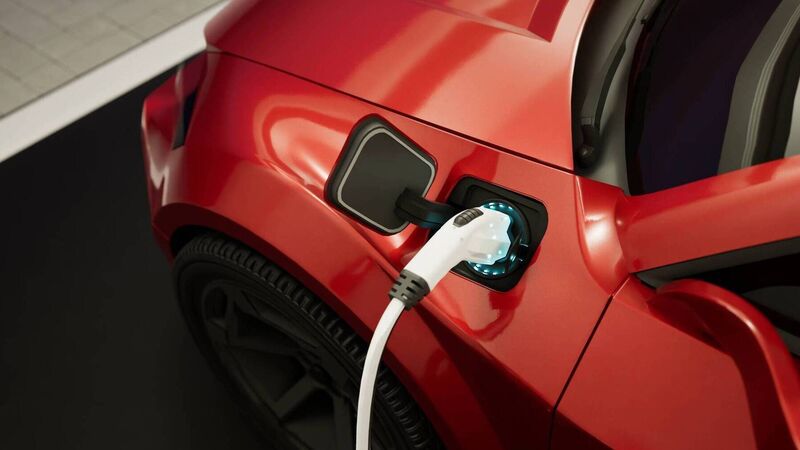
Only deal with RECI-registered electricians when installing any charger, advises Kya deLongchamps. File picture
In short, yes, it is possible, but not every EV can, and you will need compatible hardware in place even then.
This process is known as V2H (vehicle to home) or V2G (vehicle to grid) if you want to send power back to the Grid.
V2H describes moving DC power from the battery in the car battery to the domestic supply in the home as AC current.
In the event of a power failure, this can be extremely handy. There are some complications technically requiring what’s termed a bi-directional charger (in place of a standard EV charger) and therefore considerable extra expense compared to a standard charger for a PHEV or BEV.
You should only deal with RECI-registered electricians when installing any charger.
A limited number of EV charger suppliers stock dedicated bi-directional chargers, including Sigenergy.
Unfortunately, there’s also no clear messaging from Safe Electric Ireland/ESB Networks, except that there must be a G10 relay-switch (or fireman’s switch) to ensure no power re-enters the grid, causing dangerous spikes. This is standard if you’re using your PV-solar battery to run the house during a power outage, a more typical form of bi-directional charging.
Otherwise, ESB Networks throws the responsibility back to the installer of the charger, which could provide a roadblock to carrying out a safe, ESB-approved project at the moment. Explore vehicles capable of V2H (this includes certain models of VW, Renault, Hyundai and Volvo). The SEAI includes some V2H-capable chargers in its list of acceptable devices.
- Got a question for our Home team? Email home@examiner.ie


CONNECT WITH US TODAY



Be the first to know the latest news and updates